Home
Class 11
CHEMISTRY
which of the following species have six ...

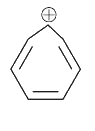
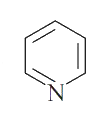
which of the following species have six Pi constructed electrons?

A

B

`ch_2=ch-ch=ch-ch_2(-)`

C

D

all of these

Text Solution

AI Generated Solution

The correct Answer is:

To determine which of the given species have six π (pi) electrons, we need to analyze each structure based on the number of pi bonds present. Here’s a step-by-step breakdown of the solution: ### Step 1: Understand π Electrons - π electrons are found in double bonds (each double bond has 2 π electrons) and in aromatic systems (where delocalization occurs). - A single bond does not contribute any π electrons. ### Step 2: Analyze Each Option 1. **Option A**: - Identify the structure (not provided here, but assume it has a certain number of double bonds). - Count the number of π bonds. If there are 3 double bonds, then there are 3 x 2 = 6 π electrons. - Conclusion: This option has 6 π electrons. 2. **Option B**: - Identify the structure (again, not provided). - Count the π bonds. If there are 3 double bonds, then similarly, there are 6 π electrons. - Conclusion: This option also has 6 π electrons. 3. **Option C (Pyridine)**: - Pyridine has a nitrogen atom in the ring. The nitrogen's lone pair is outside the aromatic system, so it does not contribute to the π electron count. - Count the π bonds in the ring. Pyridine has 3 double bonds, contributing 6 π electrons. - Conclusion: This option has 6 π electrons. 4. **Option D**: - This option states that all the previous options have 6 π electrons. - Since we have established that options A, B, and C each have 6 π electrons, this option is correct. ### Final Conclusion - All the species (Options A, B, and C) have six π electrons. Therefore, the correct answer is **Option D: All of these**.
Promotional Banner

Topper's Solved these Questions

  • ORGANIC CHEMISTRY: SOME BASIC PRINCIPLES AND TECHNIQUES

    CBSE COMPLEMENTARY MATERIAL|Exercise Fill in the blanks|10 Videos
  • ORGANIC CHEMISTRY: SOME BASIC PRINCIPLES AND TECHNIQUES

    CBSE COMPLEMENTARY MATERIAL|Exercise True and false type questions|10 Videos
  • HYDROGEN

    CBSE COMPLEMENTARY MATERIAL|Exercise Unit Test|11 Videos
  • P-BLOCK ELEMENTS

    CBSE COMPLEMENTARY MATERIAL|Exercise UNIT TEST|8 Videos

Similar Questions

Explore conceptually related problems

Which of the following species have maximum number of electrons ?

Which of the following species have same outer most shell electronic configuration

Which of the following species has (have) five unpaired electron ?

Which of the following species have one unpaired electron each

For which of the following species the contribution of s electron to the shielding constant is 0.3 ?

Which of the following molecualr species has unpaired electrons ?

Which of the following species have the same shape?

CBSE COMPLEMENTARY MATERIAL-ORGANIC CHEMISTRY: SOME BASIC PRINCIPLES AND TECHNIQUES-Unit test
  1. which of the following species have six Pi constructed electrons?

    Text Solution

    |

  2. Write bond line formula for the following compound HOCH2CH2CH(CH3)CH(C...

    Text Solution

    |

  3. WRITE IUPAC name of the following compound: CH3-underset(NO2) underse...

    Text Solution

    |

  4. The cenral atom of compound ch2=c=ch2 is ........... Hybridized

    Text Solution

    |

  5. The difference in molecular weight of two consecutive members of a hom...

    Text Solution

    |

  6. What type of ismomerism is exhibvbited by the following pair of compou...

    Text Solution

    |

  7. Give one example each of nucleophile and electrophile

    Text Solution

    |

  8. Arrage thje following uin increasing order of staboltiy: (ch3)3c^-,ch3...

    Text Solution

    |

  9. Write two point of difference between inductive and electromeric effec...

    Text Solution

    |

  10. When do we use hot water funnel for filtration?

    Text Solution

    |

  11. How would you isolate a mixture of two organic compoundas which have d...

    Text Solution

    |

  12. An organic liqiuid decomposes below or at its boiling point. How will...

    Text Solution

    |

  13. Draw the resonating sturctures of 1. Phenol

    Text Solution

    |

  14. Draw the resonating sturctures of 2. benzaldehyde

    Text Solution

    |

  15. Arraange the following in the order of the order of property indicated...

    Text Solution

    |

  16. Arraange the following in the order of the order of property indicated...

    Text Solution

    |

  17. Arraange the following in the order of the order of property indicated...

    Text Solution

    |
