Home
Class 12
CHEMISTRY
Which of the following is least reactiv...

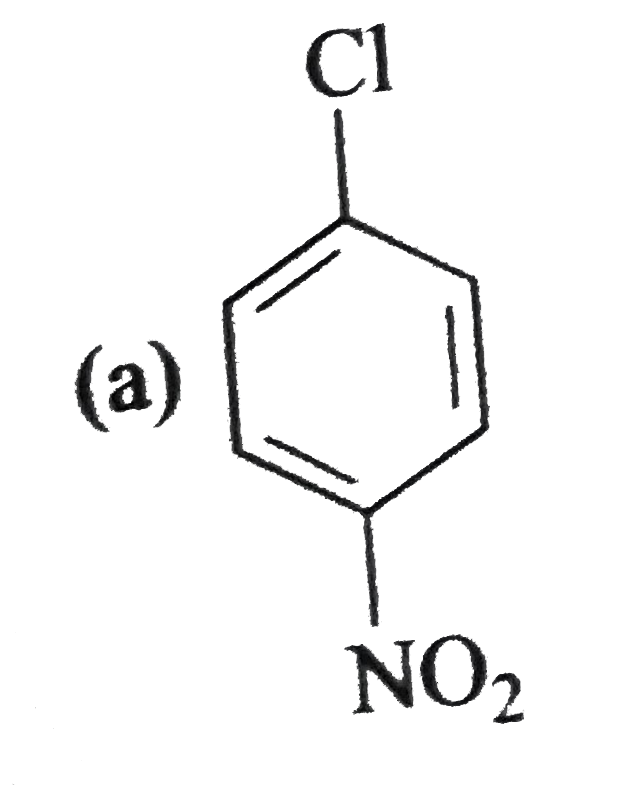
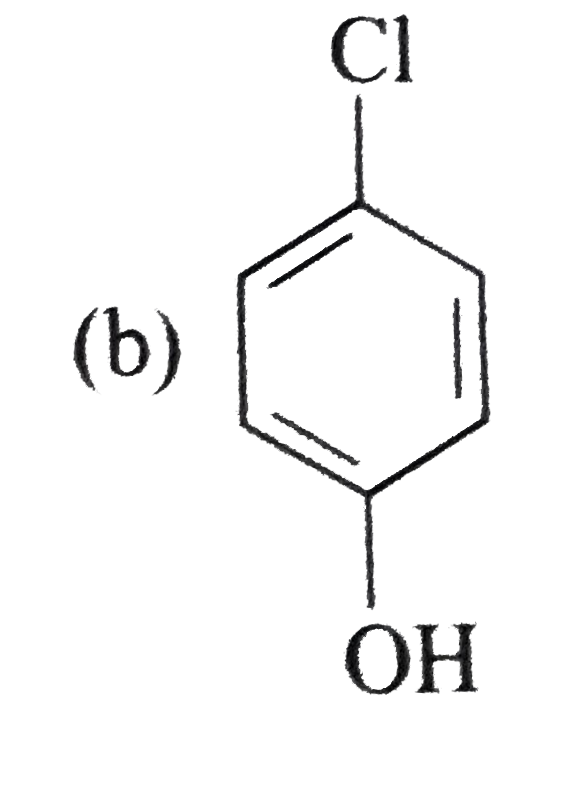
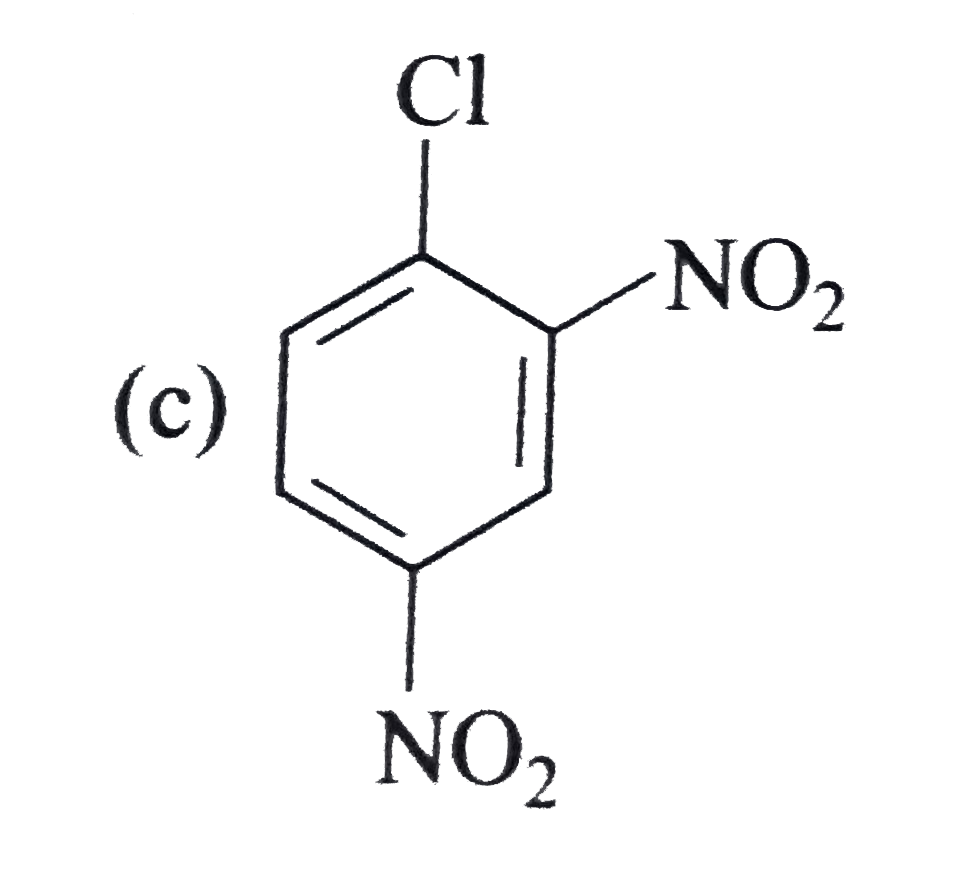
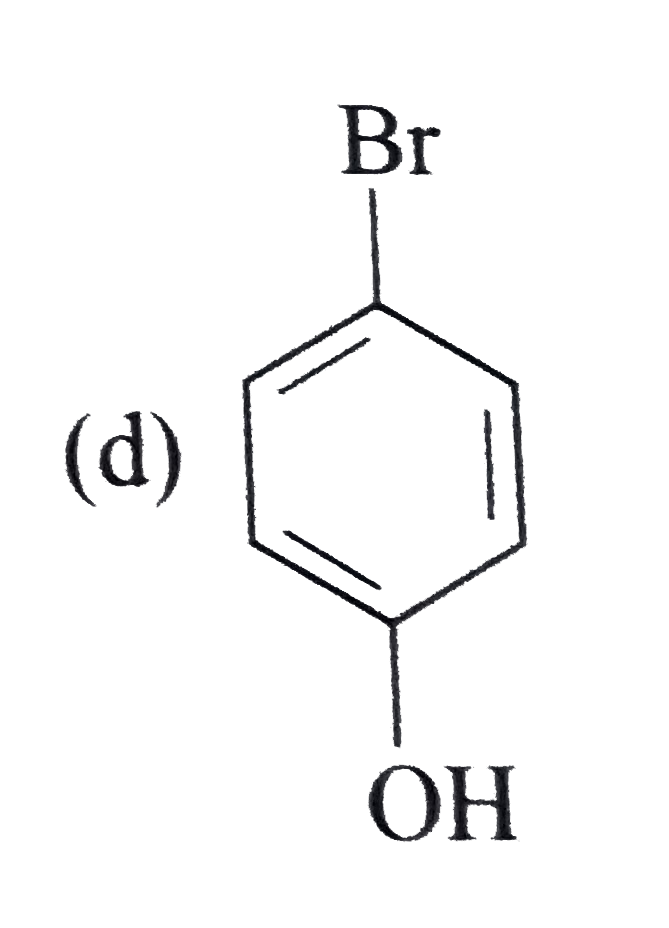
Which of the following is least reactive towards nucleophilic substitution with aqueous KOH

A

B

C

D

Text Solution

AI Generated Solution

The correct Answer is:

To determine which of the given compounds is least reactive towards nucleophilic substitution with aqueous KOH, we can follow these steps: ### Step 1: Understand the Types of Nucleophilic Substitution Reactions Nucleophilic substitution reactions can be classified into two main types: - **SN1 (Unimolecular Nucleophilic Substitution)**: This mechanism involves the formation of a carbocation intermediate. The rate of reaction depends only on the concentration of the substrate. - **SN2 (Bimolecular Nucleophilic Substitution)**: This mechanism involves a single concerted step where the nucleophile attacks the substrate, leading to the displacement of the leaving group. The rate depends on both the substrate and the nucleophile. ### Step 2: Identify the Leaving Groups In this case, we need to consider the halides (Cl and Br) as leaving groups. The ability of a leaving group to depart is influenced by its stability as a lone pair after leaving: - Bromide (Br⁻) is a better leaving group than chloride (Cl⁻) because it is a weaker base and more stable in solution. ### Step 3: Analyze the Substituents on the Benzene Ring The presence of electron-withdrawing or electron-donating groups on the benzene ring can significantly affect the reactivity of the halides: - **Electron-withdrawing groups (EWGs)** (like NO₂) stabilize the positive charge on the carbocation formed in SN1 mechanisms and weaken the bond between carbon and the leaving group, making substitution easier. - **Electron-donating groups (EDGs)** (like OH) increase the electron density on the carbon, making the bond stronger and thus less reactive towards nucleophilic substitution. ### Step 4: Compare the Given Compounds Let's analyze the four options based on the presence of substituents and the type of halide: 1. **Option A**: Benzene with Cl and NO₂ 2. **Option B**: Benzene with Cl and OH 3. **Option C**: Benzene with Cl, NO₂, and another NO₂ 4. **Option D**: Benzene with Br and OH - **Option A** has one EWG (NO₂), which will enhance reactivity. - **Option B** has an EDG (OH), which will decrease reactivity. - **Option C** has two EWGs (NO₂), making it the most reactive. - **Option D** has Br (better leaving group) but also has an EDG (OH), which will reduce its reactivity. ### Step 5: Determine the Least Reactive Compound Based on the analysis: - **Option C** is the most reactive due to two EWGs. - **Option A** is more reactive than **Option D** because of the presence of Cl and an EWG. - **Option D** is more reactive than **Option B** due to the better leaving group (Br). - **Option B** is least reactive because the OH group donates electrons, making the C-Cl bond stronger and less prone to nucleophilic attack. ### Conclusion The least reactive compound towards nucleophilic substitution with aqueous KOH is **Option B**. ---
Promotional Banner

Topper's Solved these Questions

  • HALOALKANES AND HALOARENES

    OP TANDON|Exercise Objective Questions Lavel -B Set II This set contains the questions|16 Videos
  • HALOALKANES AND HALOARENES

    OP TANDON|Exercise Assertion -Reason Type Questions|20 Videos
  • HALOALKANES AND HALOARENES

    OP TANDON|Exercise Objective Questions|234 Videos
  • ELECTROCHEMISTRY

    OP TANDON|Exercise Matrix-Matching Type Question|3 Videos
  • ISOMERISM (STRUCTURAL AND STEROISOMERISM)

    OP TANDON|Exercise INTEGER|7 Videos

Similar Questions

Explore conceptually related problems

Which of the following is least reactive towards nucleo- philic substitution?

Which of the following is the least reactive towards nucleophile?

Which of the following is most reactive toward nucleophilic substitution reaction ?

Which of the following is least reactive in a nucleophilic substiution reaction

Which of the following is the most reactive towards electrophilic substitution?

OP TANDON-HALOALKANES AND HALOARENES -Objective Questions Lavel -B
  1. Dehydrohalogenation by strong base is slowest in :

    Text Solution

    |

  2. consider the structures of the following two molecules : X : F(2)C=C...

    Text Solution

    |

  3. Which of the following is least reactive towards nucleophilic substit...

    Text Solution

    |

  4. water (through S(N^(2)) reaction mechanism) then sterochemistry of pro...

    Text Solution

    |

  5. Which of the following is known as freon which is used as a refrigeran...

    Text Solution

    |

  6. In which of the following reactions an otically active single product ...

    Text Solution

    |

  7. Which of the following will give acetophenone as a product ?

    Text Solution

    |

  8. Most reactive alkyl halide towards E2 mechanism is :

    Text Solution

    |

  9. Which of the following compounds is the most likeyl to undergo a bimo...

    Text Solution

    |

  10. The major product obtained in the reaction

    Text Solution

    |

  11. The reaction H(2)C=CH-CH(3)+CI(2) overset(673K)(to) H(2)C=CH-CH(2)C...

    Text Solution

    |

  12. Iodoform si used as an:

    Text Solution

    |

  13. The trade name of trichloroethylene is :

    Text Solution

    |

  14. In the reaction : R-Br+CI^(-) to R -CI+Br^(-) The rates of react...

    Text Solution

    |

  15. Arrange the following compounds in the decreasing order of the boiling...

    Text Solution

    |

  16. In the reaction , CH(3)-underset(Br)underset(|)(CH)-CH(3)overset(alc...

    Text Solution

    |

  17. C Cl4 is used as fire extinguisher because :

    Text Solution

    |

  18. The correct of reactivity of alkyl halides for S(N^(1)) reaction is :

    Text Solution

    |

  19. Match List I with List II and select the correct answer using the co...

    Text Solution

    |

  20. Match List I with list II and select the correct answer using the cod...

    Text Solution

    |
