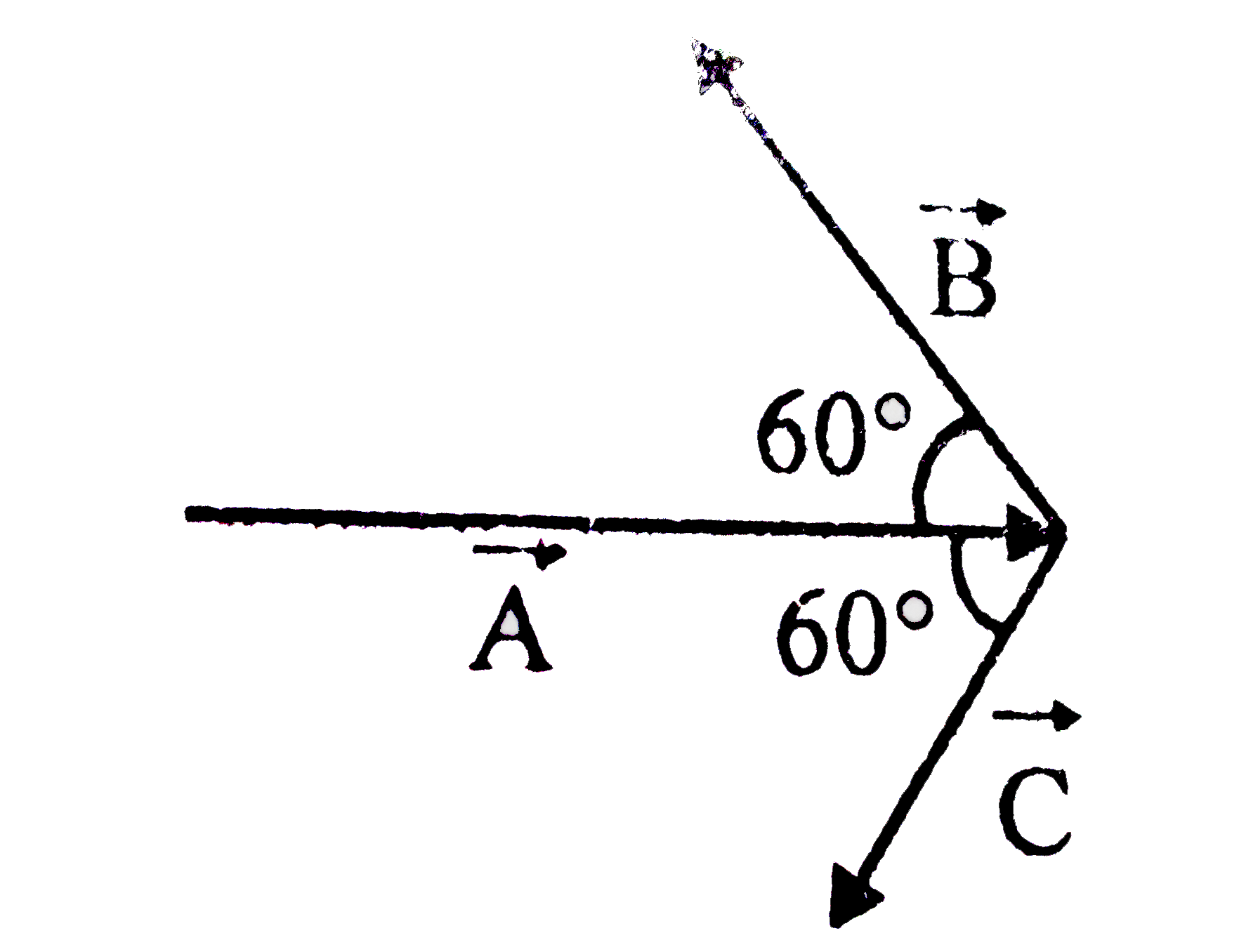
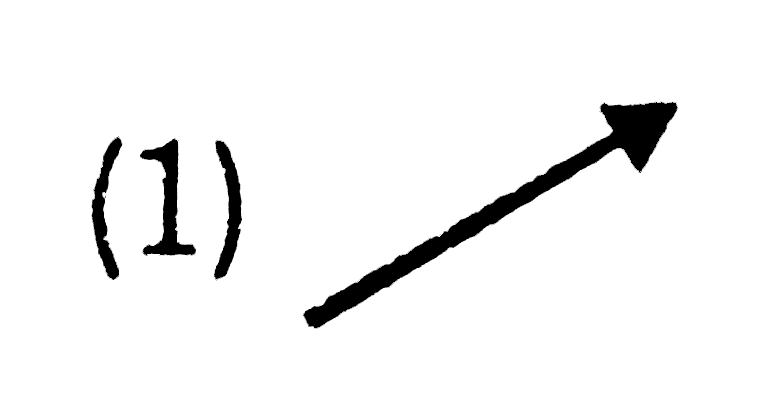
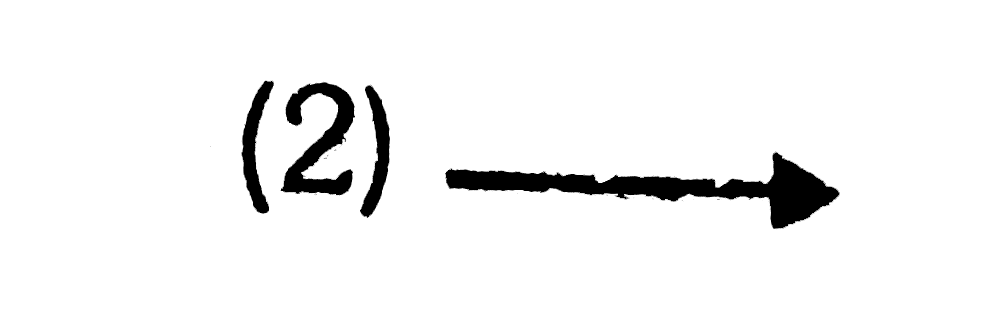
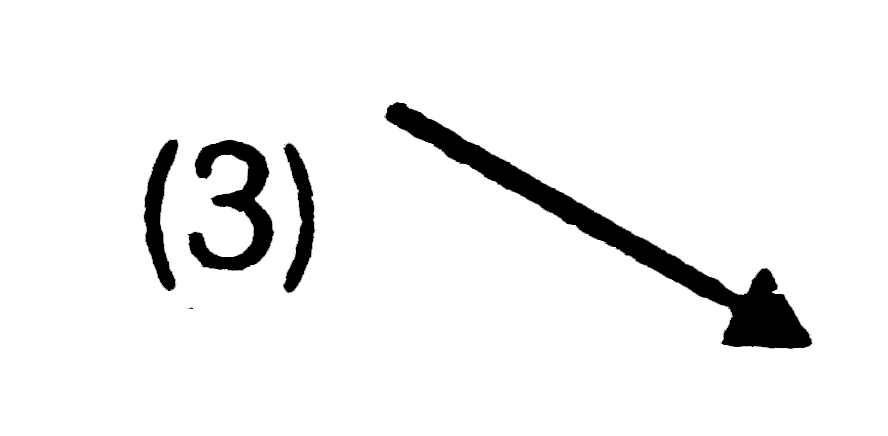
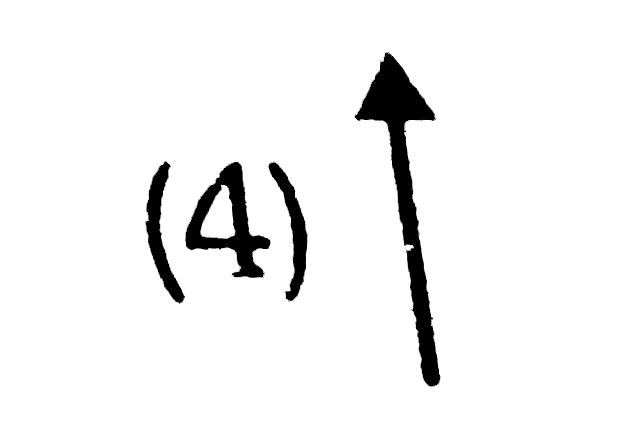
Theree coplanar vectors `vecA,vecB` and `vecC` have magnitudes 4.3 and 2 respectively. If the angle between any two vectors is `120^(@)` then which of the following vector may be equal to `(3vecA)/(4)+(vecB)/(3)+(vecC)/(2)`
A
B
C
D
Text Solution
Verified by Experts
The correct Answer is:
2
`|(vecB)/(3)|=|(vecC)/(2)|` so `(vecB)/(3)+(vecC)/(2)=(vecA)/(4) "therefore" (3vecA)/(4)+(vecB)/(3)+(vecC)/(2)=(vecA)/(2)`
Topper's Solved these Questions
BASIC MATHS
ALLEN|Exercise EXERCISE-1|128 Videos
BASIC MATHS
ALLEN|Exercise EXERCISE-2|80 Videos
AIIMS 2019
ALLEN|Exercise PHYSICS|40 Videos
CIRCULAR MOTION
ALLEN|Exercise EXERCISE (J-A)|6 Videos
Similar Questions
Explore conceptually related problems
The magnitudes of vectors vecA,vecB and vecC are 3,4 and 5 units respectively. If vecA+vecB= vecC , the angle between vecA and vecB is
Three vectors vecA,vecB and vecC are such that vecA=vecB+vecC and their magnitudes are in ratio 5:4:3 respectively. Find angle between vector vecA and vecC
If vecA = vecB + vecC and the magnitudes of vecA, vecB and vecC are 5,4 and 3 units respecetively, the angle between vecA and vecC is :
The angle between two vectors veca and vecb with magnitudes sqrt(3) and 4, respectively and veca.vecb = 2sqrt(3) is:
If vecA,vecB and vecC are coplanar vectors, then
The magnitudes of vectors vecA.vecB and vecC are respectively 12,5 and 13 unira and vecA+vecB=vecC , then the angle between vecA and vecB is :
A magnitude of vector vecA,vecB and vecC are respectively 12, 5 and 13 units and vecA+vecB=vecC then the angle between vecA and vecB is
vecA, vecB" and "vecC are three orthogonal vectors with magnitudes 3, 4 and 12 respectively. The value of |vecA-vecB+vecC| will be :-
Let veca, vecb and vecc be the three vectors having magnitudes, 1,5 and 3, respectively, such that the angle between veca and vecb "is" theta and veca xx (veca xxvecb)=vecc . Then tan theta is equal to
if veca,vecb and vecc are mutally perpendicular vectors of equal magnitudes, then find the angle between vectors and veca+ vecb+vecc .