A
B
C
D

Text Solution
Verified by Experts
The correct Answer is:




Topper's Solved these Questions
CHEMICAL EQUILIBRIUM
RESONANCE|Exercise Exercise-2 (Part-1)|28 VideosCHEMICAL EQUILIBRIUM
RESONANCE|Exercise Exercise-2 (Part-2)|23 VideosCHEMICAL EQUILIBRIUM
RESONANCE|Exercise Exercise-1 (Part-1)|38 VideosCHEMICAL BONDING
RESONANCE|Exercise Inorganic chemistry (Chemistry Bonding)|49 VideosD & F-BLOCK ELEMENTS & THEIR IMPORTANT COMPOUNDS
RESONANCE|Exercise Match the column|1 Videos
Similar Questions
Explore conceptually related problems
RESONANCE-CHEMICAL EQUILIBRIUM-Exercise-1 (Part-2)
- The degree of dissociation of SO(2) is alpha at equilibrium pressure P...
Text Solution
|
- In the dissociation of N(2)O(4) into NO(2), (1+ alpha) values with the...
Text Solution
|
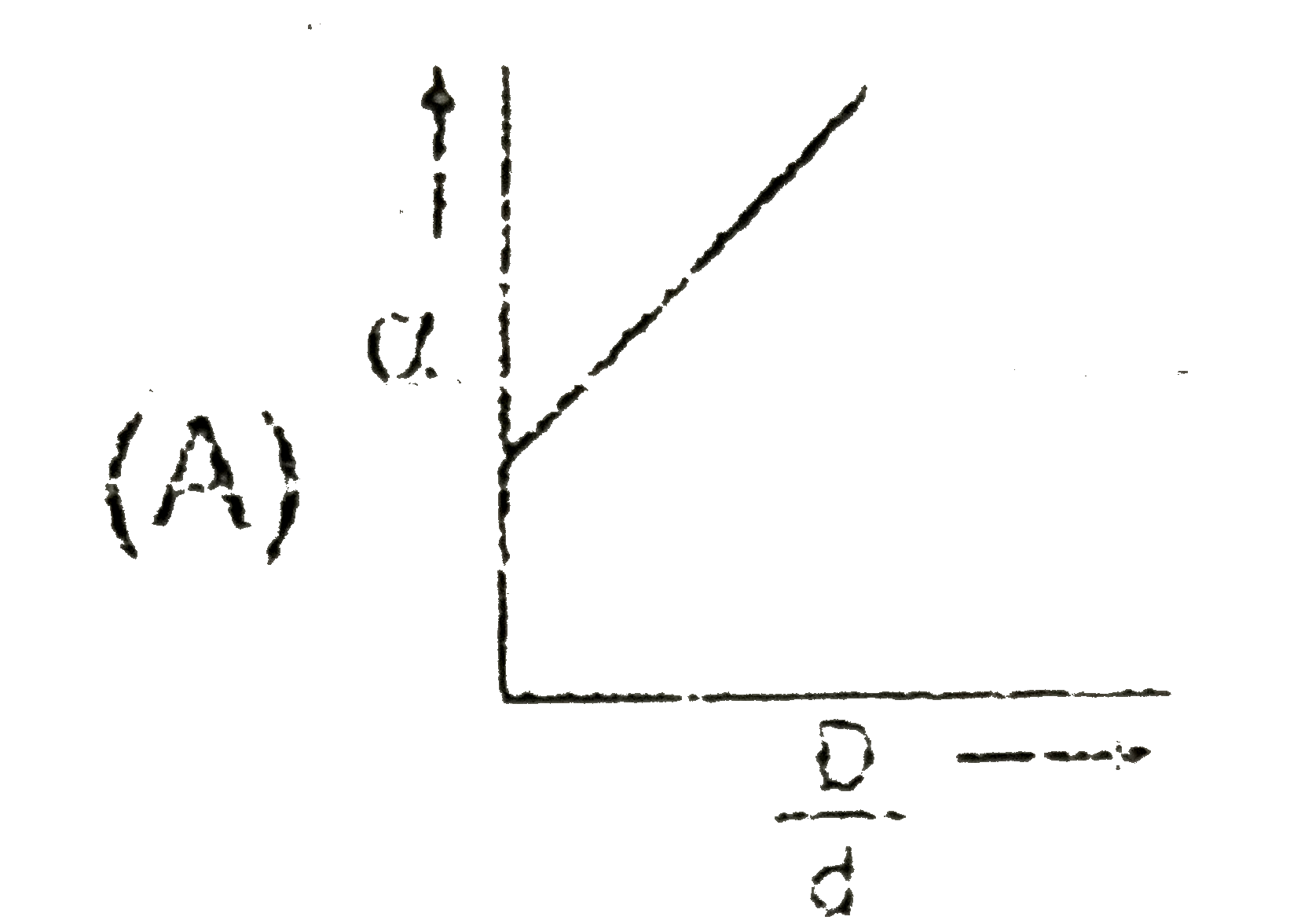
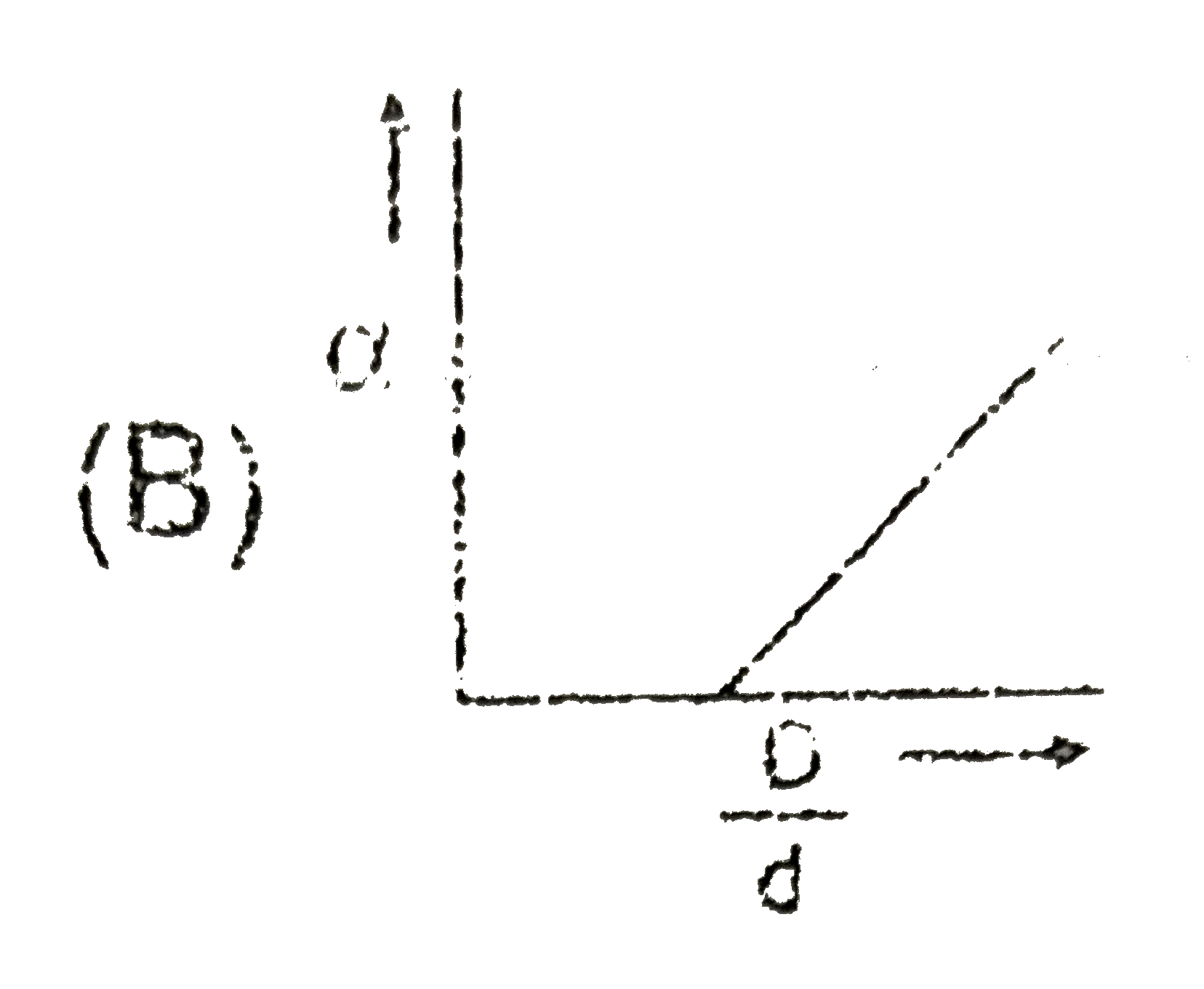
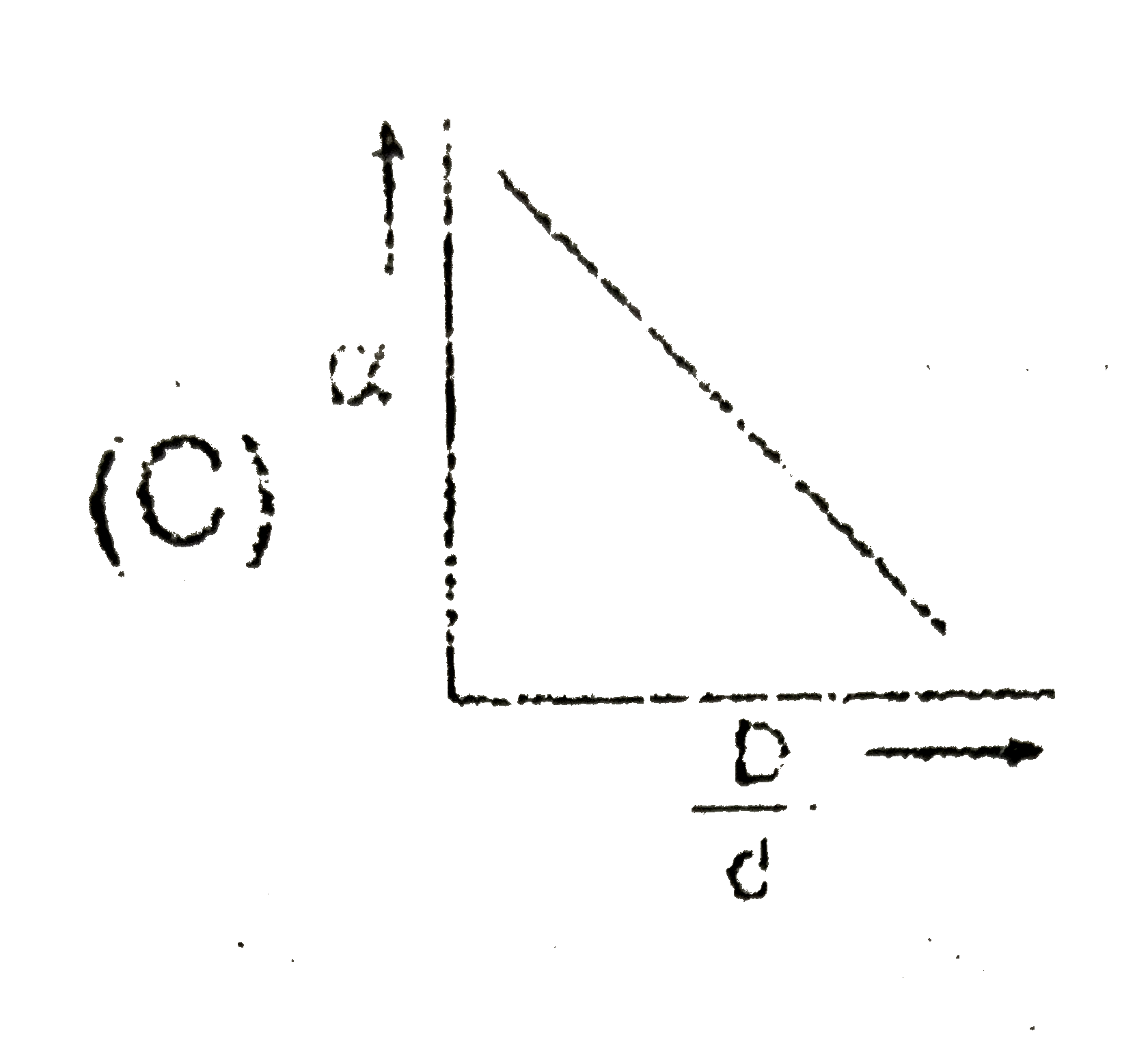
- In the above question, alpha varies with (D)/(d) according to:
Text Solution
|
- For the reaction N2O4 hArr 2NO2(g), if percentage dissociation of N2O4...
Text Solution
|
- At a certain temperature T, a compound AB(4)(g) dissociates as 2AB(4...
Text Solution
|
- The degree of dissociation of PCI(5) (alpha) obeying the equilibrium, ...
Text Solution
|
- At 727^(@)C and 1.2 atm of total equilibrium pressure, SO(3) is partia...
Text Solution
|
- Consider the following hypothetical equilibrium 2B(g)hArrB(2)(g) I...
Text Solution
|
- The vapour density of fully dissociated NH(4)Cl would be
Text Solution
|
- The degree of dissociation is 0.5 at 800K and 2 atm for the gaseous r...
Text Solution
|
- SO(3)(g)hArrSO(2)(g)+(1)/(2)O(2)(g) If observed vapour density of mi...
Text Solution
|
- What is the minimum mass of CaCO3(s), below which it decomposes comple...
Text Solution
|
- In the reaction C(s)+CO(2)(g) hArr 2CO(g), the equilibrium pressure is...
Text Solution
|
- Solid ammonium cabamate dissociae to give ammonia and carbon dioxide a...
Text Solution
|
- For NH(4)HS(s)hArrNH(3)(g)+H(2)S(g) reaction started only with NH(4)HS...
Text Solution
|
- Consider the decomposition of solid NH(4)HS in a flask containing NH(3...
Text Solution
|
- What is the relative humidity of air at 1 bar pressure and 313K temper...
Text Solution
|
- For the equilibrium CuSO(4)xx5H(2)O(s)hArrCuSO(4)xx3H(2)O(s) + 2H(2)O(...
Text Solution
|
- (a) CuSO(4).5H(2)O(s)hArrCuSO(4).3H(2)O(s)+2H(2)O(g) K(p)=4xx10^(-4)at...
Text Solution
|
- For the equilibrium CuSO(4)xx5H(2)O(s)hArrCuSO(4)xx3H(2)O(s) + 2H(2)O(...
Text Solution
|