Home
Class 11
CHEMISTRY
In which cases delocalisation of charge ...

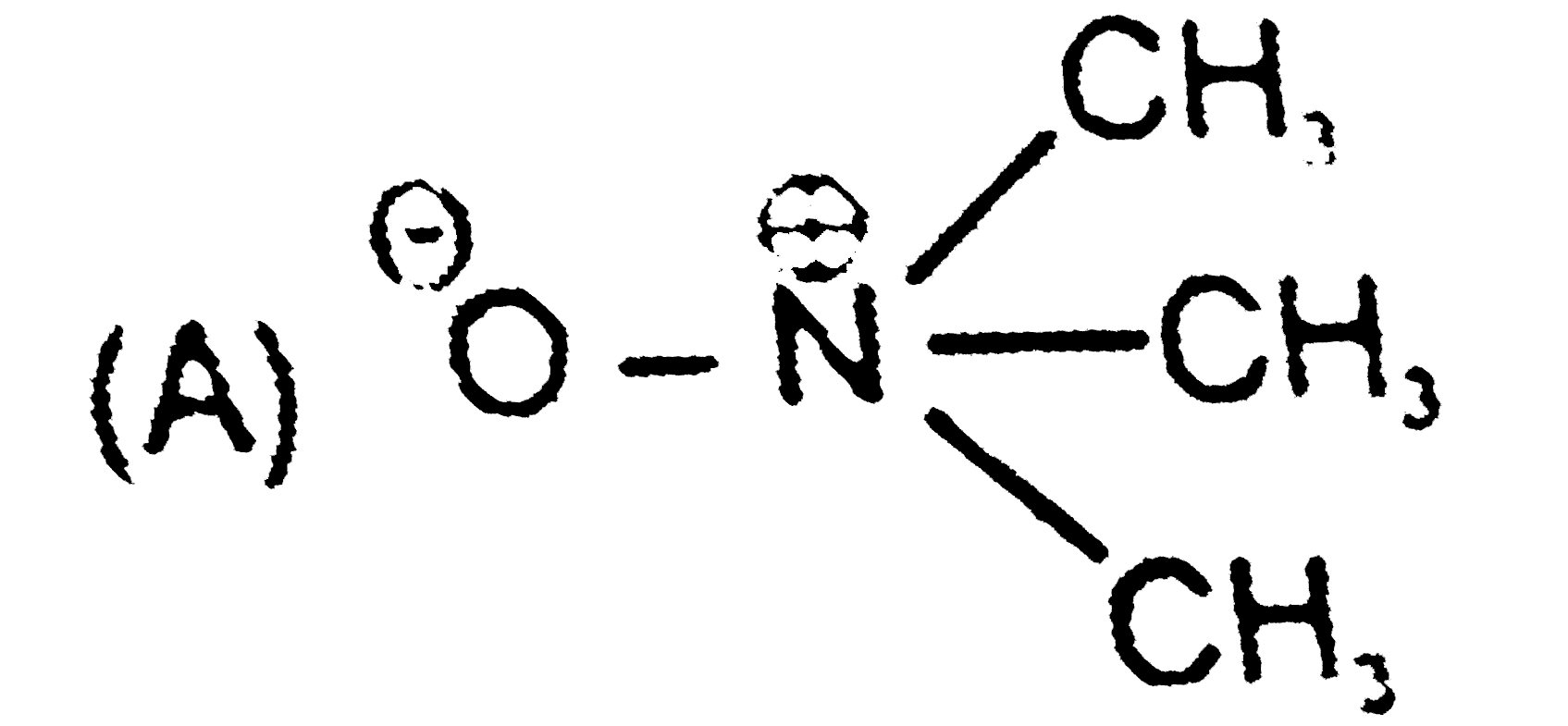
In which cases delocalisation of charge is possible ?

A

B

`overset(Theta)O-P(CH_(3))_(2)`

C

`overset(Theta)O-overset(o+)P(CH_(3))_(2)`

D

`overset(Theta)O-B(CH_(3))_(2)`

Text Solution

Verified by Experts

The correct Answer is:

B, C, D

(Nitrogen does not have empty p/d orbitals).


Promotional Banner

Topper's Solved these Questions

  • GENERAL ORGANIC CHEMISTRY-I

    RESONANCE|Exercise PART-III : PRACTICE TEST-13|1 Videos
  • GENERAL ORGANIC CHEMISTRY-I

    RESONANCE|Exercise PART-III : PRACTICE TEST-14|1 Videos
  • GENERAL ORGANIC CHEMISTRY-I

    RESONANCE|Exercise PART-III : PRACTICE TEST-11|1 Videos
  • GENERAL ORGANIC CHEMISTRY II

    RESONANCE|Exercise Part-III: Section-5: Matching List Type|1 Videos
  • HYDROGEN AND ITS COMPOUNDS

    RESONANCE|Exercise INORGANIC CHEMISTRY(Hydrogen & its compunds Y environment chemistry)|33 Videos

Similar Questions

Explore conceptually related problems

In which delocalisation of positive charge is possible

In which delocalisation of positive charge is possible?

In which of the following carbocations, delocalisation of positive charge is possible :

In which case formation of butane nitrile is possible ?

Mark against the correct answer: With the angles given below, in which case the construction of triangle is possible?

Resonance is delocalisation of :

In which of the following , delocalisation of pi- electrons is/are possible?

In which case, a spontaneous reaction is possible at any temperature?

RESONANCE-GENERAL ORGANIC CHEMISTRY-I-PART-III : PRACTICE TEST-12
  1. In which cases delocalisation of charge is possible ?

    Text Solution

    |