Home
Class 11
CHEMISTRY
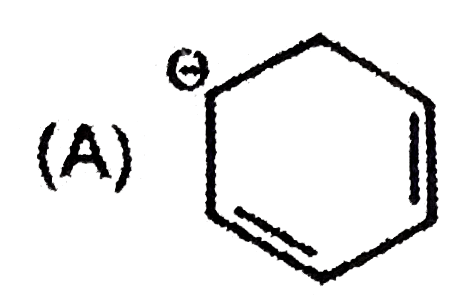
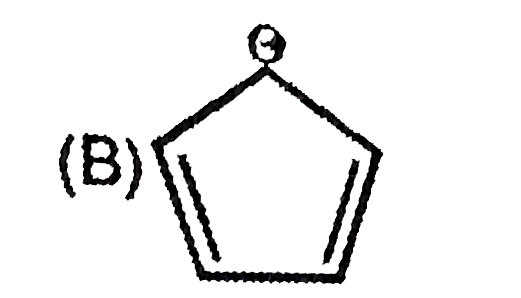
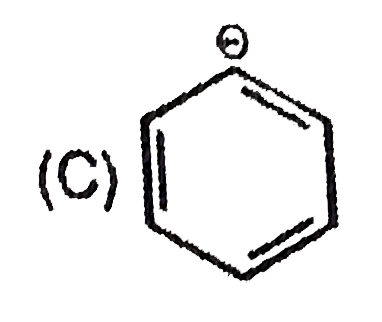
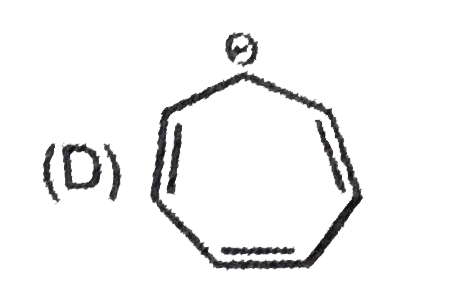
The most stable anion is:...

The most stable anion is:

A

B

C

D

Text Solution

AI Generated Solution

The correct Answer is:

To determine which anion is the most stable, we need to consider the factors that contribute to anion stability, particularly resonance and aromaticity. Here’s a step-by-step breakdown of how to approach this question: ### Step 1: Identify the Anions First, we need to identify the anions we are comparing. Let's assume we have several anions to consider, such as: - Anion A - Anion B - Anion C - Anion D ### Step 2: Analyze Resonance Structures For each anion, we should analyze how many resonance structures can be drawn. The more resonance structures an anion has, the more stable it generally is because the negative charge can be delocalized. - **Anion A**: Draw its resonance structures. Count how many unique structures can be formed. - **Anion B**: Repeat the process for this anion. - **Anion C**: Do the same. - **Anion D**: Finally, analyze this anion. ### Step 3: Evaluate Aromaticity Next, check if any of the anions are aromatic. An aromatic compound is particularly stable due to its cyclic structure and the delocalization of electrons. To be aromatic, a compound must follow Huckel's rule (4n + 2 π electrons). - If any of the anions are aromatic, they will be more stable than non-aromatic ones. ### Step 4: Compare Stability After analyzing resonance and aromaticity: - Compare the number of resonance structures for each anion. - Identify if any anion is aromatic. - The anion with the highest number of resonance structures or the one that is aromatic will be the most stable. ### Step 5: Conclusion Based on the analysis, conclude which anion is the most stable. ### Example Conclusion If Anion B was found to have the most resonance structures and was also aromatic, then Anion B would be the most stable anion.
Promotional Banner

Topper's Solved these Questions

  • GENERAL ORGANIC CHEMISTRY II

    RESONANCE|Exercise Part-III: Match the Column|2 Videos
  • GENERAL ORGANIC CHEMISTRY II

    RESONANCE|Exercise Part-I : Only One Option Correct Type|22 Videos
  • GENERAL ORGANIC CHEMISTRY II

    RESONANCE|Exercise Exercise-1|20 Videos
  • GASEOUS STATE

    RESONANCE|Exercise PHYSICAL CHMISTRY (Gaseous State)|47 Videos
  • GENERAL ORGANIC CHEMISTRY-I

    RESONANCE|Exercise PART-III : PRACTICE TEST-19|1 Videos

Similar Questions

Explore conceptually related problems

The most stable ion is:

The least stable anion is

The most stable carbanion is

In this diagram , the most stable oxidation is

RESONANCE-GENERAL ORGANIC CHEMISTRY II-Part-II Only One Option Correct Type
  1. In which of the following pairs of carbanion the first one is more sta...

    Text Solution

    |

  2. Arrange the following carbanions in decreasing order of stability:

    Text Solution

    |

  3. The most stable anion is:

    Text Solution

    |

  4. Arrange the following carbanions in increasing order of stability:

    Text Solution

    |

  5. Among the following, the paramagnetic species is:

    Text Solution

    |

  6. The stability of given free radicals in decreasing order is: (i) CH(...

    Text Solution

    |

  7. Which of the following is the correct order of stability of free radic...

    Text Solution

    |

  8. Most stable radical among the following is :

    Text Solution

    |

  9. Arrange the following radicals in decreasing order of their stability.

    Text Solution

    |

  10. Least stable radical among the following is :

    Text Solution

    |

  11. The most unstable carbocation is:

    Text Solution

    |

  12. The most stable carbocation is:

    Text Solution

    |

  13. Which of the following shows the correct order of decreasing stability...

    Text Solution

    |

  14. Which of the following is the arranged more stable carbocation of the ...

    Text Solution

    |

  15. Most stable rearranged form of given carbocations is:

    Text Solution

    |

  16. Which of the following in the rearranged in the rearranged more stable...

    Text Solution

    |

  17. The correct basic strength order of following anions is:

    Text Solution

    |

  18. Which of the following shows the correct order of decreasing basicity ...

    Text Solution

    |

  19. Find the order of basic strength .(If R=Me) ? (I) R(4)N^(+)OH^(-) " ...

    Text Solution

    |

  20. Which of the following cannot be a base?

    Text Solution

    |
