

Home
Class 12
PHYSICS
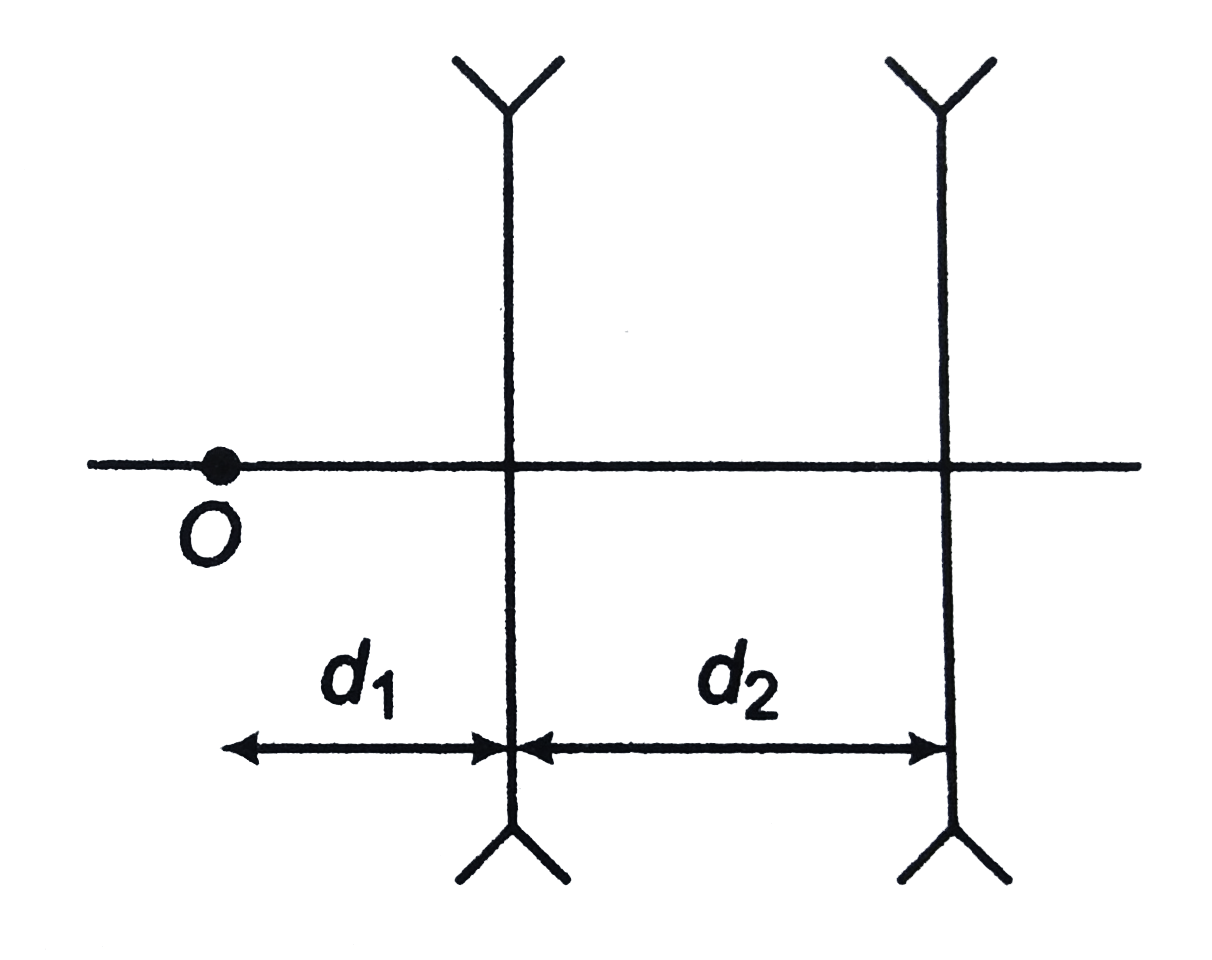
Two diverging lenses are kept as shown i...

Two diverging lenses are kept as shown in figure. The final image formed will be

Promotional Banner

Similar Questions

Explore conceptually related problems

The final image formed by microscope is

A point ofject 'O' lies in front of the lens as shown in figure. Find the final position of image formed by the combined lenses.

A point ofject 'O' lies in front of the lens as shown in figure. Find the final position of image formed by the combined lenses.

An object P is kept in front of two plane mirrors as shown in the figure. The number of image formed is k. Find out the value of k.

An object P is kept in front of two plane mirrors as shown in the figure. The number of image formed is k. Find out the value of k.

For the system as shown in the figure, the image formed by the concave mirror

For the system as shown in the figure, the image formed by the concave mirror

Two convex lenses of focal length 20cm each are placed coaxially with a separation of 60cm between them. Find the image of a distant object formed by the combination by: a. Using thin lense formul separately for the two lenses, and b. Using the equivalent lens. Note that although the combination forms a real image of a distant object on the other side, it is equivalent to a diverging lens as far as the location of the final image is concerned.

Two convex lenses f focal length 20 cm each are placed coaxially with a separation of 60 cm between them. find the image of a distance object formed by the combination by a. using thin les formula separately for the two lenses and b. using the equivalent lens. Note that although the combination forms a real image of as distance object on the other side, it is equivalent to as diverging lens as far as the locatiion of the final image is concerned.

Two convex lenses f focal length 20 cm each are placed coaxially with a separation of 60 cm between them. find the image of a distance object formed by the combination by a. using thin les formula separately for the two lenses and b. using the equivalent lens. Note that although the combination forms a real image of as distance object on the other side, it is equivalent to as diverging lens as far as the locatiion of the final image is concerned.