

Home
Class 12
PHYSICS
A metal surface in an evacuated tube is ...


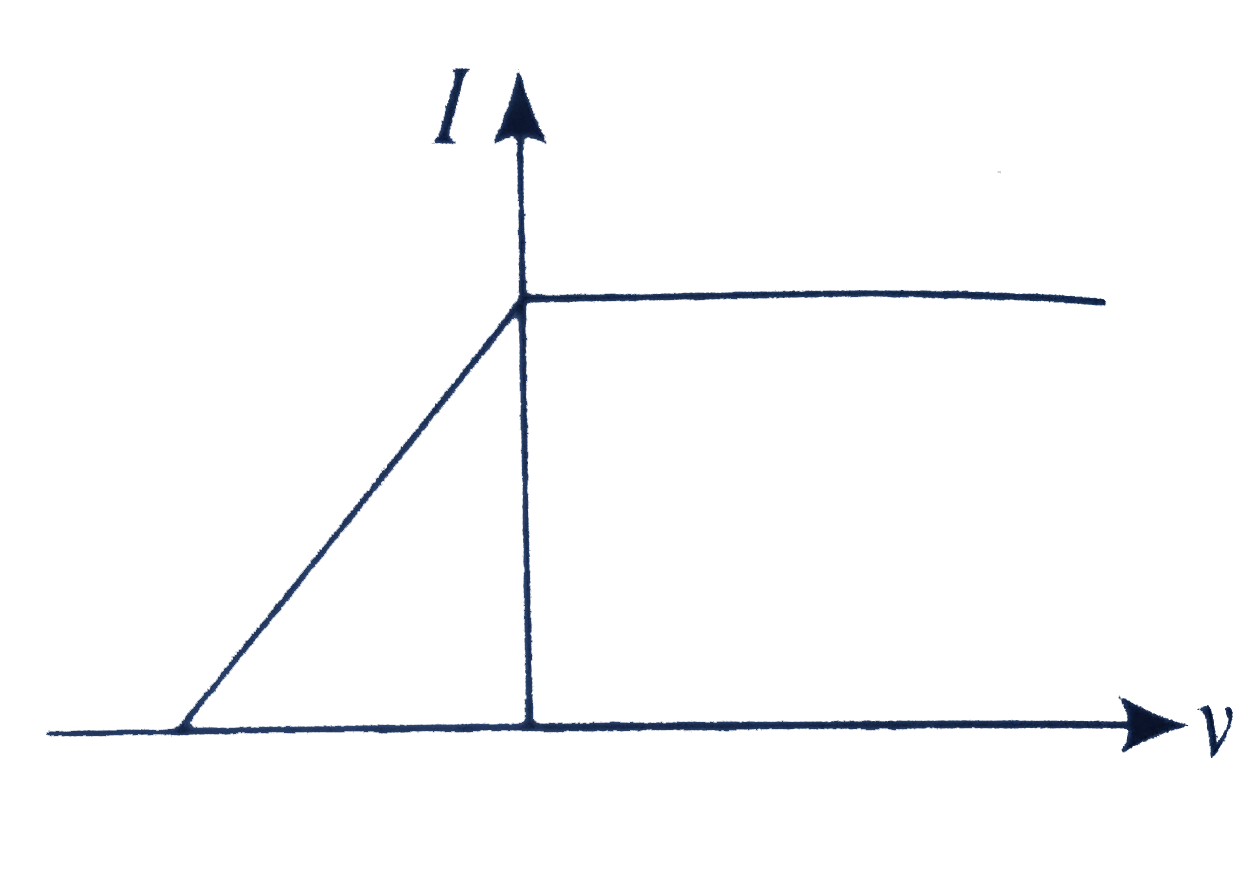
A metal surface in an evacuated tube is illuminated with monochromatic light causeng the emission of photoelectrons which are collected at an adjacent electrode. For a given intensity of light, the in which the photocurrent I depends in the potential difference V between the electrodes is shown by approximate graphi in Fig. If the experiment were repeated with light of twice the intensit but the same wavelength, which of the graphs below would best represent the new relation between I and V? (In these graphs, the result of the original experiment is idicated by a broken line.)

Promotional Banner

Similar Questions

Explore conceptually related problems

A metal surface in an evacuated tube is illuminated with monochromatic light causing the emission of photoelectrons. For a given intensity of light, a graph between saturation current and potential of the electrode is given in Fig. If the experiment were repeated with light of twice the intensity but the same wavelength, which of the graphs below would best represent the new relation between I and V?(Dotted represents initial condition)

A metal surface in an evacuated tube is illuminated with monochromatic light causing the emission of photoelectrons. For a given intensity of light, a graph between saturation current and potential of the electrode is given in Fig. If the experiment were repeated with light of twice the intensity but the same wavelength, which of the graphs below would best represent the new relation between I and V?(Dotted represents initial condition)

When a metal surface is exposed with a monochromatic light, then all the photoelectrons are not emitted from the metal surface with the same kintetic energy. Why?

When a metallic surface is illuminated with monochromatic light of wavelength lambda stopping potential for photoelectric current is 3 V_(0) . When the same metal surface Illuminated with a light of wavelength 2lambda , the stopping potential is V_(0) The threshold wavelength for the surface is

When a metallic surface is illuminated with monochromatic light of wavelength X, the stopping potential is 5Vq. When the same surface is illuminated with light of wavelength 3X, the stopping potential is Then the work function of the metallic surface is

A metallic surface is irradiated with monochromatic light of variable wavelength. Above a wavelength of 5000 Å no photoelectrons are emitted from the surface. With an unknown wavelength, stopping potential fo 3V is neceddsry ot eliminate the photocurrent. Find the unknown wavelenght.

A metallic surface is irradiated with monochromatic light of variable wavelength. Above a wavelength of 5000 Å no photoelectrons are emitted from the surface. With an unknown wavelength, stopping potential fo 3V is neceddsry ot eliminate the photocurrent. Find the unknown wavelenght.

When a metallic surface is illuminated with monochromatic light of wavelength lambda , the stopping potential is 5 V_0 . When the same surface is illuminated with the light of wavelength 3lambda , the stopping potential is V_0 . Then, the work function of the metallic surface is

When a metallic surface is illuminated with monochromatic light of wavelength lambda , the stopping potential is 5 V_0 . When the same surface is illuminated with the light of wavelength 3lambda , the stopping potential is V_0 . Then, the work function of the metallic surface is