Home
Class 12
CHEMISTRY
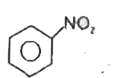
Which of the following is most reactive...

Which of the following is most reactive towards electrophillic aromatic substitution for halogen ?

A

B

C

D

Text Solution

AI Generated Solution

The correct Answer is:

To determine which compound is most reactive towards electrophilic aromatic substitution for halogen, we need to analyze the substituents on the aromatic ring and their effects on reactivity. Here’s a step-by-step solution: ### Step 1: Identify the Substituents List the substituents present on the aromatic compounds in the options provided. Common substituents include alkyl groups (like CH3), halogens (like Cl), and electron-withdrawing groups (like NO2). ### Step 2: Determine the Nature of Each Substituent Evaluate whether each substituent is an electron-donating group (EDG) or an electron-withdrawing group (EWG): - **Electron-Donating Groups (EDGs)**: These groups increase the electron density on the aromatic ring, making it more reactive towards electrophiles. Examples include alkyl groups (like CH3) and groups that exhibit resonance donation. - **Electron-Withdrawing Groups (EWGs)**: These groups decrease the electron density on the aromatic ring, making it less reactive towards electrophiles. Examples include nitro groups (NO2) and halogens (like Cl). ### Step 3: Analyze the Effects of Each Substituent - **CH3 Group**: This is an EDG due to hyperconjugation and inductive effects, increasing the reactivity of the aromatic ring. - **NO2 Group**: This is a strong EWG, significantly decreasing the reactivity of the aromatic ring. - **C2F5 Group**: This group has an alkyl component, which can act as an EDG, but the presence of fluorine atoms can also introduce some electron-withdrawing character. - **Cl Group**: This is an EWG due to its -I (inductive) effect, although it can have some resonance donation. ### Step 4: Compare the Reactivity Among the groups: - The CH3 group is the strongest EDG and will make the aromatic ring highly reactive towards electrophilic substitution. - The C2F5 group has some EDG characteristics but is less effective than CH3 due to the presence of electronegative fluorine atoms. - The NO2 and Cl groups are both EWGs, which will decrease reactivity. ### Conclusion The compound with the CH3 group is the most reactive towards electrophilic aromatic substitution for halogen due to its strong electron-donating effect. **Final Answer**: The compound with the CH3 group (alkyl group) is the most reactive towards electrophilic aromatic substitution for halogen. ---
Promotional Banner

Topper's Solved these Questions

  • HALOALKANES AND HALOARENES

    AAKASH INSTITUTE|Exercise ASSIGNMENT SECTON - A|45 Videos
  • HALOALKANES AND HALOARENES

    AAKASH INSTITUTE|Exercise ASSIGNMENT SECTION - B|25 Videos
  • HALOALKANES AND HALOARENES

    AAKASH INSTITUTE|Exercise Try Yourself|40 Videos
  • GENERAL PRINCIPLES AND PROCESSES OF ISOLATION OF ELEMENTS

    AAKASH INSTITUTE|Exercise Try Yourself|33 Videos
  • HYDROCARBONS

    AAKASH INSTITUTE|Exercise Assignment(Section - D) (Assertion -Reason Type Question)|24 Videos

Similar Questions

Explore conceptually related problems

Which of the following is the most reactive towards eklectrophilic aromatic substitution?

Which of the following is the most reactive towards electrophilic attack ?

Which one of the following is most reactive towards electrophilic attack?

Which one of the following is most reactive towards electrophilic reagent ?

AAKASH INSTITUTE-HALOALKANES AND HALOARENES -EXERCISE
  1. Which of the following will react most readily with HI ?

    Text Solution

    |

  2. The isomer of C(6)H(14) which will give maximum number of monochlorode...

    Text Solution

    |

  3. Which of the following is most reactive towards electrophillic aromat...

    Text Solution

    |

  4. Amongst the C-X bond the correct bond energy order is

    Text Solution

    |

  5. Which of the following has highest boilling point ?

    Text Solution

    |

  6. Out of the following compounds which one will have zero dipole moment ...

    Text Solution

    |

  7. Treatment of ammonia with excess of ethyl chloride will yield

    Text Solution

    |

  8. Identity Z in the following sequence

    Text Solution

    |

  9. Most reactive halide towards S(N^(1)) reactions is

    Text Solution

    |

  10. Which of the following is most reactive toward nucleophilic substituti...

    Text Solution

    |

  11. NBS is a specific reagent for

    Text Solution

    |

  12. In reaction C(2)H(5)OH+Hxoverset(ZnX(2))rarrC(2)H(5)X+H(2)O the order ...

    Text Solution

    |

  13. Which of the following is not true for S(N^(1)) reaction ?

    Text Solution

    |

  14. 2-Chloro-2-methylpropane on reaction with aqueous KOH gives X as the m...

    Text Solution

    |

  15. Which of the following does not form Grignard reagent on reaction with...

    Text Solution

    |

  16. 1-phenyl-2-chloropropane on treating with alc. KOH gives mainly

    Text Solution

    |

  17. An alkyl halide on reaction with sodium in the presence of ether gives...

    Text Solution

    |

  18. Ethyl bromide reacts with lead sodium alloy to form:

    Text Solution

    |

  19. Allybromide on dehydrobromination gives

    Text Solution

    |

  20. Identify the major product

    Text Solution

    |
