

Home
Class 11
PHYSICS
With two hands you hold a cone motionles...

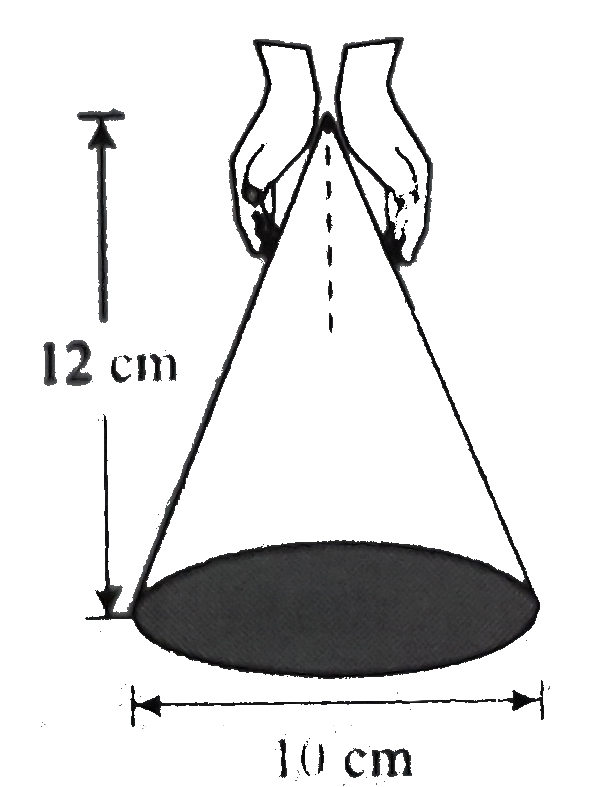
With two hands you hold a cone motionless upside doen , as shown in figure The mass of the cone is `(m = 1 kg)` and the coefficient of static friction between you fingers and the cone is `(mu = 0.5)` what is the minimum normal force you must applywith each hand in order to hold up the cone? Consider only translational equilibruim

Promotional Banner

Similar Questions

Explore conceptually related problems

Consider an object of mass 2 kg resting on the floor. The coefficient of static friction between the object and the floor is mu_8 = 0.8. What force must be applied on the object to move it?

The coefficient of static friction between the two blocks shown in figure is mu and the table is smooth. What maximum horizontal forced F can be applied to he block of mass M so that the block move together?

The coefficient of static friction between the two blocks shown in figure is mu and the table is smooth. What maximum horizontal forced F can be applied to he block of mass M so that the block move together?

The coefficient of static friction between the two blocks shown in figure is mu and the table is smooth. What maximum horizontal forced F can be applied to he block of mass M so that the block move together?

The coefficient of static friction between the two blocks shown in figure is mu and the table is smooth. What maximum horizontal forced F can be applied to he block of mass M so that the block move together?

A fireman of mass 60 kg slides down a pole. As shown in figure. He is pressing the pole with a force of 600 N. The coefficient of friction between the hands and the pole is 0.5. With wht acceleration will the fireman slide down (g=10 m//s^(2))

A fireman of mass 60 kg slides down a pole. As shown in figure. He is pressing the pole with a force of 600 N. The coefficient of friction between the hands and the pole is 0.5. With wht acceleration will the fireman slide down (g=10 m//s^(2))

A block of mass 10 kg is kept on a rough inclined plane as shown in the figure. A force of 3 N is applied on the block. The coefficient of static friction between the plane and the block is 0.6 What should be the minimum value of force P, such that the block doesnot move downward? (take g=10ms^(-2) )

A block of mass 10 kg is kept on a rough inclined plane as shown in the figure. A force of 3 N is applied on the block. The coefficient of static friction between the plane and the block is 0.6 What should be the minimum value of force P, such that the block doesnot move downward? (take g=10ms^(-2) )

A block of mass 10 kg is kept on a rough inclined plane as shown in the figure. A force of 3 N is applied on the block. The coefficient of static friction between the plane and the block is 0.6 What should be the minimum value of force P, such that the block doesnot move downward? (take g=10ms^(-2) )