

Home
Class 12
CHEMISTRY
A line which bisects a compound in two e...

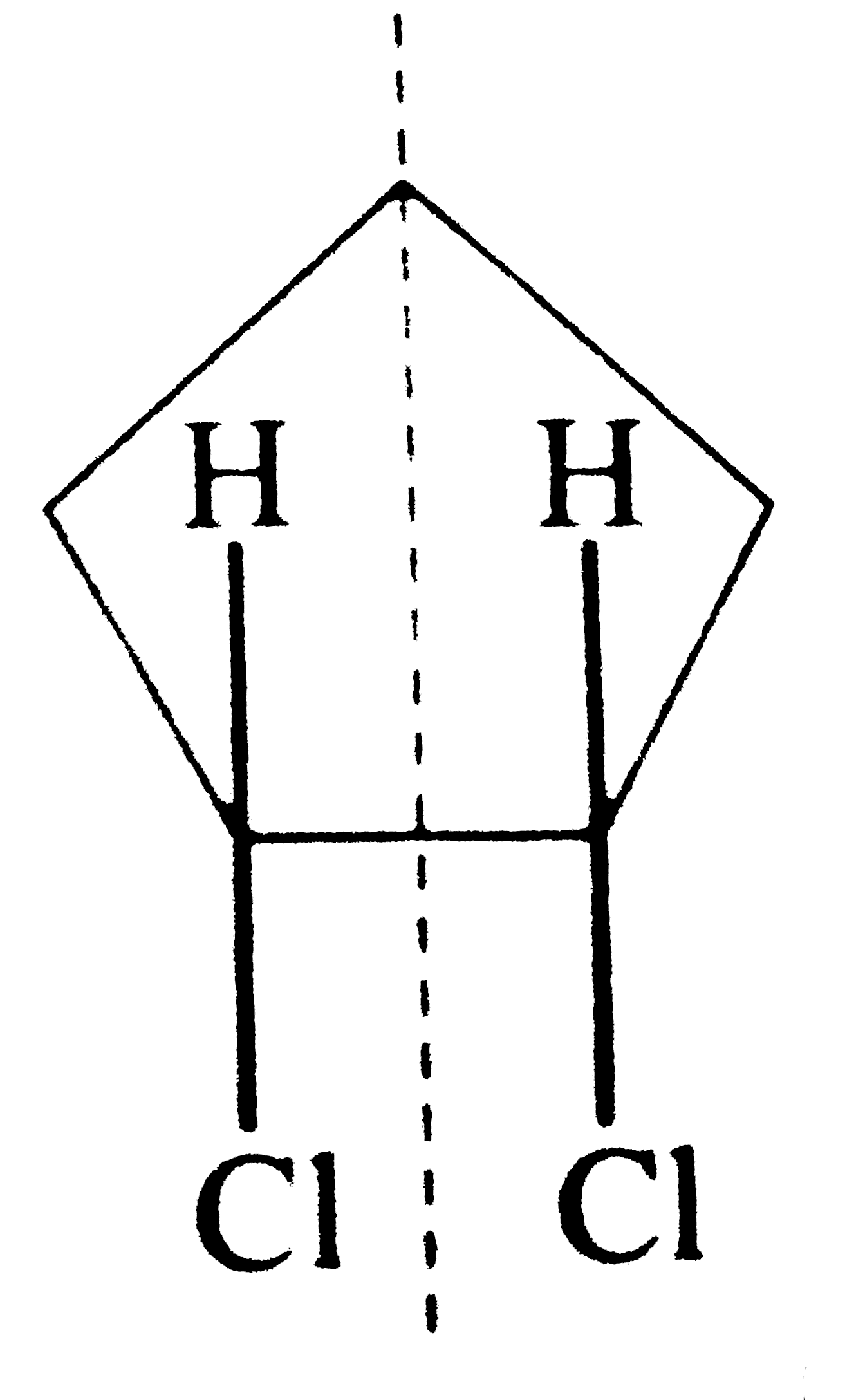
A line which bisects a compound in two equal parts and both parts appear to be the mirror image of each other, such kind of symmetry is known as plane of symmetry

Any molecule that has a internald mirror palne of symmetry cannot be chiral, even thought it may contain asymmetric carbon atoms.
Which of the following compounds is not chiral?

Promotional Banner

Similar Questions

Explore conceptually related problems

A line which bisects a compound in two equal parts and both parts appear to be the mirror image of each other, such kind of symmetry is known as plane of symmetry Any molecule that has a internald mirror palne of symmetry cannot be chiral, even thought it may contain asymmetric carbon atoms. Which of the following compounds does not contain plane of symmetry?

A line which bisects a compound in two equal parts and both parts appear to be the mirror image of each other, such kind of symmetry is known as plane of symmetry Any molecule that has a internald mirror palne of symmetry cannot be chiral, even thought it may contain asymmetric carbon atoms. Which of the following compound optically active?

Which of the following compounds contains two Chiral carbon atoms?

The necessary condition for a molecule to exhibit optical isomerism is dissymmetry or chiral. Thus all organic compounds which contain one assymetric carbon atom are chiral and exist in two stereoisomers. Although the two forms have the same structure, they have different arrangements of groups about the assymmetric carbon. In fact, they represent assymetric molecules. They do not have a plane of symmetry. They are related to each other as an object to its miror image and are non superimposable. The two structures actually stand for dextro or (+) and leavo or (-) isomers. Since they are related each other as mirror images, they are commonly called enantiomers. Which of the following compounds is optically inactive

A compound whose molecule is superimposabel on its mirror image despite containing chiral carbon atoms is called:

A compound whose molecule is superimposabel on its mirror image despite containing chiral carbon atoms is called: