

Home
Class 12
PHYSICS
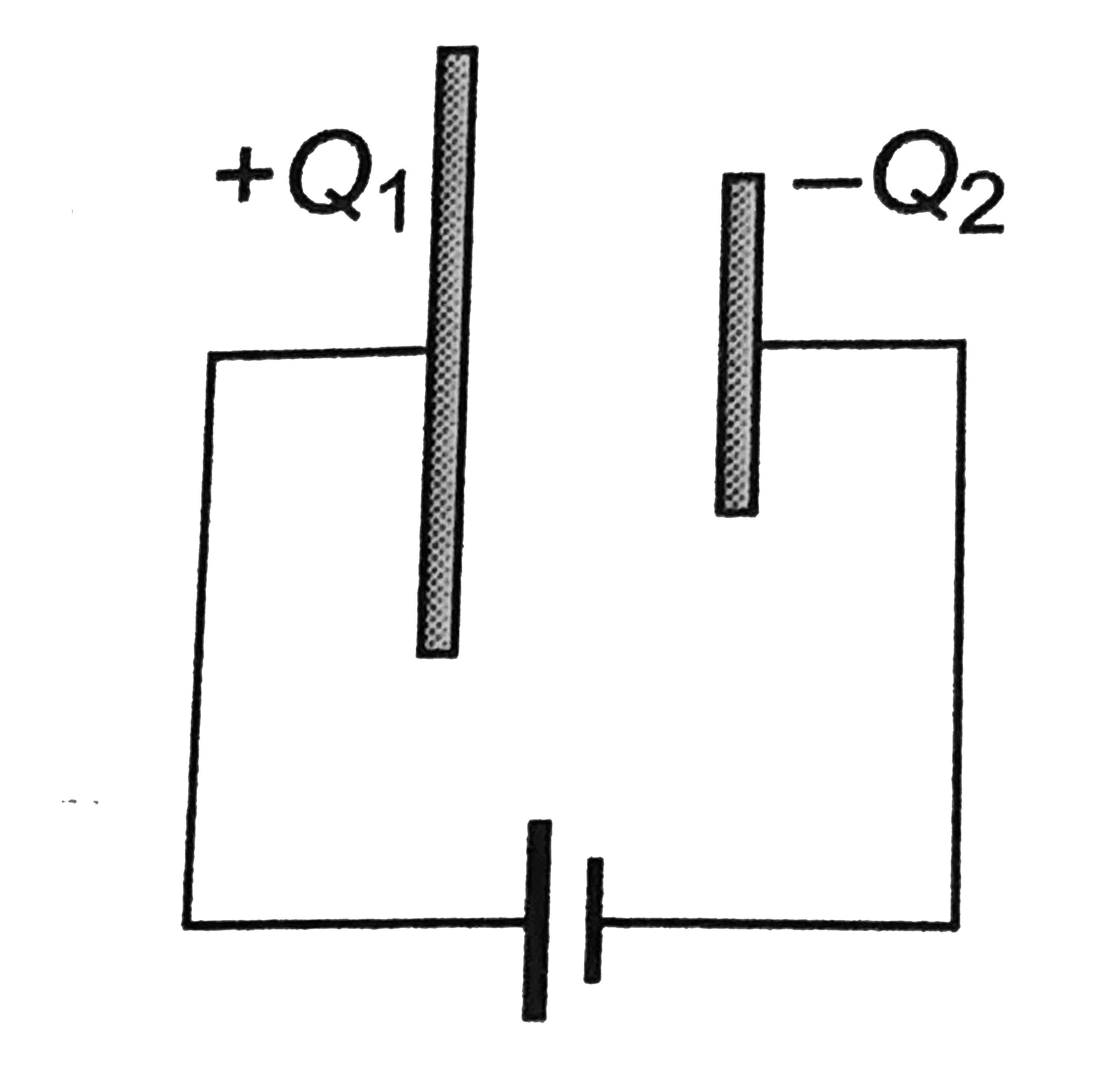
Consider a parallel plate capaciter havi...

Consider a parallel plate capaciter having plates of unequal area. When a battery supplies `+Q_(1)` and `-Q_(2)` charges to two plates.

Promotional Banner

Similar Questions

Explore conceptually related problems

Consider a parallel plate capacitor having charge Q. Then,

A parallel-plate capacitor has plates of unequal area . The larger plates is connected to the positive terminal of the battery and the smaller plate to its nagative terminal. Let Q+ and Q-be the charges appearing on the positive and negative plates respectively

A parallel-plate capacitor has plates of unequal area . The larger plates is connected to the positive terminal of the battery and the smaller plate to its nagative terminal. Let Q+ and Q-be the charges appearing on the positive and negative plates respectively

A parallel-plate capacitor haas plates of unequal area . The large r plates is connected to the positive terminal of the brttery and the smaller plate to its nagative terminal. Let Q, and Q_ be the charges appearing on the positive and negative appearing on the

(a) Derive the expression for the capacitance of a parallel plate capacitor having plate area A and plate separation d. (b) Two charged spherical conductors of radii R_(1) and R_(2) when connected by a conducting wire acquire charges q_(1) and q_(2) respectively. Find the ratio of their surface charge densities in terms of their radii.

In the figure shown the plates of a parallel plate capacitor have unequal charges. Its capacitance is 'C' P is a point outside the capacitor and close to the plate of charge -Q . The distance between the plates is 'd'

In a parallel-plate capacitor of plate area A , plate separation d and charge Q the force of attraction between the plates is F .

In a parallel-plate capacitor of plate area A , plate separation d and charge Q the force of attraction between the plates is F .

In an isolated parallel plate capacitor of capacitance C , the plates have charge Q_(1) and Q_(2) . The potential difference between the plates is

In figure , the plates of a parallel plate capacitors have unequal charges. Its capacitance is C. P is a point outside the capacitor and close to the plate of charge -Q. The distance between the plates is d. Then