

Home
Class 12
PHYSICS
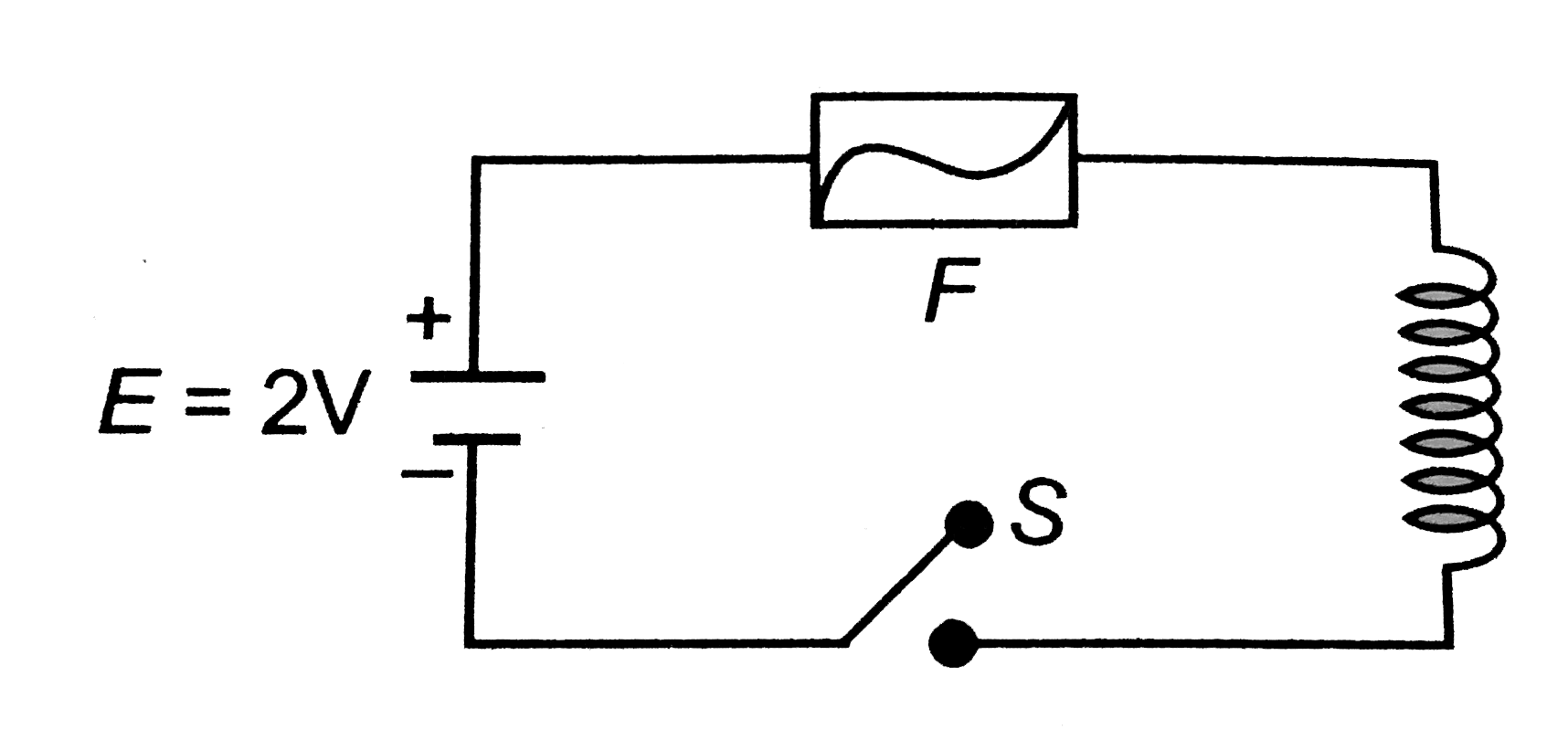
In the circuit shown, the cell is deal. ...

In the circuit shown, the cell is deal. The coil has an inductance of `4H` and zero resistance. `F` is a fuse of zero resistance and will blow when the current through it reaches `5 A`. The switch is closed at `t=0`. The fuse will blow:

Promotional Banner

Similar Questions

Explore conceptually related problems

In the circuit shows Fig the cell is ideal. The coil has an inductance of 4 H and zero resistance. F is a fuse of zero resistance and will blow when the current through it reaches 5 H . The switch is closed at t= 0 . The fuse will blow

In the circuit shows Fig the cell is ideal. The coil has an inductance of 4 H and zero resistance. F is a fuse of zero resistance and will blow when the current through it reaches 5 H . The switch is closed at t= 0 . The fuse will blow

In the circuit shown the cell is ideal. The codil has an inductance of 2H and will blow when the current through it reaches 5a. The switch is closed at t=0. Find the time (in second)n when fuse will blow.

In the circuit shown the cell is ideal. The codil has an inductance of 2H and will blow when the current through it reaches 5a. The switch is closed at t=0. Find the time (in second)n when fuse will blow.

The cell in the circuit shows in Fig is ideal. The coil has an inductance of 4 mH and a resistance of 2 mOmega . The switch is closed at t = 0 . The amount of energy stored in the inductor at t = 2 s is (take e = 3)

The cell in the circuit shows in Fig is ideal. The coil has an inductance of 4 mH and a resistance of 2 mOmega . The switch is closed at t = 0 . The amount of energy stored in the inductor at t = 2 s is (take e = 3)

In the circuit shown, find the value of resistance R in terms of inductance L and capacitance C such that the current through the cell remains constant forever after the switch is closed.

The switch S of the circuit is closed at t = 0. Find the current (in Amp.) through the capacitor when the switch S is closed at t = 0

In a circuit containing an inductance of zero resistances, the e.m.f of the applied AC voltage leads the current by

In a circuit containing an inductance of zero resistance, the e.m.f. of the applied ac voltage leads the current by