

Home
Class 11
PHYSICS
A bead of mass m is fitted on to a rod a...

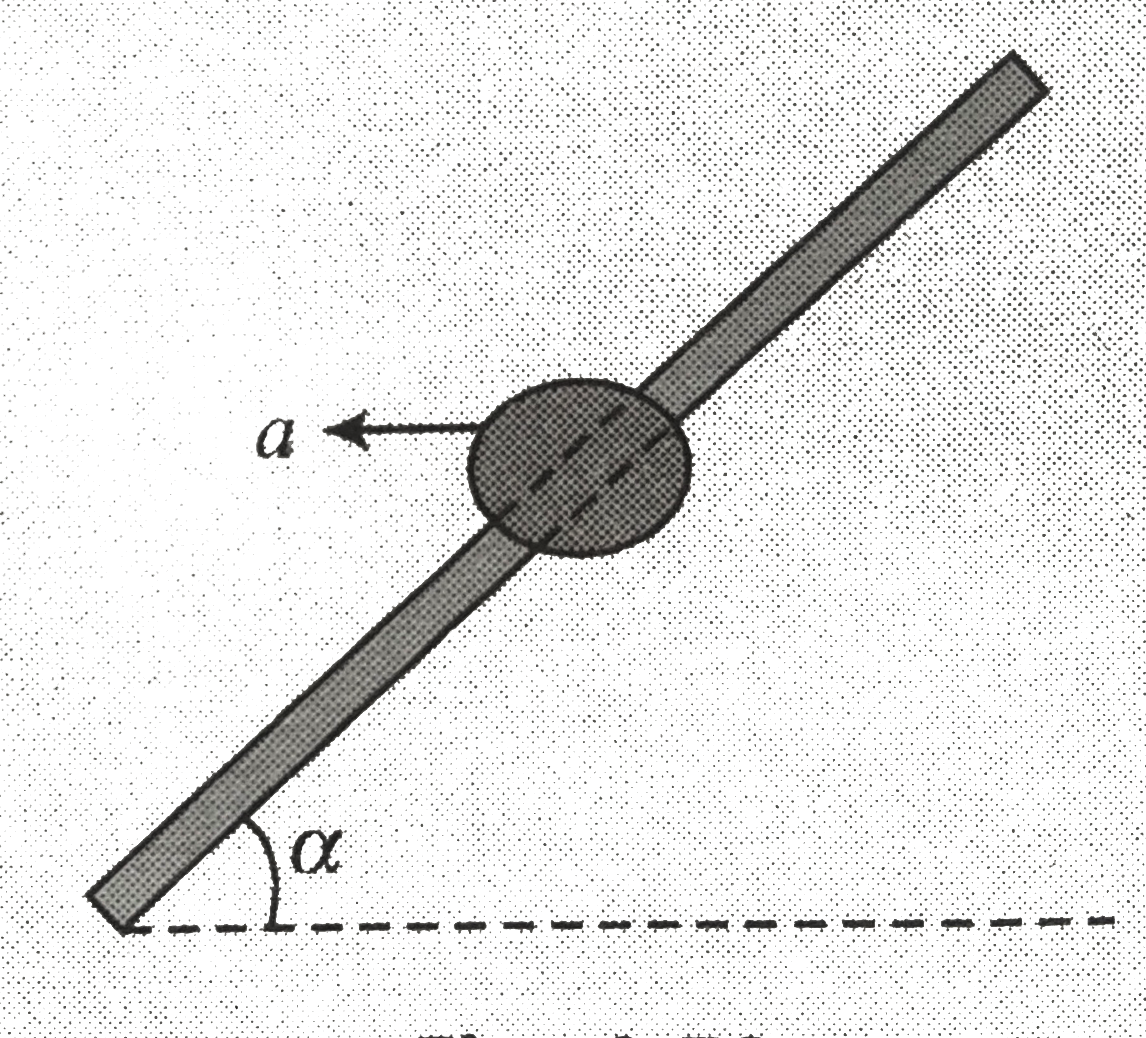
A bead of mass m is fitted on to a rod and can move on it without friction. At the initial moment the bead is in the middle of the rod. The rod moves translationally in a horizontal plane with an acceleration a in a direction forming an angle `alpha` with the rod. Find the acceleration of the bead relative to the rod.

Promotional Banner

Similar Questions

Explore conceptually related problems

A bead of mass m is fitted on a rod and can move on it without friction. Initially the bead is at the middle of the rod moves transitionally in the vertical plane with an accleration a_(0) in direction forming angle alpha with the rod as shown. The acceleration of bead with respect to rod is: z

A bead of mass m is fitted on a rod and can move on it without friction. Initially the bead is at the middle of the rod moves transitionally in the vertical plane with an accleration a_(0) in direction forming angle alpha with the rod as shown. The acceleration of bead with respect to rod is: z

A bead of mass m moves on a rod without friction. Initially the bead is at the middle of the rod and the rod moves translationally in a vertical plane with an acceleration a_(0) in a direction forming angle theta with the horizontal as shown in the given figure. The acceleration of bead with respect to rod is

A rod touches a disc kept on a smooth horizontal plane. If the rod moves with an acceleration a , the disc rolls on the rod without acceleration a , the disc rools on therod without slidding. Then , the acceleration of the disc w.r.t the rod is

A rod of mass 'm and length L is attached to a L shaped plank at 'A'. rod can move freely about A. A string is tied between rod and plank as shown in figure. Whole system is moving with a constant acceleration g in x-direction If string is cut at any instant then the angular acceleration of rod (with respect to the plank) at that instant is

A uniform rod of mass m and length L is free to rotate in the vertical plane about a horizontal axis passing through its end. The rod initially in horizontal position is released. The initial angular acceleration of the rod is:

A unifrom rod of length l and mass m is free to rotate in a vertical plane about A as shown in Fig. The rod initially in horizontal position is released. The initial angular acceleration of the rod is

A uniform rod of length l and mass m is free to rotate in a vertical plane about A as shown in Fig. The rod initially in horizontal position is released. The initial angular acceleration of the rod is