

Home
Class 11
PHYSICS
A solid sphere of radius r is floating a...

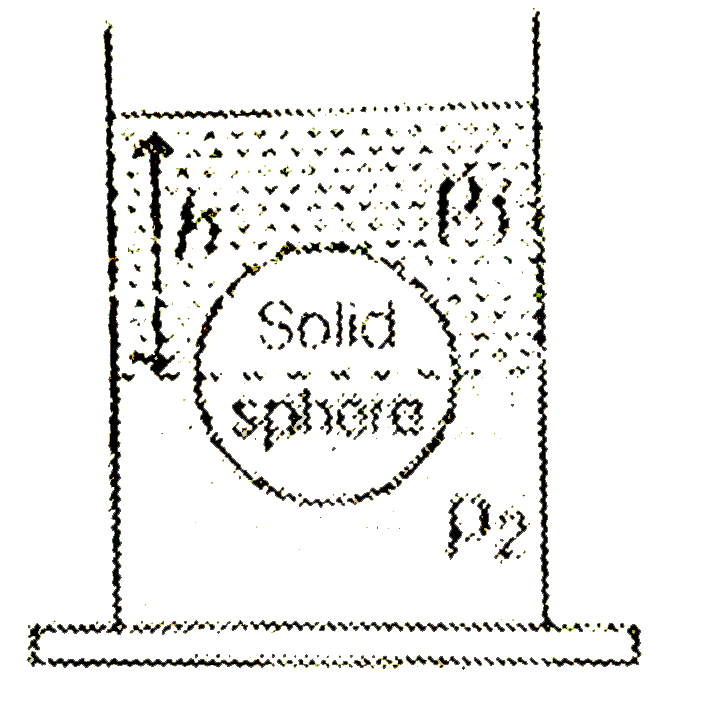
A solid sphere of radius r is floating at the interface of two immiscible liquids of densities `rho_(1)` and `rho_(2)(rho_(2) gt rho_(1))`, half of its volume lying in each. The height of the upper liquid column from the interface of the two liquids is h. The force exerted on the sphere by the upper liquid is (atmospheric pressure `= p_(0)` and acceleration due to gravity is g):

Promotional Banner

Similar Questions

Explore conceptually related problems

A solid sphere having volume V and density rho floats at the interface of two immiscible liquids of densites rho_(1) and rho_(2) respectively. If rho_(1) lt rho lt rho_(2) , then the ratio of volume of the parts of the sphere in upper and lower liquid is

A solid sphere having volume V and density rho floats at the interface of two immiscible liquids of densityes rho_(1) and rho_(2) respectively. If rho_(1) lt rho lt rho_(2) , then the ratio of volume of the parts of the sphere in upper and lower liquid is

A uniform sphere of density rho floats at the interface of two liquids of densities rho_(1) and rho_(2)(>rho_(1)) The sphere has (2)/(3) rd of vertical diameter in denser liquid and remaining part in the other liquid.If a rho=b rho_(1)+c rho_(2) then b+c-a=_______.

A thin uniform tube is bent into a circle of radius r in the vertical plane. Equal volumes of two immiscible liquids, whose densities are rho_(1) and rho_(2) (rho_(1) gt rho_(2)) fill half the circle. The angle theta between the radius vector passing though the common interface and the vertical is :

A spherical ball of radius R is floating at the interface of two liquids with densities rho and 2rho . The volumes of the ball immersed in two liquids are equal. Answer the following questions: If a hole is drilled at the bottom of the vessel then volume of the ball immersed inliquid with density rho will

A cylinder stands vertical in two immiscible liquids of densities rho and 2rho as shown. Find the difference in pressure at point A and B: