


Similar Questions
Explore conceptually related problems
Recommended Questions
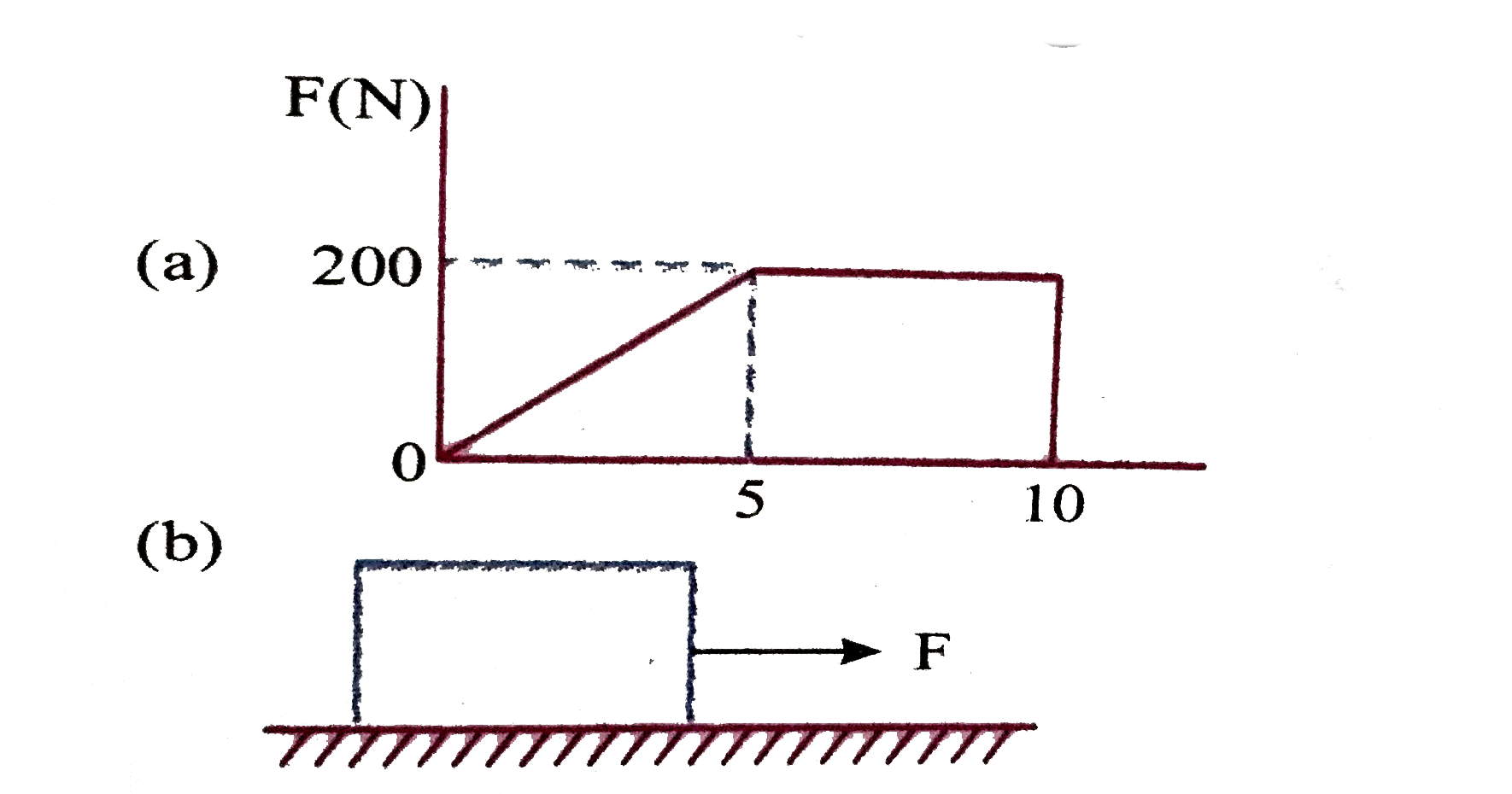
- A 20 kg block is originally at rest on a horizontal surface for which ...
Text Solution
|
- The 10 kg block is resting on the horizontal surface when the force F ...
Text Solution
|
- A 20 kg block is originally at rest on a horizontal surface for which ...
Text Solution
|
- A block of mass 5 kg is lying on a rough horizontal surface. The coeff...
Text Solution
|
- A force of 100N is applied on a block of mass 3 kg as shown in the fig...
Text Solution
|
- A 20 kg block is originally at rest on a horizontal surface for which ...
Text Solution
|
- Two blocks A and B of masses 10 kg and 15 kg are placed in contact wit...
Text Solution
|
- A block of mass 1 kg start moving at t = 0 with speed 2 m//s on rough ...
Text Solution
|
- A block of mass 20 kg is placed on a rough horizontal surface. When a ...
Text Solution
|