 .
.


Similar Questions
Explore conceptually related problems
Recommended Questions
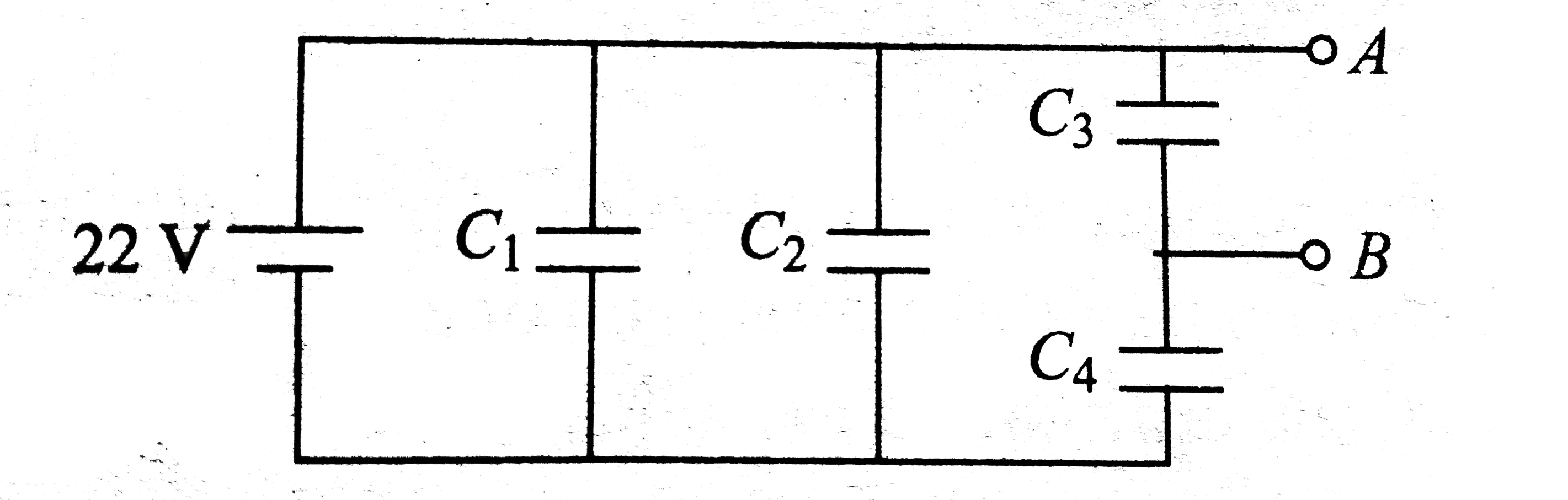
- In, given C(1)=3 muF, C(2)=5muF, C(3)=9 muF, and C(4)=13 muF. What is ...
Text Solution
|
- Four capacitors C(1)=8 muF , C(2)=2 muf, C(3)=6 muF , and C(4)=6, muF ...
Text Solution
|
- In, given C(1)=3 muF, C(2)=5muF, C(3)=9 muF , and C(4)=13 muF . What i...
Text Solution
|
- In the circuit shown in, C(1)=6 muF, C(2)=3 muF , and battery B=20 V ....
Text Solution
|
- In the given network capacitance, C(1) = 10muF, C(2) = 5 muF and C(3) ...
Text Solution
|
- In the given figure the capacitors C(1), C(3), C(4),C(5) have a capaci...
Text Solution
|
- In fig potential difference between the points X and Y, when C(1) = 2 ...
Text Solution
|
- In fig. C(1) = 20 muF, C(2) = 30 muF and C(3) = 15 muF and the insulat...
Text Solution
|
- In the circuit shown, C(1) = C(5) = C(6) = 6.0 muF and C(2) = C(3) = C...
Text Solution
|