Home
Class 12
CHEMISTRY
underset((ii) H(2)O)overset((i) CO(2))(r...

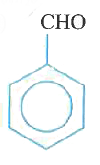
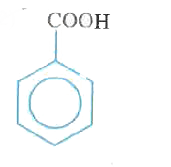
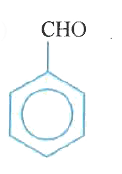
`underset((ii) H_(2)O)overset((i) CO_(2))(rarr)` In the reaction, product P is

A

B

C

D

`C_(6)H_(5) - overset(O)overset(||)(C ) - C_(6) H_(5)`

Text Solution

AI Generated Solution

The correct Answer is:

To solve the problem, we need to analyze the reaction of phenylmagnesium bromide (a Grignard reagent) with carbon dioxide (CO2) and water (H2O). Let's break it down step by step: ### Step 1: Identify the Grignard Reagent The given Grignard reagent is phenylmagnesium bromide, which can be represented as C6H5MgBr. Here, C6H5 (the phenyl group) is the organic part, and MgBr is the metal part. **Hint:** Remember that Grignard reagents are highly reactive and can act as nucleophiles due to the presence of a carbon atom with a partial negative charge. ### Step 2: Reaction with Carbon Dioxide When phenylmagnesium bromide reacts with carbon dioxide (CO2), the nucleophilic carbon (C6H5-) attacks the electrophilic carbon of CO2. The structure of CO2 is O=C=O, where the central carbon is electrophilic. **Hint:** Look for the electrophilic center in CO2 that can be attacked by the nucleophile. ### Step 3: Formation of the Intermediate The attack of the phenyl group on CO2 leads to the formation of a carboxylate intermediate. The reaction can be visualized as follows: 1. The phenyl group (C6H5-) attacks the carbon of CO2. 2. This results in the formation of a compound with a carboxylate group (-COO-) and the magnesium bromide complex. The structure can be represented as: \[ C6H5-C(=O)O^{-}MgBr^{+} \] **Hint:** The product formed after the nucleophilic attack will contain a carboxylate group. ### Step 4: Hydrolysis with Water In the next step, the carboxylate intermediate reacts with water (H2O). The water molecule donates a proton (H+) to the carboxylate oxygen, leading to the formation of a carboxylic acid. The reaction can be summarized as: \[ C6H5-C(=O)O^{-} + H2O \rightarrow C6H5-C(=O)OH + MgBrOH \] The final product is benzoic acid (C6H5COOH). **Hint:** Remember that hydrolysis of the carboxylate ion will yield the corresponding carboxylic acid. ### Step 5: Conclusion The product P formed from the reaction of phenylmagnesium bromide with CO2 and water is benzoic acid (C6H5COOH). **Final Answer:** The product P is benzoic acid (C6H5COOH).

To solve the problem, we need to analyze the reaction of phenylmagnesium bromide (a Grignard reagent) with carbon dioxide (CO2) and water (H2O). Let's break it down step by step: ### Step 1: Identify the Grignard Reagent The given Grignard reagent is phenylmagnesium bromide, which can be represented as C6H5MgBr. Here, C6H5 (the phenyl group) is the organic part, and MgBr is the metal part. **Hint:** Remember that Grignard reagents are highly reactive and can act as nucleophiles due to the presence of a carbon atom with a partial negative charge. ### Step 2: Reaction with Carbon Dioxide ...
Promotional Banner

Topper's Solved these Questions

  • ALDEHYDES, KETONES & CARBOXYLIC ACIDS

    NARAYNA|Exercise EXERCISE -4|30 Videos
  • ALDEHYDES, KETONES & CARBOXYLIC ACIDS

    NARAYNA|Exercise CHECK YOUR GRASP|6 Videos
  • ALDEHYDES, KETONES & CARBOXYLIC ACIDS

    NARAYNA|Exercise EXERCISE -II (H.W.)|25 Videos
  • ALCOHOLS, ETHERS, PHENOL

    NARAYNA|Exercise Assertion Reaosn|10 Videos
  • AMINES & DIAZO COMPOUNDS

    NARAYNA|Exercise Subjective type Q.|13 Videos

Similar Questions

Explore conceptually related problems

overset(Mg)rarr(A)overset((i)^(14)CO_(2))underset((ii)H^(+)//H_(2)O)rarr(B)overset(NaHCO_(3))rarr(C) gas, product C is :

Acetonitrile underset((ii)H^(+)//H_(2)O)overset((i)PhMgBr)rarr Product Product is :

Phenol underset((ii) CO_(2)//140^(@)C)overset((i)NaOH)rarrAoverset(H^(+)//H_(2)O)rarrBoverset(Ac_(2)O)rarrC in this reaction the end product C is

Phenol overset("(i) NaOH")underset("(ii) "CO_(2))rarr(A)overset(H^(+)//H_(2)O)rarr (B)overset(Ac_(2)O)rarr(C) In this reaction , identify the incorrect statement?

[A] underset(250^(@)C)overset(Al_(2)O_(3))(rarr) [B] underset((ii) AgOH)overset((i) HI)(rarr) [C] underset(250^(@)C)overset(Al_(2)O_(3))(rarr) [B] underset((ii) H_(2)O_(2)//OH^(-))overset((i) B_(2)H_(6))(rarr) [A] In the above reaction scheme [A] and [C] are isomers. [B] has a formula C_(5)H_(10) which can also be obtained from the product of the reaction of CH_(3)CH_(2)MgBr and (CH_(3))_(2)CO . Give the structures of [A], [B] and [C].

underset((ii)C_(6)H_(5)Ona)overset((i)Br_(2),H^(+))rarr P,P will be

"Phenol"overset("(i) NaOH")underset("(ii) "CO_(2)//140^(@)C)rarr Aoverset(H^(+)//H_(2)O)rarrB In the above reaction, the end product B is

NARAYNA-ALDEHYDES, KETONES & CARBOXYLIC ACIDS-EXERCISE -III
  1. The reaction CH(3) CH = CH(2) underset(H^(+))overset(CO + H(2)O)(rar...

    Text Solution

    |

  2. By oxidation with V(2) O(5), which one of the following gives phthalic...

    Text Solution

    |

  3. underset((ii) H(2)O)overset((i) CO(2))(rarr) In the reaction, product...

    Text Solution

    |

  4. Which of the following acids has the smallest dissociation constant

    Text Solution

    |

  5. CH(3)CH(2)COOH overset("Red P/HI")rarr is overset("alc. KOH")rarr "Pro...

    Text Solution

    |

  6. Acetophenone is prepared from :

    Text Solution

    |

  7. Glycerol reacts with potassium bisulphate to produce

    Text Solution

    |

  8. Identify the reactant X and the product Y CH(3) - CO - CH(3) + X rar...

    Text Solution

    |

  9. When m-chlorobenzaldehyde is treated with 50% KOH solution, the produc...

    Text Solution

    |

  10. A and B in the following reaction are R - C - R' overset("HCN/KCN"...

    Text Solution

    |

  11. Which gives lactic acid on hydrolysis after reacting with HCN in KCN ...

    Text Solution

    |

  12. A underset(800^(@)C )overset(Delta)(rarr) CH(2) = C = O , Reactant ' A...

    Text Solution

    |

  13. Laboratory method for the preparation of acetyl chloride is :

    Text Solution

    |

  14. 2CH(3) "COOH" underset(300^(@) C )overset(MnO)(rarr) A, product 'A ' i...

    Text Solution

    |

  15. Which of the aldehyde is most reactive ?

    Text Solution

    |

  16. CH(3) - CH(2) - C equiv CH underset(H(2)SO(4))overset("HgSO"(4))(rarr)...

    Text Solution

    |

  17. R - CH = CH(2) + CO + H(2) underset("High pressure" ) overset("High te...

    Text Solution

    |

  18. The regent used in Gattermann -Koch aldehyde synthesis is

    Text Solution

    |

  19. What is the main reason for the fact that carboxylic acids can undergo...

    Text Solution

    |

  20. On reductive ozonolysis yields

    Text Solution

    |
