


Similar Questions
Explore conceptually related problems
Recommended Questions
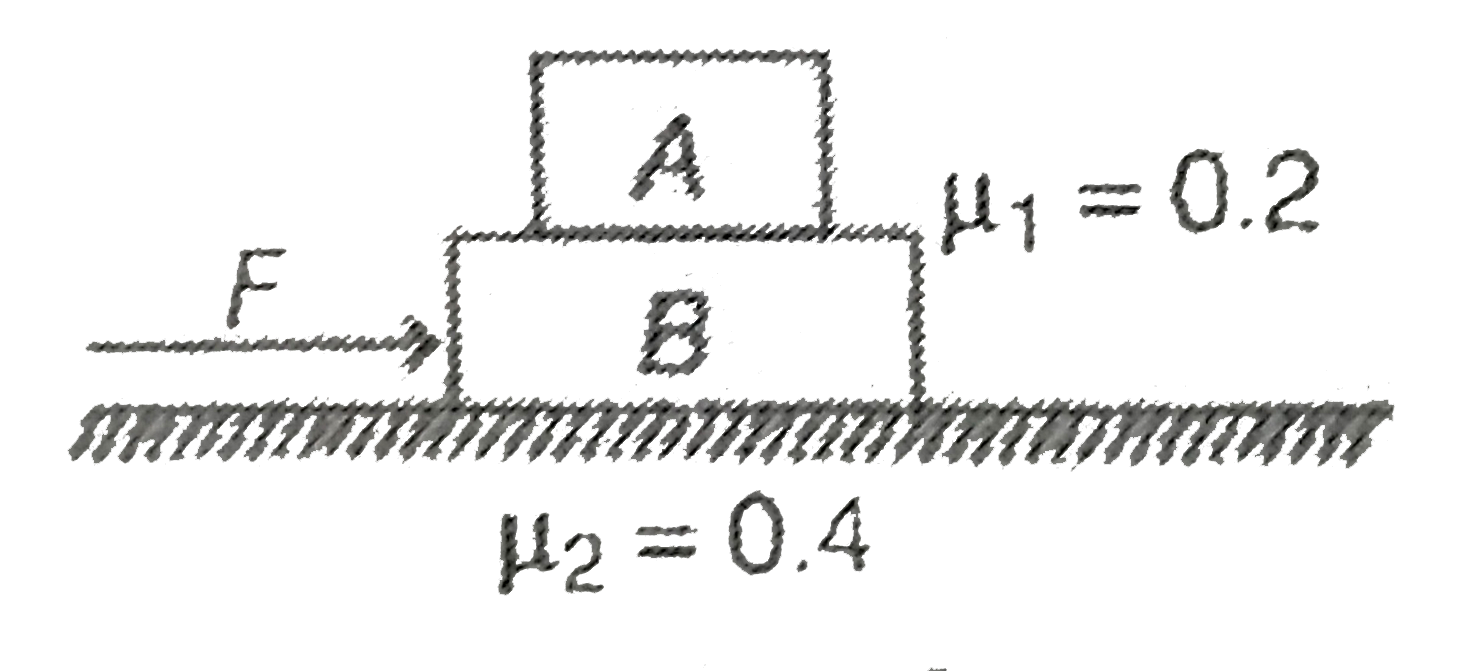
- In the figure, m(A)=2 kg and m(B)=4kg. For what minimum value of F,A s...
Text Solution
|
- If the system shown in the figure is rotated in a horizontal circle wi...
Text Solution
|
- In the figure, m(1)=m(2)=10 kg . The coefficients of friction between ...
Text Solution
|
- find minimum value of F such that m(2) starts its motion on the ground
Text Solution
|
- Two masses m(1) kg and m(2) kg passes over an atwoods machine. Find th...
Text Solution
|
- In the figure, m(A)=2 kg and m(B)=4kg. For what minimum value of F,A s...
Text Solution
|
- (A) M((g))^(-)toM((g)) (B) M((g))toM((g))^(+) (C) M((g))^(+)toM((g...
Text Solution
|
- In the figure , mA =2kg and mb=4kg For what minimum value of F A sta...
Text Solution
|
- Three blocks of masses m(1)=4kg, m(2)=2kg, m(3)=4kg are connected with...
Text Solution
|