


Similar Questions
Explore conceptually related problems
Recommended Questions
- A small block of mass m starts sliding down from rest along the smooth...
Text Solution
|
- All surfaces are smooth. The ball of mass m is released from A . Find ...
Text Solution
|
- Assuming all the surfaces to be smooth, find the acceleration of the t...
Text Solution
|
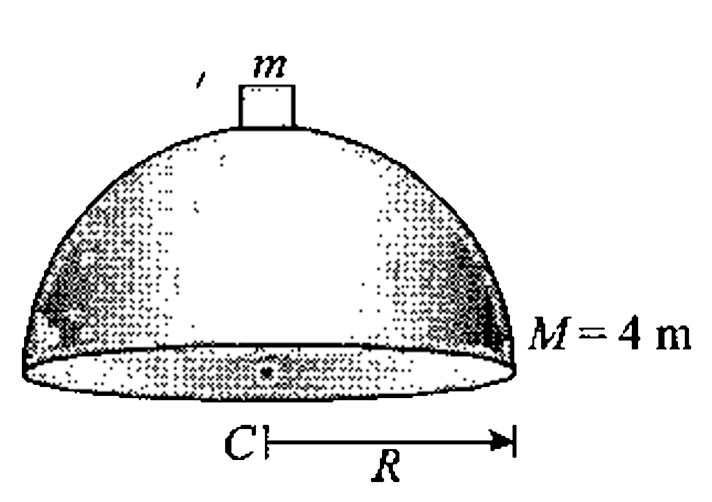
- A small body of mass m slides without friction from the top of a hemi...
Text Solution
|
- A small block of mass m starts sliding down from rest along the smooth...
Text Solution
|
- A small block of mass m is released from rest from position A inside a...
Text Solution
|
- A small body of mass m slides without friction from the top of a hemis...
Text Solution
|
- Figure shows a block of mass 2m sliding on a block of mass m. Find the...
Text Solution
|
- A block of mass m slides down along the surface of the bowl from the r...
Text Solution
|