

Home
Class 11
PHYSICS
Calculate thermal conductance for radial...

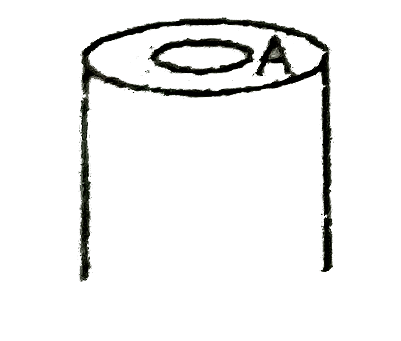
Calculate thermal conductance for radial flow of an annular cylinder of length `l` and inner and outer radius `r_(1)` and `r_(2)`. Assume that thermal conductivity of the material is `K`

Promotional Banner

Similar Questions

Explore conceptually related problems

Calculated thermal conductance for radial flow of a spherical sheel of inner and outer radius r_(1) and r_(2) . Assume that thermal conductivity of the material is K

Calculated thermal conductance for radial flow of a spherical sheel of inner and outer radius r_(1) and r_(2) . Assume that thermal conductivity of the material is K

Inner surfaec of a cylindrical shell of length l and of material of thermal conductivity k is kept at constant temperature T_(1) and outer surface of the cylinder is kept at constant temperature T_(2) such that (T_(1)gtT_(2)) as shown in figure. heat flows from inner surface to outer surface radially outward. inner and outer radii of the shell are R and 2R resspectively. Due to lack of space this cylinder has to be replaced by a smaller cylinder of length (l)/(2) inner and outer radii (R)/(4) and R respectively and thermal conductivity of material nk. if rate of radially outward heat flow remains same for same temperatures of inner and outer surface i.e., T_(1) and T_(2) then find the value of n.

A hole of radius r_(1) is made centrally in a uniform circular disc of thickness d and radius r_(2) . The inner surface (a cylinder of length d and radius r_(1) ) is maintained at a temperature theta_(1) and the outer surface (a cylinder of length d and radius r_(2) ) is maintained at a temperature theta_(2)(theta_(1)gttheta_(2)) .The thermal conductivity of the material of the disc is K. Calculate the heat flowing per unit time through the disc.

A hole of radius r_(1) is made centrally in a uniform circular disc of thickness d and radius r_(2) . The inner surface (a cylinder of length d and radius r_(1) ) is maintained at a temperature theta_(1) and the outer surface (a cylinder of length d and radius r_(2) ) is maintained at a temperature theta_(2)(theta_(1)gttheta_(2)) .The thermal conductivity of the material of the disc is K. Calculate the heat flowing per unit time through the disc.

A hole of radius r_(1) is made centrally in a uniform circular disc of thickness d and radius r_(2) . The inner surface (a cylinder of length d and radius r_(1) is maintained at a temperature theta_(1) and the oouter surface (a cylinder of length d and radius r_(2) . The is maintianed at a temperature theta_(2)(theta_(1)gttheta_(2)) .The thermal conductivity of the material of the dics is K. Calculate the heat flowing per unit time through the disc.

A cylinder of radius R is surrounded by a cylindrical shell of inner radius R and oputer radius 2R. The thermal conductivity of the material of the inner cylinder is k_(1) and that of the outer cylinder is K_(2) ,Assumming no loss of heat , the effective thermal conductivity of the system for heat flowing along the length of the cylinder is :

A cylinder of radius R is surrounded by a cylindrical shell of inner radius R and oputer radius 2R. The thermal conductivity of the material of the inner cylinder si k_(1) and that of the outer cylinder is K_(2) ,Assumming no loss of heat , the effective thermal conductivity of the system for heat flowing along the length of the cylionder is :

A cylinder of radius r made of a material of thermal conductivity K_1 is surrounded by a cylindrical shell of inner radius r and outer radius 2r made of a material of thermal conductivity K_2 . The two ends of the combined system are maintained at two different temperatures. There is no loss of heat across the cylindrical surface and the system is in steady state. Show that the effective thermal conductivity of the system is (K_1 + 3K_2 )//4 .

A cylinder of radius R made of a material of thermal conductivity K_1 is surrounded by a cylinderical shell of inner radius R and outer radius 2R made of a material of thermal conductivity K_2 . The two ends of the combined system are maintained at two different temperatures. There is no loss of heat across the cylindrical surface and the system is in steady state. The effictive thermal conductivity of the system is