Home
Class 12
CHEMISTRY
For the following bond cleavages, use cu...

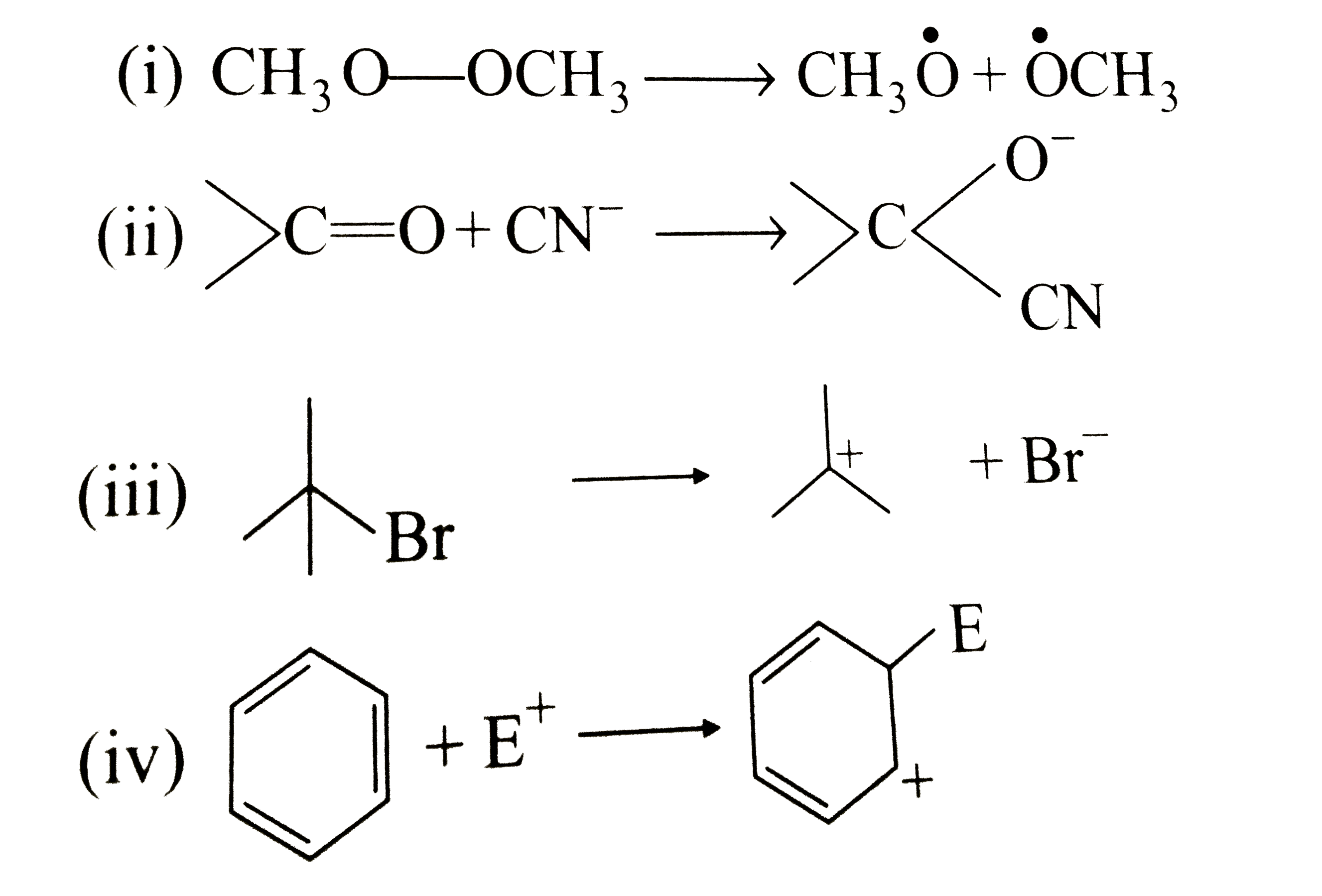
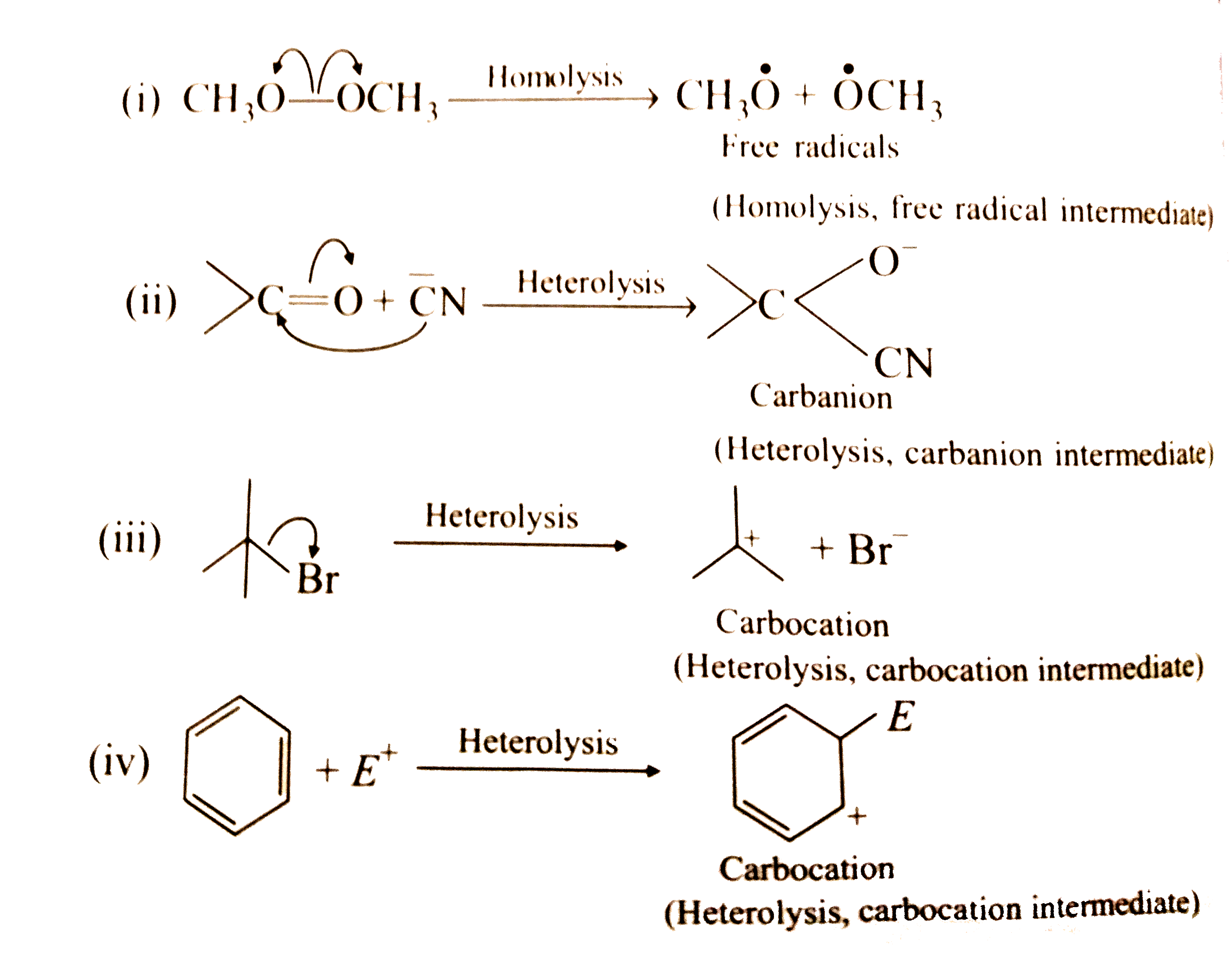
For the following bond cleavages, use curved arrows to show the electron flow and classify each as homolysis or heterolysis. Identify reactive intermediate produced during the fission.

Text Solution

Verified by Experts
Promotional Banner

Topper's Solved these Questions

  • BASIC PRINCIPLES OF ORGANIC COMPOUNDS (MECHANISM OF ORGANIC REACTIONS)

    OP TANDON|Exercise BRAIN STORMING PROBLEMS|14 Videos
  • BASIC PRINCIPLES OF ORGANIC COMPOUNDS (MECHANISM OF ORGANIC REACTIONS)

    OP TANDON|Exercise OBJECTIVE QUESTIONS (Level-A)|193 Videos
  • BASIC PRINCIPLES OF ORGANIC COMPOUNDS (MECHANISM OF ORGANIC REACTIONS)

    OP TANDON|Exercise ILLUSTRATIONS OF OBJECTIVE QUESTIONS|20 Videos
  • BASIC PRINCIPLES

    OP TANDON|Exercise SECTION V INTEGER ANSWER TYPE QUESTION|3 Videos
  • CARBOXYLIC ACIDS AND THEIR DERIVATIVES

    OP TANDON|Exercise Integer|4 Videos

Similar Questions

Explore conceptually related problems

For the following bond cleavages, use curved-arrow to show the electron flow and classify each as homolysis or heterolysis. Identify intermediate products as free radical, carbocation, and carbanion. (a) CH_3O - OCH_3 rarr CH_3 dot O+ dot O CH_3 .

Passage Organic compounds mainly consist of covalent bonds. The electron pair in these covalent bonds may undergo displacement either of their own or under the influence of other species. The cleavage of covalent bond between two atoms takes place in homolytic or heterolytic fashion. The homolytic fission results into free radicals while heterolytic fission results into carbocations and carbanions. These are also called reaction intermediates and are attacked by electrophiles and nucleophiles. The electrophiles seek electron rich sites while nucleophiles seek electron deficient sites. Answer the followings Questions : Which of the following is the most stable cation ?

Passage Organic compounds mainly consist of covalent bonds. The electron pair in these covalent bonds may undergo displacement either of their own or under the influence of other species. The cleavage of covalent bond between two atoms takes place in homolytic or heterolytic fashion. The homolytic fission results into free radicals while heterolytic fission results into carbocations and carbanions. These are also called reaction intermediates and are attacked by electrophiles and nucleophiles. The electrophiles seek electron rich sites while nucleophiles seek electron deficient sites. Answer the followings Questions : The most stable carbanion among the following is

Passage Organic compounds mainly consist of covalent bonds. The electron pair in these covalent bonds may undergo displacement either of their own or under the influence of other species. The cleavage of covalent bond between two atoms takes place in homolytic or heterolytic fashion. The homolytic fission results into free radicals while heterolytic fission results into carbocations and carbanions. These are also called reaction intermediates and are attacked by electrophiles and nucleophiles. The electrophiles seek electron rich sites while nucleophiles seek electron deficient sites. Answer the followings Questions : The most stable free radical among the following is

Passage Organic compounds mainly consist of covalent bonds. The electron pair in these covalent bonds may undergo displacement either of their own or under the influence of other species. The cleavage of covalent bond between two atoms takes place in homolytic or heterolytic fashion. The homolytic fission results into free radicals while heterolytic fission results into carbocations and carbanions. These are also called reaction intermediates and are attacked by electrophiles and nucleophiles. The electrophiles seek electron rich sites while nucleophiles seek electron deficient sites. Answer the followings Questions : Which of the following is most stable carbocation ?

Passage Organic compounds mainly consist of covalent bonds. The electron pair in these covalent bonds may undergo displacement either of their own or under the influence of other species. The cleavage of covalent bond between two atoms takes place in homolytic or heterolytic fashion. The homolytic fission results into free radicals while heterolytic fission results into carbocations and carbanions. These are also called reaction intermediates and are attacked by electrophiles and nucleophiles. The electrophiles seek electron rich sites while nucleophiles seek electron deficient sites. Answer the followings Questions : Diazomethane decomposes in the presence of light to give

Passage Organic compounds mainly consist of covalent bonds. The electron pair in these covalent bonds may undergo displacement either of their own or under the influence of other species. The cleavage of covalent bond between two atoms takes place in homolytic or heterolytic fashion. The homolytic fission results into free radicals while heterolytic fission results into carbocations and carbanions. These are also called reaction intermediates and are attacked by electrophiles and nucleophiles. The electrophiles seek electron rich sites while nucleophiles seek electron deficient sites. Answer the followings Questions : The hybridisation state of carbon in the carbocation C_6 H_5 CH_(2)^(+) is

Passage Organic compounds mainly consist of covalent bonds. The electron pair in these covalent bonds may undergo displacement either of their own or under the influence of other species. The cleavage of covalent bond between two atoms takes place in homolytic or heterolytic fashion. The homolytic fission results into free radicals while heterolytic fission results into carbocations and carbanions. These are also called reaction intermediates and are attacked by electrophiles and nucleophiles. The electrophiles seek electron rich sites while nucleophiles seek electron deficient sites. Answer the followings Questions : The most stable carbocation is :

OP TANDON-BASIC PRINCIPLES OF ORGANIC COMPOUNDS (MECHANISM OF ORGANIC REACTIONS)-PROBLEMS FOR PRACTICE
  1. Classify the following into electrophilic and nucleophilic reagents: ...

    Text Solution

    |

  2. For the following bond cleavages, use curved arrows to show the electr...

    Text Solution

    |

  3. Identify each of the following as carbon-intermediates: {:((a)CH(3)-...

    Text Solution

    |

  4. Classsify the following reactions by type:

    Text Solution

    |

  5. Arrange the following according to their stability: CH(3)CH(2)CH(2)o...

    Text Solution

    |

  6. Answer the following : (a) How many types of fission are possible of...

    Text Solution

    |

  7. Explain: (i) Why trichloroacetic acid is stronger than acetic acid? ...

    Text Solution

    |

  8. Complete the following and identify the type for the inter-mediate spe...

    Text Solution

    |

  9. Complete the following and identify the type of displacement reactions...

    Text Solution

    |

  10. Complete the following addition reactions through the intermediate for...

    Text Solution

    |

  11. What are the various alkanes obtained due to insertion when 2-methylbu...

    Text Solution

    |

  12. Suggest a possible mechanism for the formation of R-Li from R-X by equ...

    Text Solution

    |

  13. Give the major E(1) product of the following reactions :

    Text Solution

    |

  14. Give possible mechanism of the given reaction using carbocation rearra...

    Text Solution

    |

  15. Which the resonance structure of the following species : (i) :overse...

    Text Solution

    |

  16. Which one hydrolysis at a faster rate by S(N)1 mechanism?

    Text Solution

    |

  17. Match the following columns

    Text Solution

    |

