A
B
C
D
Text Solution
Verified by Experts
The correct Answer is:



Topper's Solved these Questions
Similar Questions
Explore conceptually related problems
KCET PREVIOUS YEAR PAPERS-KARNATAKA CET 2009-CHEMISTRY
- The characteristic not related to alkali metal is
Text Solution
|
- Among the following, the compound that contains ionic, covalent and co...
Text Solution
|
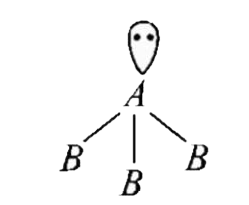
- A covalent molecule AB(3) has pyramidal structure. The number of lone ...
Text Solution
|
- Excess of carbon dioxide is passed through 50 mL of 0.5 M calcium hydr...
Text Solution
|
- A bivalent metal as an equivalent mass of 32. The molecular mas of the...
Text Solution
|
- The r.m.s. velocity of molecules of a gas of density 4kg //m^(3) and p...
Text Solution
|
- 0.5 mol each of H(2), SO(2) and CH(4) are ketp in a container. A hole ...
Text Solution
|
- The enthalpy of formation of NH(3) is -46 kJ//mol The enthalpy change ...
Text Solution
|
- 5 moles of SO(2) and 5 moles of O(2) are allowed to react, At equilibr...
Text Solution
|
- 2HI((g))hArrH(2(g))+I(2(g)) The equilibrium constant of the above re...
Text Solution
|
- Rate of physical adsorption increases with
Text Solution
|
- IUPAC name of (CH(3))(3)"CC"l
Text Solution
|
- Lucas test is associated with
Text Solution
|
- An organic compound on heating with CuO produces CO(2) but not water. ...
Text Solution
|
- The condensation polymer among the following is
Text Solution
|
- The order of stability of metal oxides is
Text Solution
|
- The temperature of the slag zone in the metallurgy of iron using blast...
Text Solution
|
- The function of Fe(OH)(3) in the contact process is
Text Solution
|
- In which of the following NH(3) is not used?
Text Solution
|
- Argon is used
Text Solution
|