

Home
Class 11
PHYSICS
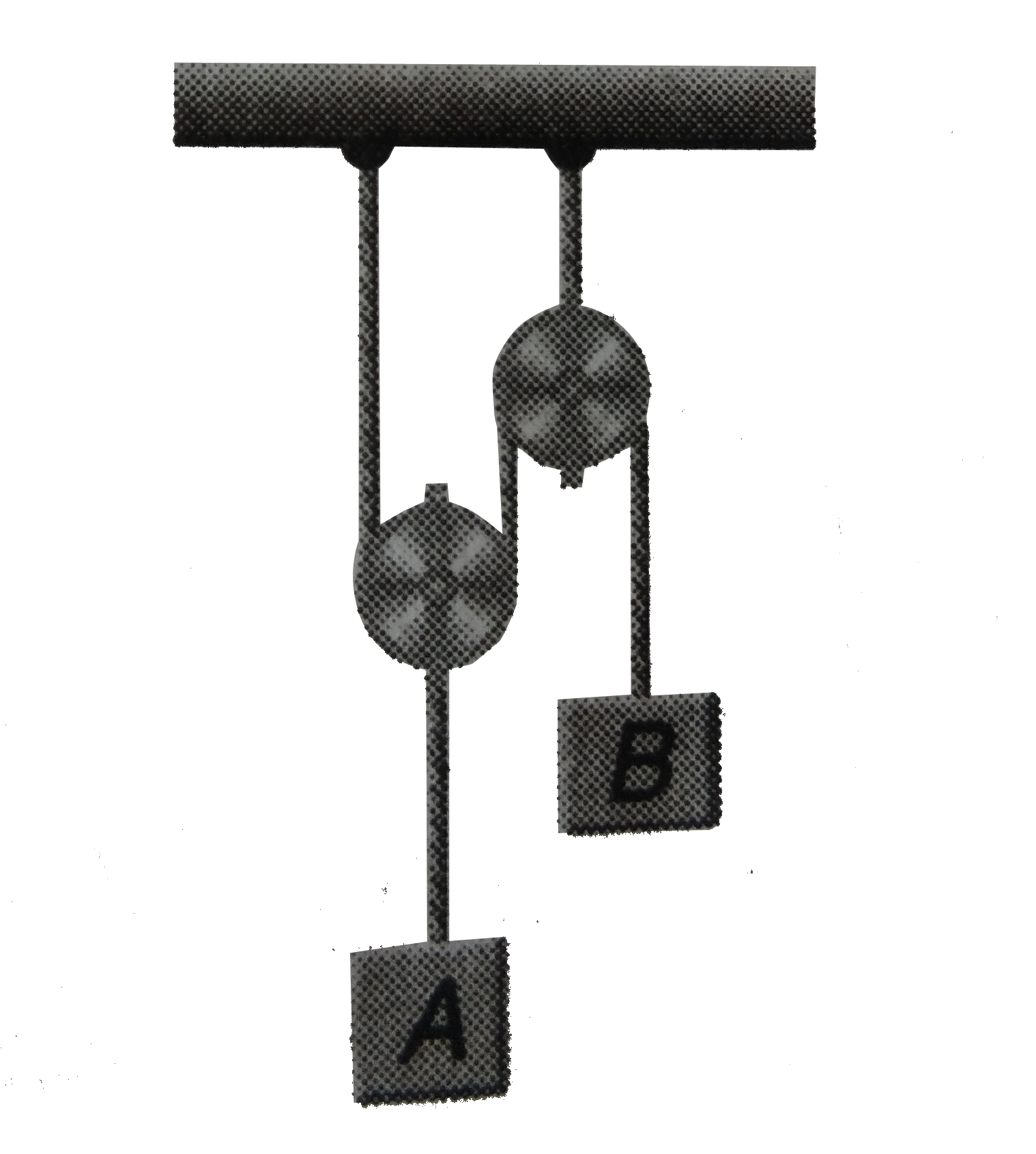
Block A has a weight of 3000 N and block...

Block A has a weight of `3000 N` and block B has a weight of `500 N`. Determine the distance that A must descend from rest before it obtains a speed of `2.5 m//s`. Neglect the mass of the cord and pulleys.
.

Promotional Banner

Similar Questions

Explore conceptually related problems

Block A has a weight of 300 N and blcok B has weight of 50 N.Determine the distance B must raise from rest before. A obtains a speed of 2.5ms^(-1) . Neglect the mass of cord and pulley?

Block A has a weight of 300 N and block B has weight 50 N . Calculate the distance A must descent form rest before it obtains a speed of 4 m//s (Neglect the mass of cord and pulleys). (Take g =1 0 m//s^(2)) . .

Block A has a weight of 3000 N and block B has a weight of 50 N . Coefficient of friction for A is mu_(k) = 0.2 . Determine the pseed of block A after moves 1 m down the plane, starting from rest. Negelect the mass of the cord and pulleys.

Block A has a weight of 300 N and block B has a weight of 50 N . Coefficient of friction for A is mu_(k) = 0.2 . Determine the speed of block A after moves 1 m down the plane, starting from rest. Negelect the mass of the cord and pulleys.

Block A of weight 500 N and block B of weight 700 N are connected by rope pulley system as shown. The largest weight C that can be suspended without moving block A and B is W . The coefficient of friction for all plane surfaces of contact is 0.3 . The pulleys are ideal. Find (W)/(90) .

If the system is released from rest, determine the speeds of both masses after B has moved 1 m. Neglect friction, the masses of pulleys and inextensible string.

Block A weights 4 N and block B weights 8 N. The coefficient of kinetic friction is 0.25 for all surfaces. The force F to slide B at a constant speed, when A rests on B and moves with it, is