Text Solution
Verified by Experts
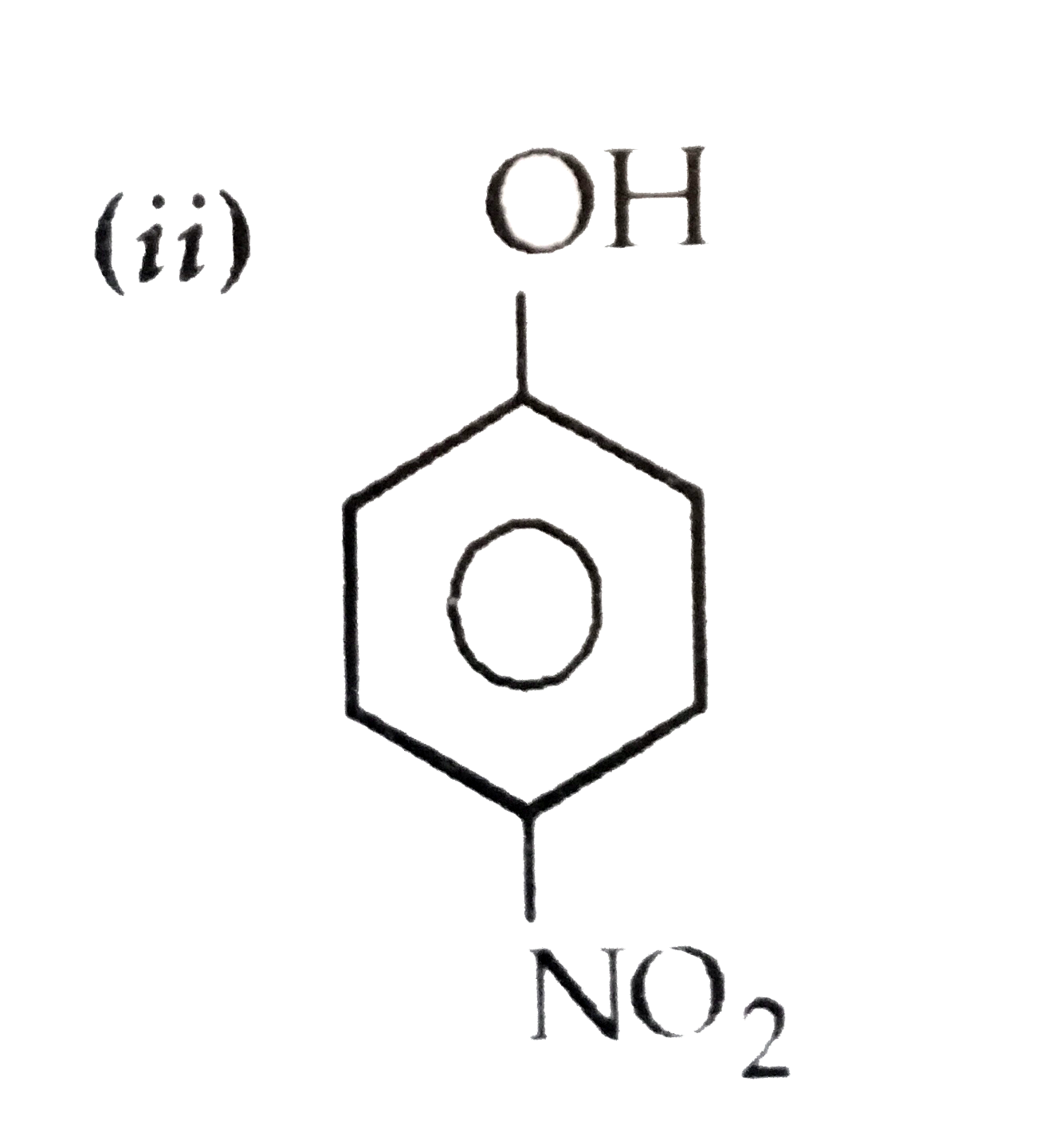



Topper's Solved these Questions
Similar Questions
Explore conceptually related problems
XII BOARDS PREVIOUS YEAR-XII BOARDS-SECTION-C
- (i) What type of drug is used in sleeping pills? (ii) What type of d...
Text Solution
|
- Define the following terms with a suitable example in each: (i) Broa...
Text Solution
|
- (i) Out of (CH(3))(3), C-Br and (CH(3))(3) C-I, which one is more reac...
Text Solution
|
- An aromatic compound A on heating with Br, and KOH forms a compound B ...
Text Solution
|
- Complete the following reactions: (i) (ii) (C(6)H(5)CH(2))(2)Cd+2...
Text Solution
|
- Write chemical equations for the following reactions: (i) Propanone ...
Text Solution
|
- Differentiate between the following: (i) Amylose and Amylopectin. ...
Text Solution
|
- Write chemical reaction to show that open structure of D-glucose conta...
Text Solution
|
- Chromium metal can be plated out from an acidic solution containing Cr...
Text Solution
|
- Give reasons for the following : (a) Leather gets hardened after tan...
Text Solution
|
- What is the role of : ( i) Depressants in froth floatation ? (b) Ca...
Text Solution
|
- Write chemical reactions taking place in the extraction of Aluminium f...
Text Solution
|
- Explain the method of preparation of sodium dichromate from chromite o...
Text Solution
|
- Complete the following reactions: (a) MnO2+KOH +O2 rarr (b)I^-+MnO4...
Text Solution
|
- Write the hybridization and magnetic character of the following comple...
Text Solution
|
- Give reasons for the following (a) The presence of -NO2 group at or...
Text Solution
|
- (i)Write equation for preparation of 1-iodobutane from 1- chlorobutane...
Text Solution
|
- How will you synthesis the following alcohol from appropriate alkene: ...
Text Solution
|
- Give one chemical test to distingusih between the compound of the foll...
Text Solution
|
- Give any one property of glucose that cannot be explained by the open ...
Text Solution
|