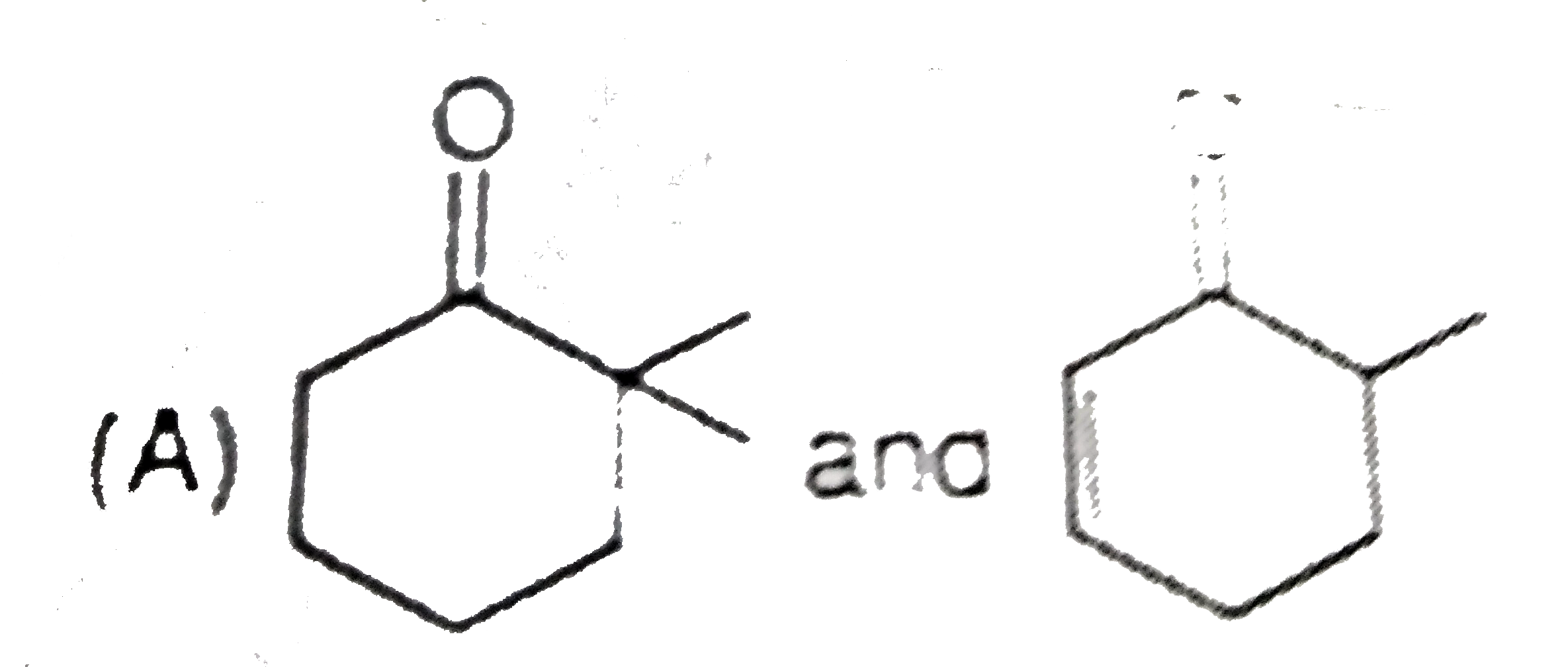
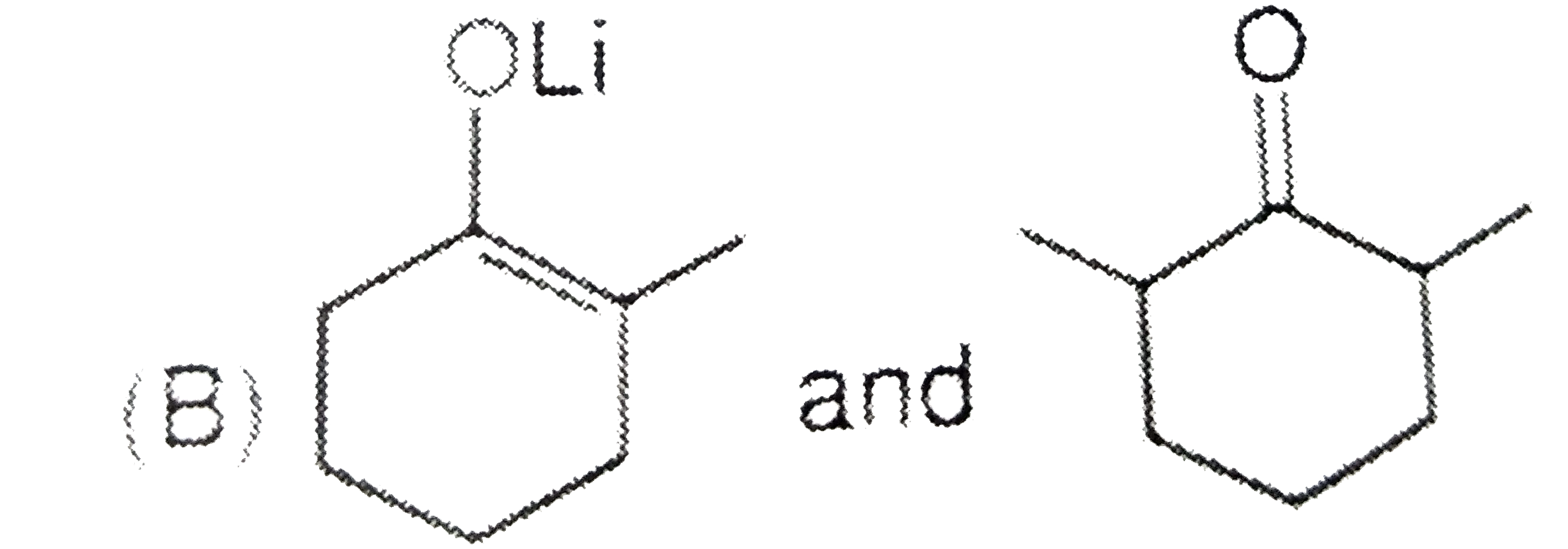
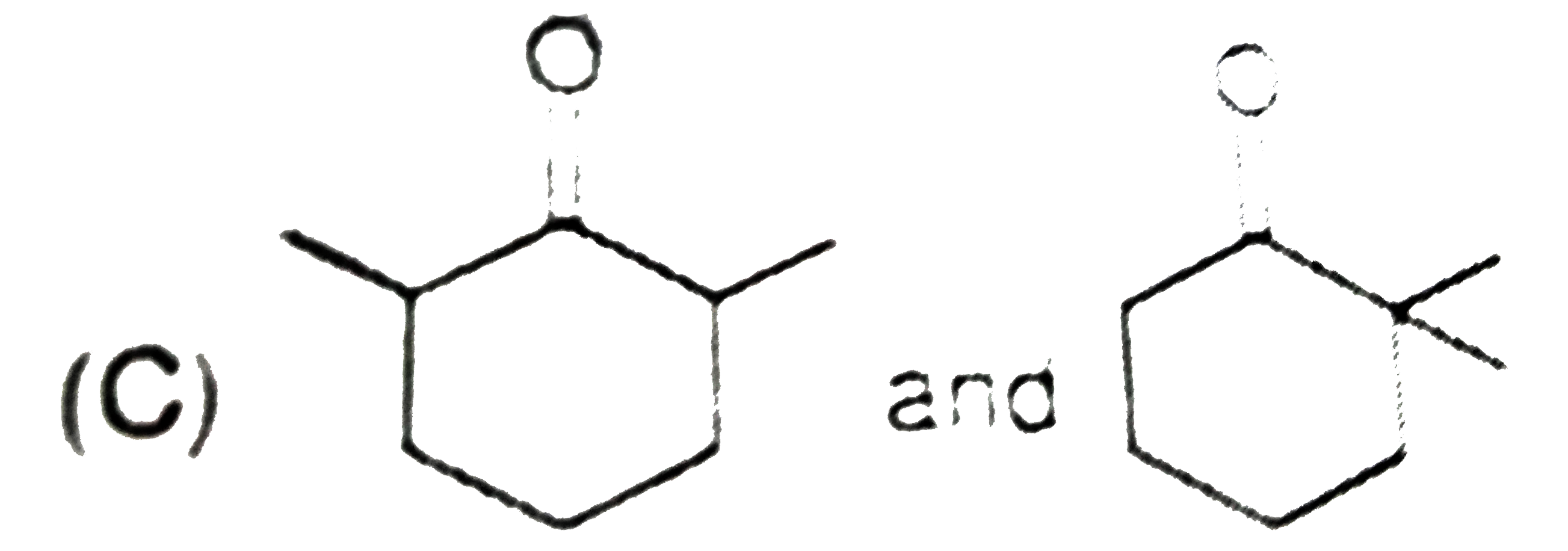
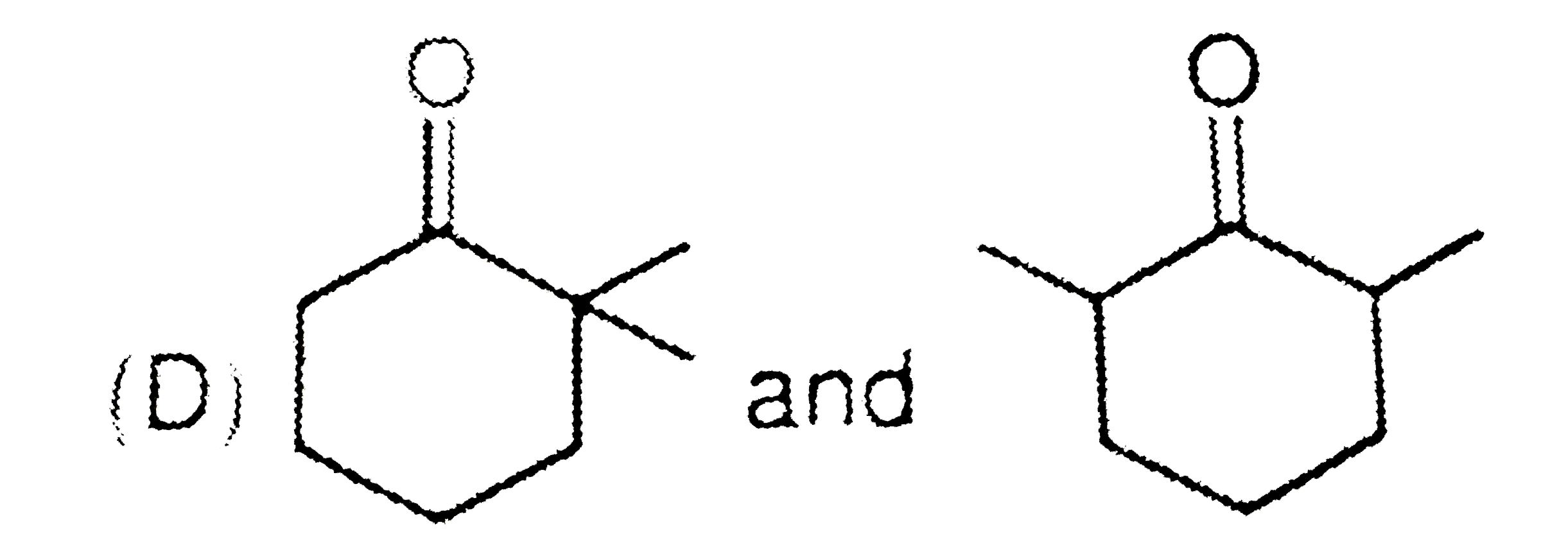
 (LDA=lithiumdiisopropyl amide) the products M and Y respectively are
 A
B
C
D
Text Solution
Verified by Experts
The correct Answer is:



Topper's Solved these Questions
CARBONYL COMPOUNDS (ALDEHYDES & KETONES ) & CARBOXYLIC ACID
RESONANCE|Exercise Part -III|31 VideosCARBONYL COMPOUNDS (ALDEHYDES & KETONES ) & CARBOXYLIC ACID
RESONANCE|Exercise Part -IV|23 VideosCARBONYL COMPOUNDS (ALDEHYDES & KETONES ) & CARBOXYLIC ACID
RESONANCE|Exercise APSP|1 VideosBIOMOLECULES & POLYMER
RESONANCE|Exercise ORGANIC CHEMISTRY(Biomolecules & Polymer)|33 VideosCHEMICAL KINETICS
RESONANCE|Exercise PHYSICAL CHEMITRY (CHEMICAL KNIETICS & RADIOACTIVITY)|49 Videos
Similar Questions
Explore conceptually related problems
RESONANCE-CARBONYL COMPOUNDS (ALDEHYDES & KETONES ) & CARBOXYLIC ACID -Part -II
- acetaldehyde reacts with a mixture of KCN and NH(4)Cl to give a produc...
Text Solution
|
- When m-chlorobenzaldehyde is treated with 50% KOH solution, the produc...
Text Solution
|
- Consider the following reactions (LDA=lithiumdiisopropyl amide) th...
Text Solution
|
- The most favourable product of the following reactions is
Text Solution
|
- The compound that would undergo hydration very easily is
Text Solution
|
- Cyclohexanone oxime is converted into epsilon-caprolactam by treatemen...
Text Solution
|
- Curved arrows are used in Organic Chemistry to show the moment of elec...
Text Solution
|
- The reaction of 50% aq KOH on an equimolar mixture of 4-methylbenzalde...
Text Solution
|
- Which of the following reaction mechanism doe not involves carbocation...
Text Solution
|
- The pair of the equimolar compound that would be give a single condens...
Text Solution
|
- The main product X formed in the following reaction is
Text Solution
|
- An organic compound ("X") is a disubstituted benzene containing 77.8% ...
Text Solution
|
- Compound "X" undergoes the following sequences of reactions to form "Y...
Text Solution
|
- The product ("X") of the following sequences of reactions is
Text Solution
|
- Three isometic compounds M,N and P (C(5)H(10)O) give the following tes...
Text Solution
|
- 4-Hydroxy-4-methylpentanal on heating with excess of methanol in the p...
Text Solution
|
- Compound "X" in the following reaction is
Text Solution
|
- Compound "X" in the following reaction is
Text Solution
|
- Compound 'P' that undergoes the sequence of reactions given below to g...
Text Solution
|
- The major product of the following reaction is
Text Solution
|