

Home
Class 12
PHYSICS
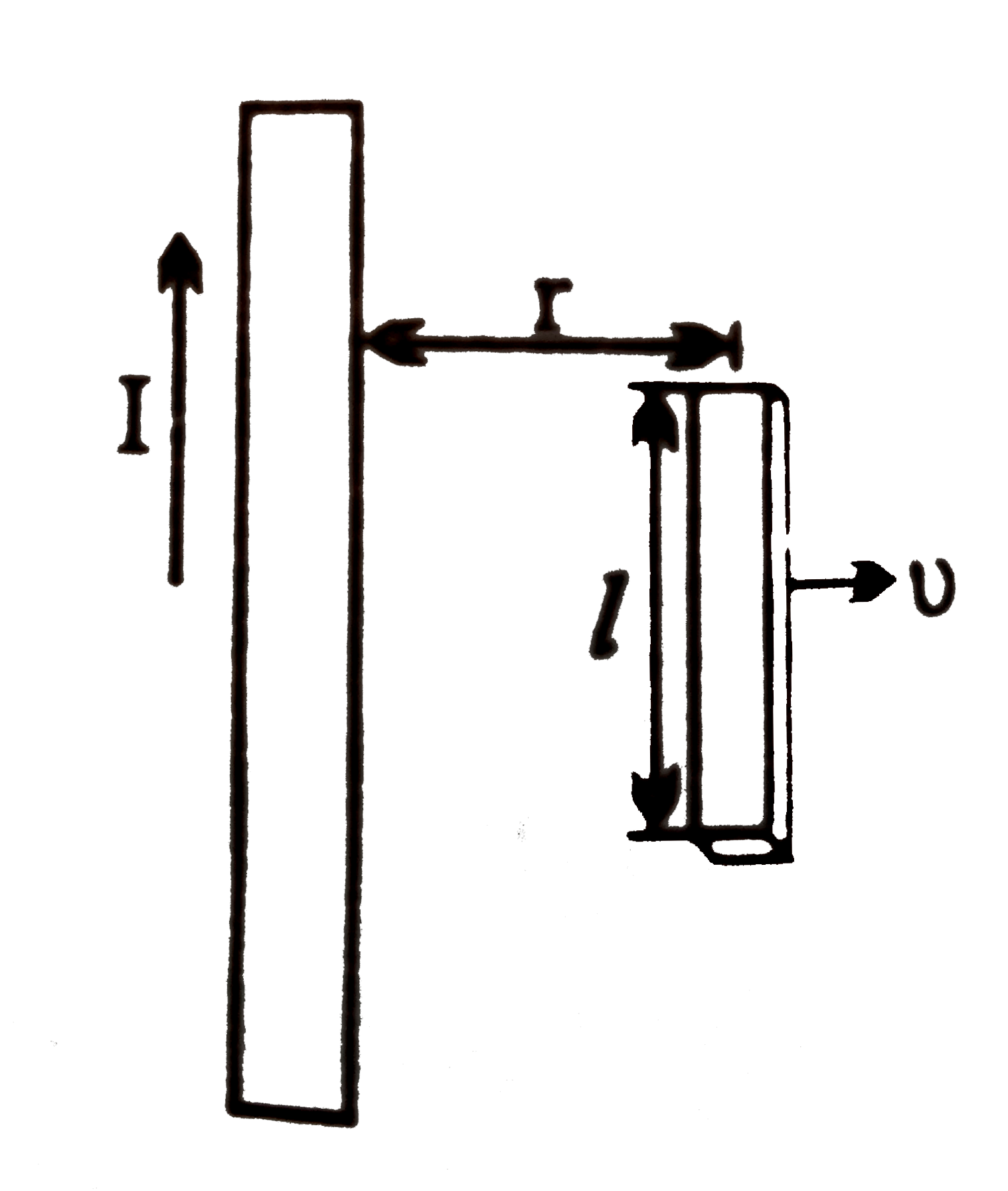
A cionducing rod moves with constant vel...

A cionducing rod moves with constant velocity `v` perpendicular to the straight wire carrying a current I as shown compute that the emf generated between the ends of the rod

Promotional Banner

Similar Questions

Explore conceptually related problems

A copper rod moves with a constant angular velocity omega about a long straight wire carrying a current I. If the ends of the rod from the wire are at distances a and b, then the e.m.f induced in the rod is

A copper rod moves with a constant angular velocity omega about a long straight wire carrying a current I. If the ends of the rod from the wire are at distances a and b, then the e.m.f induced in the rod is

A rod of length b moves with a constant velocity v in the magnetic field of a straight long conductor that carries a current I as shown in the below figure. The emf induced in the rod is

A rod of length b moves with a constant velocity v in the magnetic field of a infinitely long straight conducting wire that carries a current I as shown in the figure. The induced emf in the rod is

A conducting rod MN moves with a speed v parallel to a long straight wire which carries a constant current i, as shown in Fig. The length of the rod is normal to the wire. Find the emf induced in the total length of the rod. State which end will be at a lower potential.

A conducting rod MN moves with a speed v parallel to a long straight wire which carries a constant current i , as shown in fig. The length of the rod is normal to the wire. Find the emf induced in the total length of the rod. State which end will be at a lower potential.

A uniform metal rod is moving with a uniform velocity v parallel to a long straight wire carrying a current I. The rod is perpendicular to the wire with its ends at distance r_(1) and r_(2) (with r_(2) gt r_(1) ) form it. The E.M.F. induced in the rod at that instant is

A uniform metal rod is moving with a uniform velocity v parallel to a long straight wire carrying a current I. The rod is perpendicular to the wire with its ends at distance r_(1) and r_(2) (with r_(2) gt r_(1) ) form it. The E.M.F. induced in the rod at that instant is