Text Solution
Verified by Experts




Topper's Solved these Questions
ELECTROMAGNETIC INDUCTION
MODERN PUBLICATION|Exercise PRACTICE PROBLEMS|25 VideosELECTROMAGNETIC INDUCTION
MODERN PUBLICATION|Exercise CONCEPTUAL QUESTIONS|22 VideosELECTRIC CHARGES AND FIELDS
MODERN PUBLICATION|Exercise Chapter Practice Test|15 VideosELECTROMAGNETIC WAVES
MODERN PUBLICATION|Exercise CHAPTER PRACTICE TEST|14 Videos
Similar Questions
Explore conceptually related problems
MODERN PUBLICATION-ELECTROMAGNETIC INDUCTION-CHAPTER PRACTICE TEST FOR BOARD EXAMINATION
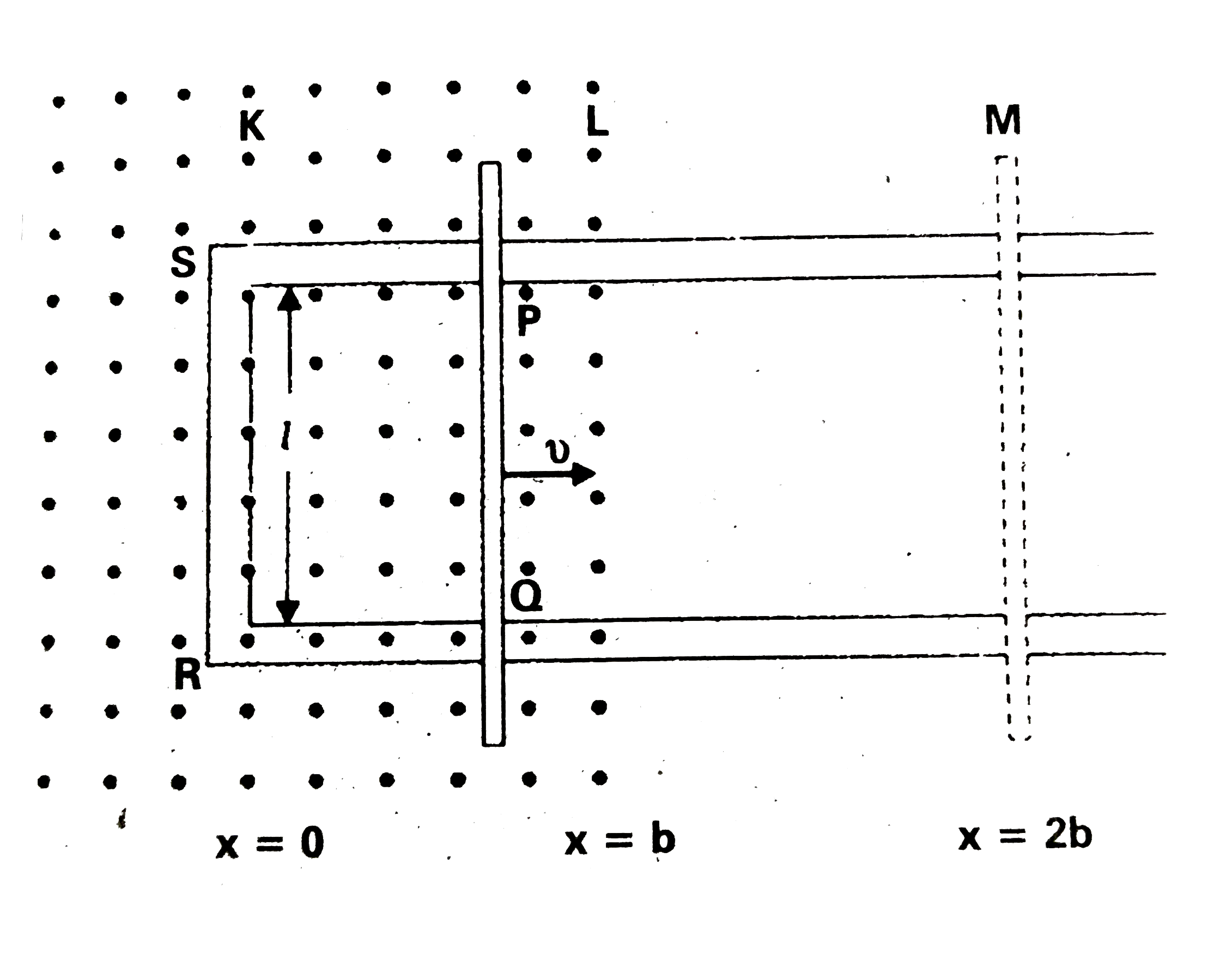
- Refer to fig. The arm PQ of the rectangular conductor is moved from x=...
Text Solution
|
- Will any emf be induced between the ends of a vertical magnetic pole f...
Text Solution
|
- The electric current flowing in a wire in the direction from B to A is...
Text Solution
|
- The north pole of a magnet is brought near a coil. The induced current...
Text Solution
|
- Why are oscillations of a copper sheet in a magnetic field highly damp...
Text Solution
|
- The magnetic flux linked with a coil is phi = (4t^(2)-6t-1) milliweber...
Text Solution
|
- Do you agree with the statement that an induced emf has no direction o...
Text Solution
|
- Two circular, similar, coaxial loops carry equal currents in the same...
Text Solution
|
- A copper coil is moving out of a magnetic field with a constant veloci...
Text Solution
|
- How is mutual inductance of a pair of coils affected when (i) separati...
Text Solution
|
- Define the term 'mutual inductance' between the two coils. Obtain the...
Text Solution
|
- Justify Lenz's law from the point of view of the law of conservation o...
Text Solution
|
- What are eddy currents ? Give some applications of eddy currents. How ...
Text Solution
|
- A wheel with 8 metallic spokes each 50 cm long is rotated with a speed...
Text Solution
|
- A conducting rod XY slides freely on two parallel rails, A and B, with...
Text Solution
|