A

B

C

D
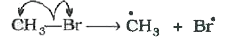
Text Solution
Verified by Experts
The correct Answer is:



Topper's Solved these Questions
ORGANIC CHEMISTRY : SOME BASIC PRINCIPLES
MODERN PUBLICATION|Exercise Multiple Choice Questions Level - II|52 VideosORGANIC CHEMISTRY : SOME BASIC PRINCIPLES
MODERN PUBLICATION|Exercise Multiple Choice Questions Level - III|6 VideosNUCLEAR CHEMISTRY
MODERN PUBLICATION|Exercise Multiple Choice Questions|163 VideosORGANIC COMPOUNDS CONTAINING NITROGEN
MODERN PUBLICATION|Exercise Recent Examination Questions|10 Videos
Similar Questions
Explore conceptually related problems
MODERN PUBLICATION-ORGANIC CHEMISTRY : SOME BASIC PRINCIPLES-Recent Examination Questions
- Covalent bond can undergo fission in two different ways. The correct r...
Text Solution
|
- The IUPAC name of is :
Text Solution
|
- The maximum number of possible optical isomers in 1-bromo-2-methyl cyc...
Text Solution
|
- Which of these is not true regarding electromeric effect ?
Text Solution
|
- The number of optical isomers of the compound, CH(3)-underset(Br)under...
Text Solution
|
- Meso compounds do not show optica activity because :
Text Solution
|
- Acetone and propanal are :
Text Solution
|
- Mesomeric effect involves :
Text Solution
|
- Identify the correct IUPAC name of the compound : CH(3)CH(2)CH(2)CH(...
Text Solution
|