Home
Class 12
MATHS
Which of the following have the same bou...

Which of the following have the same bounded area `f(x)=s in x ,g(x)=sin^2x ,w h e r e0lt=xlt=10pi` `f(x)=s in x ,g(x)=|s in x|,w h e r e0lt=xlt=20pi` `f(x)=|s in x|,g(x)=sin^3x ,w h e r e0lt=xlt=10pi` `f(x)=s in x ,g(x)=sin^4x ,w h e r e0lt=xlt=10pi`

A

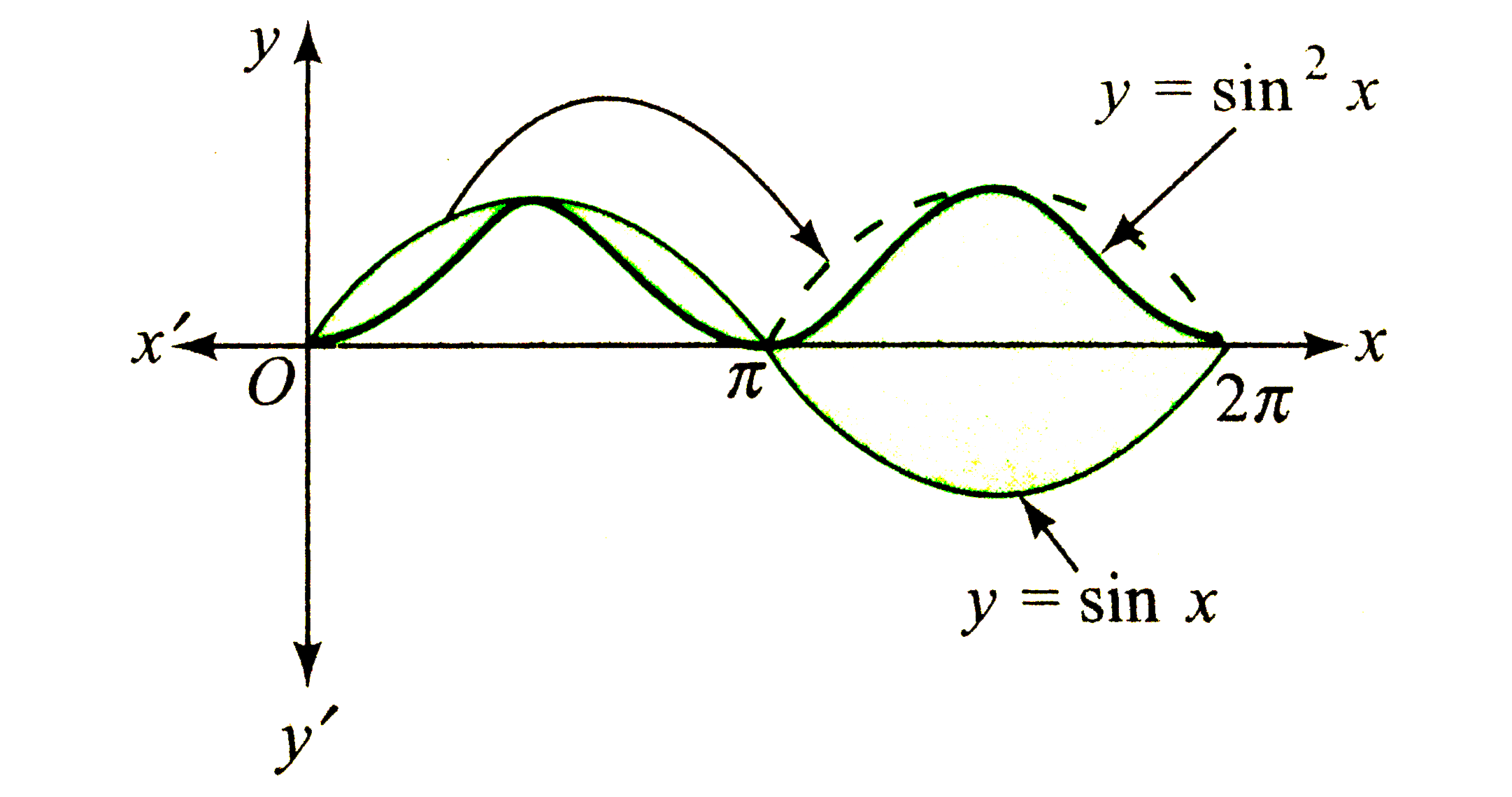
`f(x)= sin x, g(x) = sin^(2)x," where "0lexle 10 pi`

B

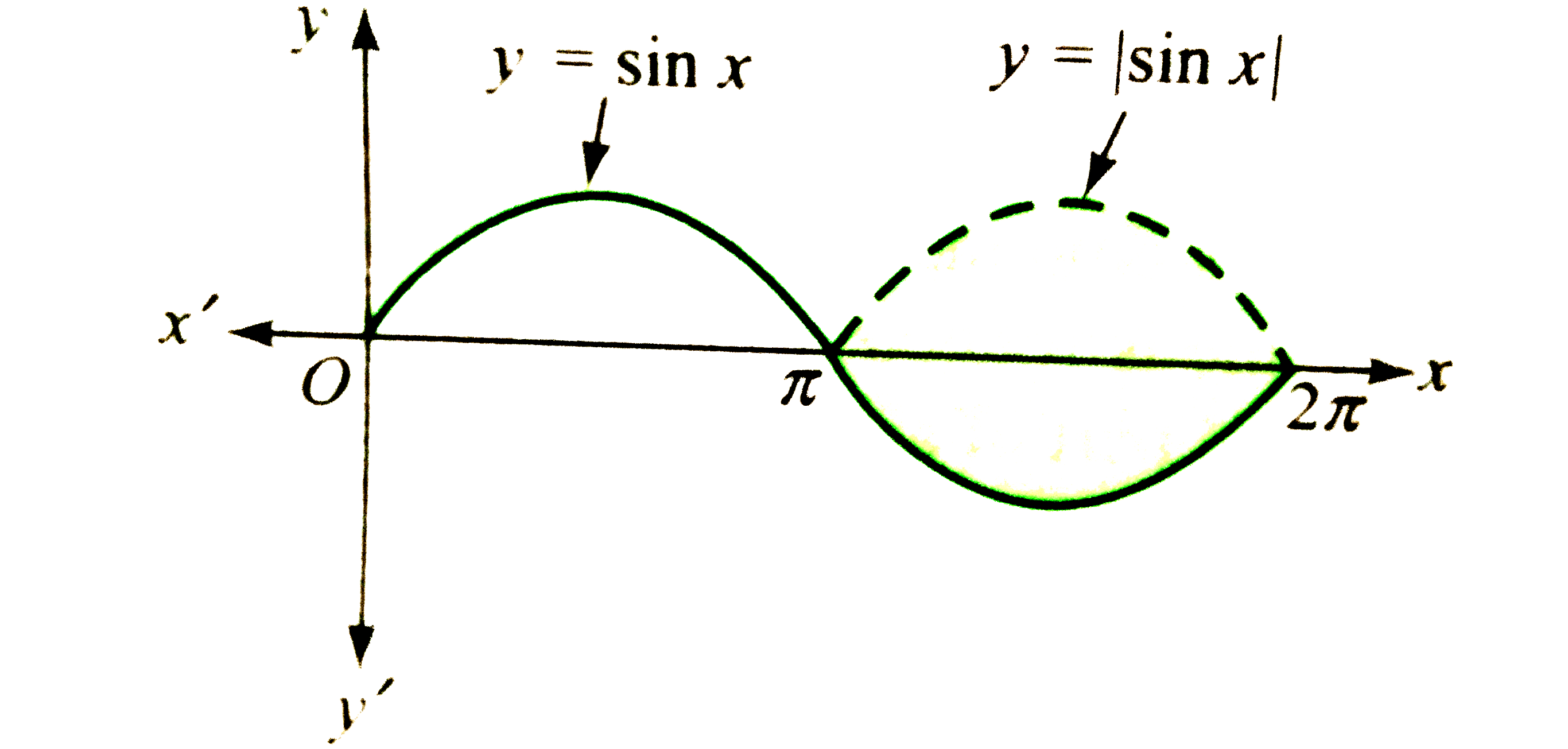
`f(x)= sin x, g(x) = |sin |," where "0le x le 20 pi`

C

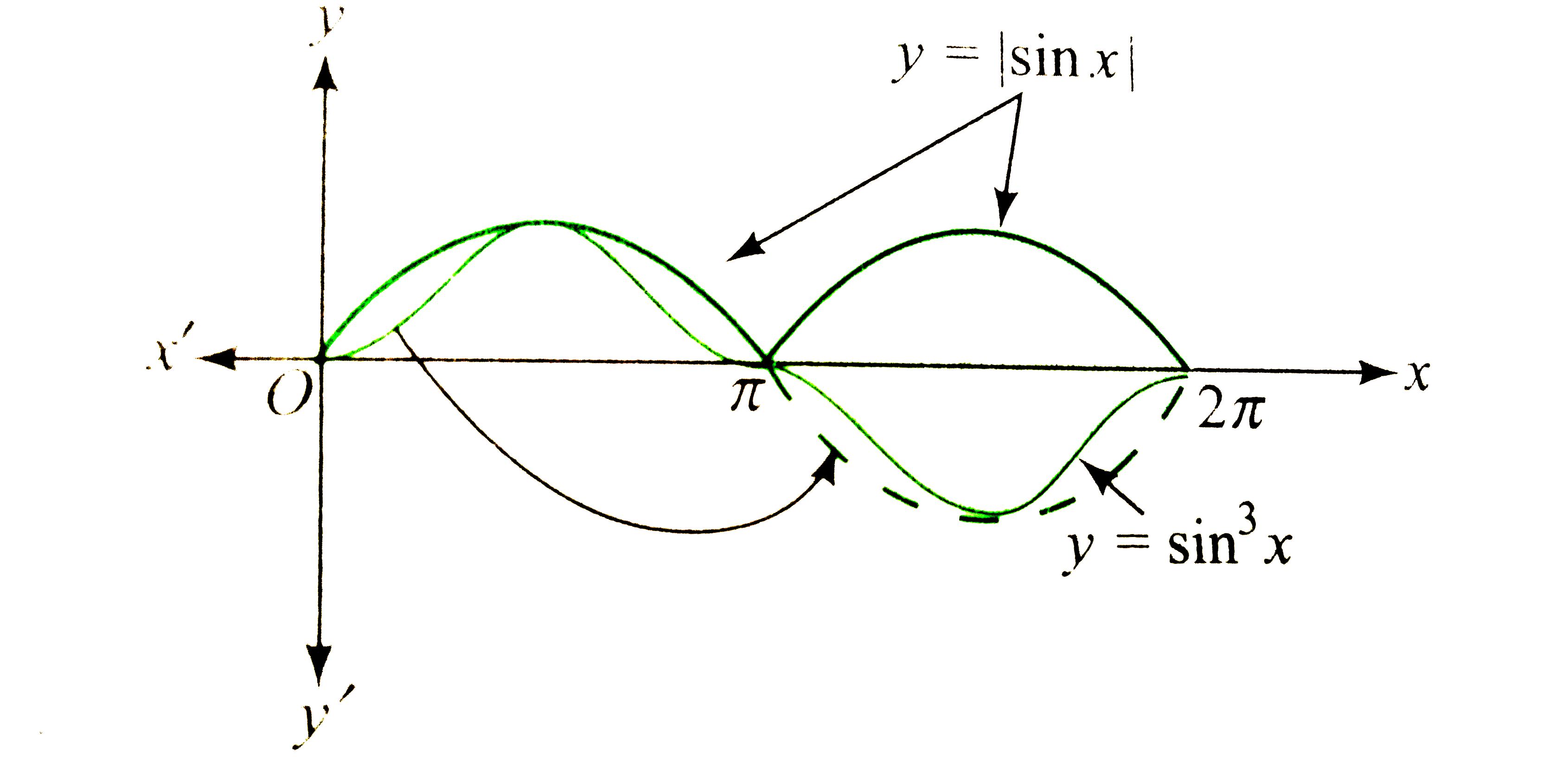
`f(x)=|sin|,g(x)=sin^(3)x," where "0lexle10 pi`

D

`f(x)=sin x, g(x)=sin^(4)x," where "0le xle 10 pi`

Text Solution

Verified by Experts

The correct Answer is:
A, C, D


We know that area bounded by `y= sin x` and x-axis for ` x in [0,pi]` is 2 sq. units.
Then area bounded by `y= sin x and y=sin^(2)x` is 4 sq. units for `x in [0,2pi]`.
Then for `x in [0,10pi]`, the area bounded is 20 sq. units.

The area bounded by y= sin x and y = `|sin x |" for " x in [0, 2pi]` is 4 sq. units.
Then for `x in [0,20pi],` the area bounded is 40 sq. units.

The area bounded by `y= sin x and y=sin^(3)x" for "x in [0,2pi]` is 4 sq units.
Then for `x in [0,10 pi],` the area bounded is 20 sq. units. Similarly, the area bounded by `y= sin x and y=sin^(4)x" for "x in [0,10pi]` is 20 sq. units.
Promotional Banner

Topper's Solved these Questions

  • AREA

    CENGAGE|Exercise Exercise (Comprehension)|21 Videos
  • AREA

    CENGAGE|Exercise Exercise (Matrix)|4 Videos
  • AREA

    CENGAGE|Exercise Exercise (Single)|40 Videos
  • APPLICATIONS OF DERIVATIVES

    CENGAGE|Exercise Question Bank|29 Videos
  • AREA UNDER CURVES

    CENGAGE|Exercise Question Bank|20 Videos

Similar Questions

Explore conceptually related problems

If f(x)=sin x/ e^(x) in [0,pi] then f(x)

Write the range of the function f(x)=sin[x],w h e r e(-pi)/4lt=xlt=pi/4 .

If f(x)=e^(x) sin x, x in [0, pi] , then

Find the area of the region bounded by the x-axis and the curves defined by y=tanx(w h e r e-pi/3lt=xlt=pi/3) and y=cotx(w h e r epi/6lt=xlt=(3x)/2) .

f(x)=[(sinx)/x ,"w h e n"x!=0=2,"w h e n"x=0 sinx-, when x0/(x) =L= 2, when x=0

If f(x)=log_(e)x and g(x)=e^(x) , then prove that : f(g(x)}=g{f(x)}

let f(x)=e^(x),g(x)=sin^(-1)x and h(x)=f(g(x)) th e n fin d (h'(x))/(h(x))

If f(x)={(sin3x)/x,w h e nx!=0 1,w h e nx=0dot Find whether f(x) is continuous at x=0