Home
Class 12
BIOLOGY
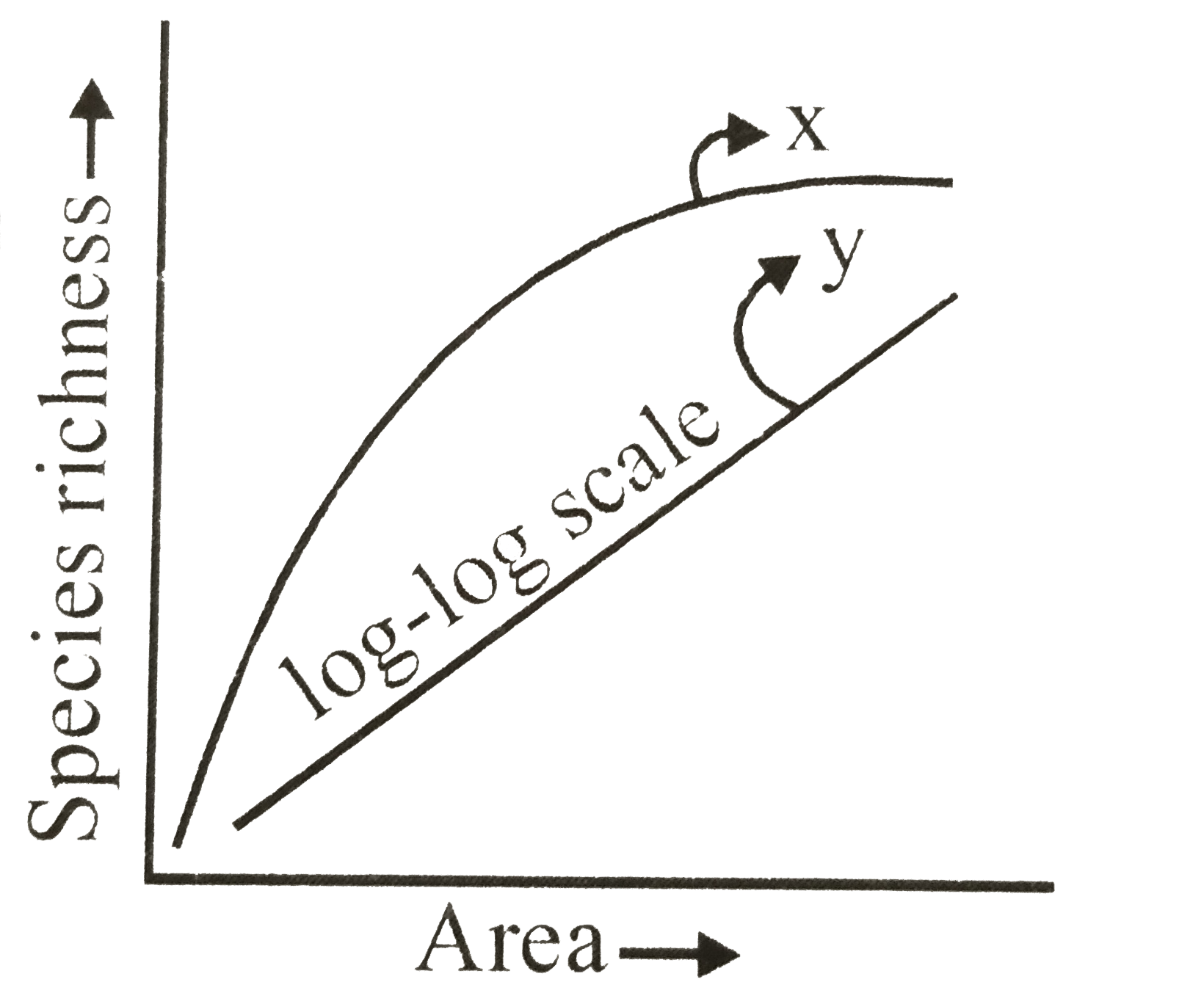
Study the above graph and answer the fo...


Study the above graph and answer the following questions -
(i) Identify x and y
(ii) The relation between species richness and area can be denoted as generally
(iii) The value of z lies in range of
(iv) On a log scale the relation between species richness and area is

Text Solution

Verified by Experts

The correct Answer is:

(i) `x = (S = CA^(z))`, `y = (log S = log C + z log A)`
(ii) rectangular hyperbola
(iii) z = 0.1 to 0.2
(iv) Straight line
Promotional Banner

Similar Questions

Explore conceptually related problems

The relation between species richness and area is correctly depicted by

The relation between species richness and area for a wide variety of taxa (angiosperm plants, birds, bats, freshwater fishes) is a

Obersve the above figure and answer the following questions - (i) Identify the above figure. (ii) Mention x, y and z. (iii) Above setup is used to remove__________.

The relation between species richness and area for a wide variety of taxa turns out to be a rectangular hyperbola. Give a brief explanation.

Relationship between species richness (S) and area (A) represent in the following graph is described by the equation

Study the graph given below and answer the question that follow ? (i) What is relationship between dissolved oxygen and biochemical oxygen Demand (BOD) ? (ii) Mention their effect on aquatic life in the river.

Which of the statement are in accordance with the observation of geographer Alexander von Humboldt ? I. Within a region species, richness increases with increasing explored area but within a limit. II. The relation between species richness and area is a rectangular hyperbole. III. The richness of species decreases with the increasing explored area. IV. There is no relation between the explored area and species richness .

The relation between specises richness and area is described on a logarithmic scale by the equation [where S = species richness, A = area, Z = slope of the line (regression coefficient ), C= Y - intercept]
