A
B
C
D
Text Solution
Verified by Experts
The correct Answer is:
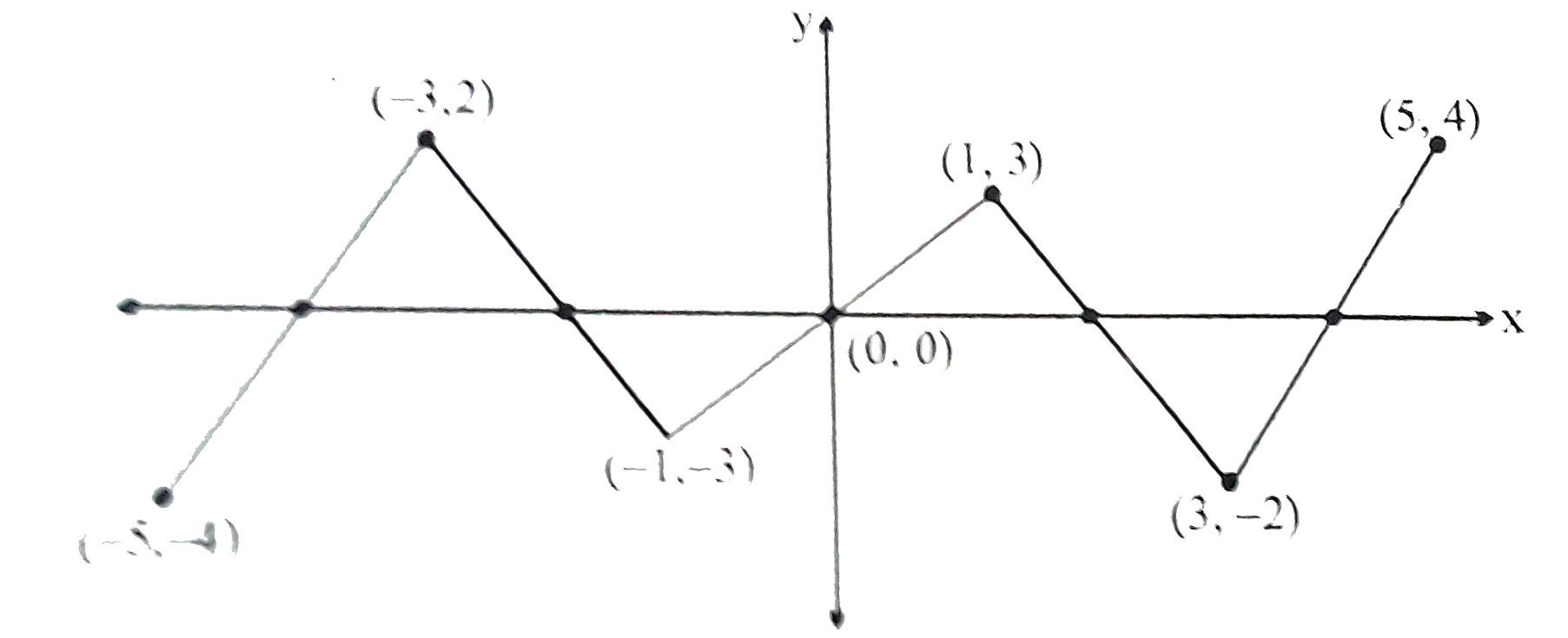



Topper's Solved these Questions
TEST PAPERS
BANSAL|Exercise MATHS SECTION - 2 PART A [PARAGRAPH TYPE]|6 VideosTEST PAPERS
BANSAL|Exercise MATHS SECTION - 2 [MULTIPLE CORRECT CHOICE TYPE]|6 VideosTEST PAPERS
BANSAL|Exercise CHEMISTRY SECTION - 2 [MULTIPLE CORRECT CHOICE TYPE]|6 VideosPROBABILITY
BANSAL|Exercise All Questions|1 VideosTHERMODYNAMICS
BANSAL|Exercise Match the column|7 Videos
BANSAL-TEST PAPERS-MATHS SECTION - 2 PART A [SINGLE CORRECT CHOICE TYPE]
- Let lim(x to) (1+(P(x))/(x^(5)))^((1)/(x^(3)-tan^(3)x)) exists and is ...
Text Solution
|
- Let f : R -> R be a continuous onto function satisfying f(x) + f(-x)=0...
Text Solution
|
- If {x} represents the fractional part of then underset(0)overset(9)(f)...
Text Solution
|
- Suppose g is the inverse fiunction of a diffdifferentiable finction fa...
Text Solution
|
- "Let"f(x)=Lim(ntooo) ((x^(2)+4x+5+e^(x)+sgn(e^(-x)))^(n)-5)/(2(x^(2)+4...
Text Solution
|
- The derivative of y=sin^(-1)((3x+sqrt(16-16x^(2)))/(5)) with respect t...
Text Solution
|
- If sqrt(y-x)+sqrt(y+x)=1" then "(d^(3)y)/(dx^(3)) at x=1 is equal to
Text Solution
|
- Let f(x)=("cosec "x+cotx-1)/(1+cotx-"cosec "x). The Primitive of f(x)...
Text Solution
|