

Home
Class 11
PHYSICS
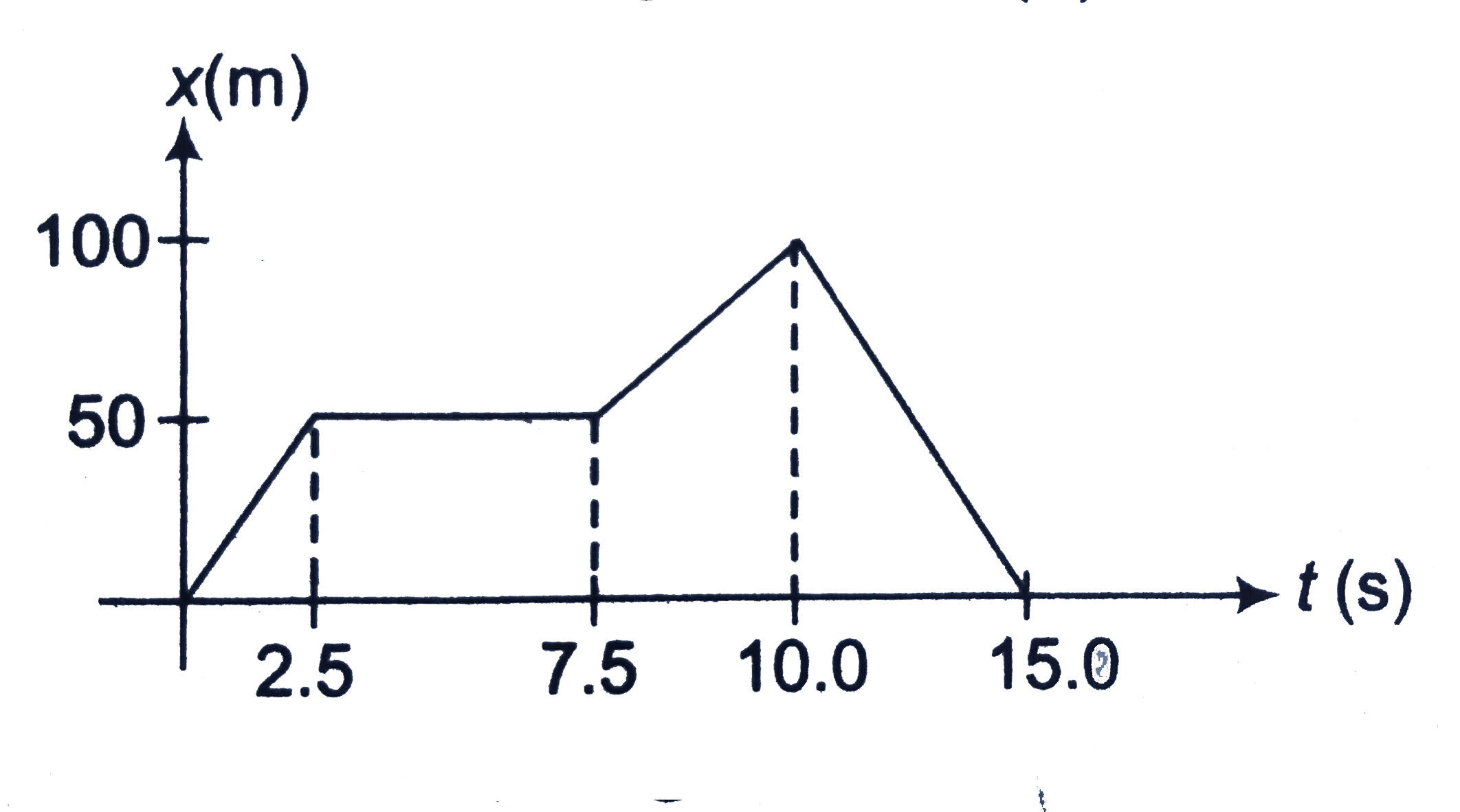
Fig. shows the graph of the x-coordinate...

Fig. shows the graph of the x-coordinate of a particle going along the x-axis as a function of time. Find (a) the average velocity during `0` to `10 s,` (b) instantaneous velocity at 2, 5, 8 and 12s.

Promotional Banner

Similar Questions

Explore conceptually related problems

Figure shows the graph of the x-coordinaste of a particle going along the X-axis as a function of time.Find a. te average velocity during 0 to 10s, b. instantaneous velocity at 2,5,8 and 12s.

Figure shows the graph of the x-coordinaste of a particle going along the X-axis as a function of time.Find a. te average velocity during 0 to 10s, b. instantaneous velocity at 2,5,8 and 12s.

Figure shows the graph of x-coordinate of a particle moving along x-axis as a function of time. Average velocity during t = 0 to 4 s and instantaneous velocity at t = 4.113 s respectively will be

Figure shows the graph of x - coordinate of a particle moving along x - axis as a function of time. Average velocity during t = 0 to 6 s and instantaneous velocity at t = 3 s respectively, will be

Figure shows the graph of x-coordinate of a particle moving along x-axis as a function of time. Average velocity during t = 0 to 4 s and instantaneous velocity at t = 4.113 s respectively will be

Figure shows the graph of x - coordinate of a particle moving along x - axis as a function of time. Average velocity during t = 0 to 6 s and instantaneous velocity at t = 3 s respectively, will be

Fig. shows the graph of velocity versus time for a particle going along the x-axis. Find (a) acceleration, (b) the distance traveled in 0 to 10 s and (c) the displacement in 0 to 10 s.

Fig. shows the graph of velocity versus time for a partice going along the x-axis. Find (a) acceleration, (b) the distance traveled in 0 to 10 s and (c) the displacement in 0 to 10 s.

Figure shows the velocity time graph of a particle moving along straight line (v is m/s and t is in second). It average velocity in 20 seconds will be: .