Home
Class 12
PHYSICS
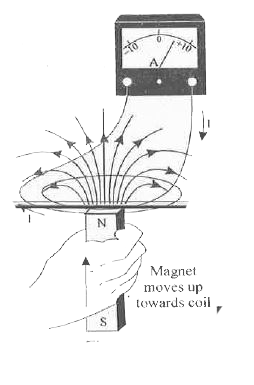
Fig. E.I show s magnet coil experiment o...

Fig. E.I show s magnet coil experiment of electromagnetic induction.
What happens when
a. i. The number of turns of the coil is inceased.
ii. The streangth of the magnet is increased.
iii. The speed of motion of the magnet is increased.
b. An induced e.m.f. has no direction of its own. Why?

Text Solution

Verified by Experts

a. i. Induced e.m.f increases
ii. Induced e.m.f increases
iii. Induced e.m.f increases
b. The direction of induced e.m.f or current is such as to oppose the cause produced it. In this experiment, if the direction of motion of magnet reverses, the e.m.f.s direction also reversed. Hence an induced e.m.f. has no direction of its own.
Promotional Banner

Topper's Solved these Questions

  • ELECTROMAGNETIC INDUCTION

    NEW JOYTHI PUBLICATION|Exercise CONTINUOUS EVALUATION (ASSIGNMENTS)|2 Videos
  • ELECTROMAGNETIC INDUCTION

    NEW JOYTHI PUBLICATION|Exercise PREVIOUS YEAR QUESTIONS|2 Videos
  • ELECTROMAGNETIC INDUCTION

    NEW JOYTHI PUBLICATION|Exercise PRACTICE PROBLEMS FOR SELF ASSESSMENT|3 Videos
  • ELECTRIC CHARGES AND FIELDS

    NEW JOYTHI PUBLICATION|Exercise Competitive Exam Corner|20 Videos
  • ELECTROMAGNETIC WAVES

    NEW JOYTHI PUBLICATION|Exercise COMPETITIVE EXAM CORNER|16 Videos

Similar Questions

Explore conceptually related problems

Define self-inductance of a coil interms of (i) magnetic flux and (ii) induced emf.

A short bar magnet placed in a horizontal plane has its axis aligned along the magnetic north - south direction . Null point are found on the axis of the magnet at 14 cm from the centre of the magnet . The earth's magnetic field at the place if 0.36 G and the angle of dip is zero. What is the total magnetic field on the normal bisector of the magnet at the same distance as the null point (i.e., 14 cm) from hte centre of the magnetic ? (At null points , field due to a magnet is equal and opposite to the horizontal component of earth's magnetic field.)

A 100 turn closely wound circular coil of radius 10 cm carries a current of 3.2 A. a. What is the field at the centre of the coil ? b. What is the magnetic moment of this coil ? The coil is placed in a vertical plane and is free to rotate about a horizontal axis which coincides with its diameter. A unifrom magnetic field of 2 T in the horizontal direction exists such that initially the axis of the coil is in the direction of the field. The coil rotates through an angle of 90^@ under the influence of the magnetic field . c. What are the magnitudes of the torques on the coil in the initial and final position ? d. What is the angular speed acqired by the coil when it has rotated by 90^(@) ? The moment of inertia of the coil is 0.1 kg m^2

A conducting wire ab of length l, resistance r and mass m starts sliding at t = 0 down a smooth, vertical, thick pair of connected rails as shown in . A uniform magnetic field B exists in the space in a diraction perpendicular to the plane of the rails. (a) Write the induced emf in the loop at an instant t when the speed of the wire is v. (b) what would be the magnitude and direction of the induced current in the wire? (c) Find the downward acceleration of the wire at this instant. (d) After sufficient time, the wire starts moving with a constant velocity. Find this velocity v_m. (e) Find the velocity of the wire as a function of time. (f) Find the displacement of the wire as a functong of time. (g) Show that the rate of heat developed inte wire is equal to the rate at which the gravitational potential energy is decreased after steady state is reached.

The rectangualr wire- frame, shown in has a width d, mass m, resistance R and a large length. A uniform magnetic field B exists to the left of the frame. A constant force F starts pushing the frame into the magnetic field at t =0. (a) Find the acceleration of the frame when its speed has increased to v. (b) Show that after some time the frame will move with a constant velocity till the whole frame enters into the magnetic field. find this velocity v_0 . (c) show that the velocity at tiem t is given by v= v_0(1 - e^(-Ft/mv_0) .

a. Magnetic field lines show the direction (at every point) along which a small magnetised needle aligns (at the point) Do the magnetic field also represent the lines of force one a moving charged particle at every point ? b. Magnetic field lines can be entirely confined within the core of a toroid , but not within a straight solenoid. Why ? c. If magnetic monopoles existed, how would the Gauss ' law of magnetism be modified ? d. Does a bar magnet exert a torque on itself due to its own field ? Does one element of a current - carrying wire exert a force on another element of the same wire ? e.Magnetic field arises due to charges in motion . Can a system have magnetic moments eventhough its charge is zero ?

Figure shows a solenoid current of I- ampere Its area is 'A' and number of turns n. a. What is the flux density of the solenoid field inside ? b. If magnetic material in the form of a rod of area 'a' (a lt lt A) is inserted into the solenoid, what is the magnetising field strength ? c. Find the total flux density inside the specimen.

A particle of mass m = 1.6 X 10^(-27) kg and charge q = 1.6 X 10^(-19) C moves at a speed of 1.0 X10^7 ms^(-7) . It enters a region of uniform magnetic field at a point E, as shown in The field has a strength of 1.0 T. (a) The magnetic field is directed into the plane of the paper. The particle leaves the region of the filed at the point F. Find the distance EF and the angle theta. (b) If the field is coming out of the paper, find the time spent by the particle in the regio the magnetic feld after entering it at E .

A currrent I is passed through a silver strip of width d and area of cross section A. The number of free electrons per unit volume is n. (a) Find the drift velocity v of the electrons. (b) If a magnetic field B exists in the region as shown in what is the average magnetic force on the free electrons? (c) Due to the magnetic force, the free electrons get accumulated on one side of the conductor along its length. This produces a transverse electric field in the conductor which opposes the magnetic force on the electrons. Find the magnitude of the electric field which will be the potential diference developed across the width of the conductor due to the electron- accumulation? The appearance of a transverse emf, when a current-carrying wire is placed in a magnetic field, is called hall effect.

Answer the following questions . a. The earth's magnetic field varies from point is space. Does it also change with time ? It so , on what time scate does it change appreciably ? b. The earth's core is known to contain iron. Yet geologists do not regard this as a source of the earth's magnetism why ? c. The charged currents in the outer conducting regions of the earth's core are thought to be responsible for earth's magnetism . What might be the ' battery ' (i.e., the source of energy) to sustain these currents ? d. The earth may have even reversed the direction of its field several times during its history of 4 to 5 billion years. How can geologists know about the earth's field in such distant past ? e. The earth's field departs from its dipole substantially at large distances (greater than about 30,000 km) what agencies may be responsible for this distortion ? f. Interstellar space has an extremely weak magnetic field of the order of 10^(-12) T, Can such a weak field be of any significant consequence ? Explain. [Note : Exercise 2 is meant mainly to arouse your curiosity . Answers to some question above are tentative or unknown . Brief answers wherever possible are given at the end . For details , you should consult a good text on geomagnetism.]
