Home
Class 12
BIOLOGY
Difference between flush end and cohesiv...

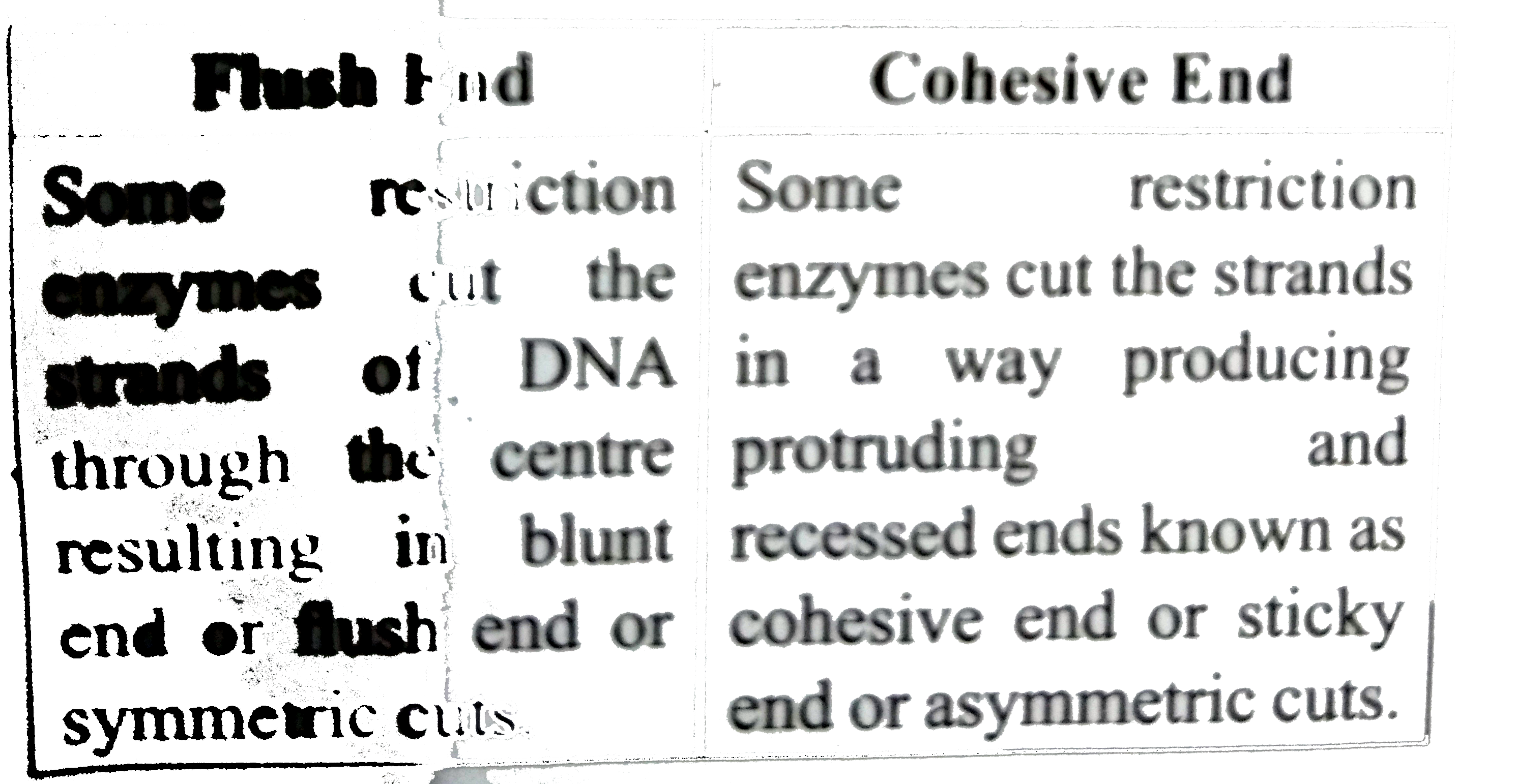
Difference between flush end and cohesive end of DNA.

Text Solution

Verified by Experts
Promotional Banner

Topper's Solved these Questions

  • SAMPLE PAPER 13 (UNSOLVED)

    FULL MARKS|Exercise Bio -Botany Part - III|5 Videos
  • SAMPLE PAPER 13 (UNSOLVED)

    FULL MARKS|Exercise Bio -Botany Part - IV|2 Videos
  • SAMPLE PAPER 13 (UNSOLVED)

    FULL MARKS|Exercise Biology -Zoology Part-IV|2 Videos
  • SAMPLE PAPER -6 (SOLVED)

    FULL MARKS|Exercise Bio-Zoology (PART IV)|4 Videos
  • SAMPLE PAPER 18 (UNSOLVED)

    FULL MARKS|Exercise BIO-ZOOLOGY (Part-IV)|4 Videos

Similar Questions

Explore conceptually related problems

The ratio of the diameters of two metallic rods of the same material is 2 : 1 and their lengths are in the ratio 1 : 4. If the temperature difference between their ends are equal, the rate of flow of heat in them will be in the ratio

A rod of length l rotates with a small but uniform angular velocity omega about its perpendicular bisector. A uniform magnetic field B exists parallel to the axis of rotation. The potential difference between the centre of the rod and an end is

What is the difference between the sugars of DNA and RNA?

What is the potential difference between the ends of resistor of 15Omega when a current of 2A passes through it ?

If the strength of current flows through a resistor is I having resistance R and potential difference between its ends is V then the power dissipated is:

The distance between one end and the other end is called____.

The distance between one end and the other end is called____.

Write the main structural difference between RNA and DNA of the four bases, name those which are common to both RNA and DNA.

A rod of length l rotates with a uniform angular velocity omega about its perpendicular bisector. A uniform magnetic field B exists parallel to the axis of rotation. The potential difference between the two ends of the rod is

Find the equivalent resistance of the circuit of the previous problen between the ends of an edge such as a and b in figure.

