Home
Class 12
BIOLOGY
Differentiate between the following: ...

Differentiate between the following:
a. Binary fision in amoeba and multiple fission in plasmodium.
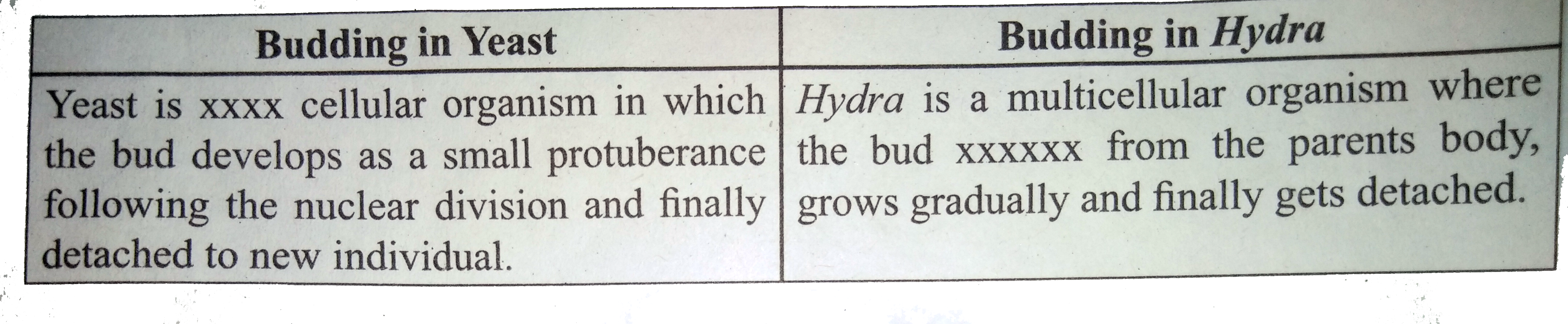
b. Budding in yeast and budding in Hydra.
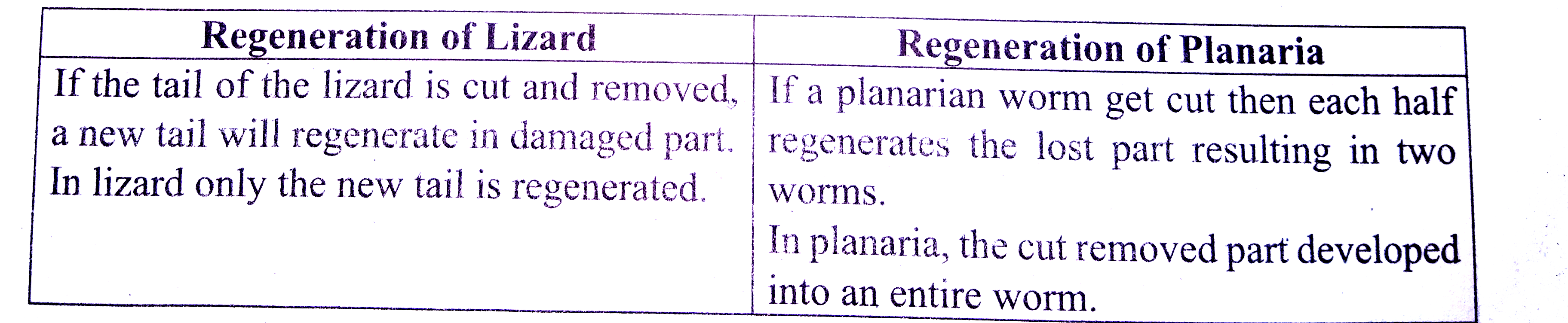
c. Regeneration in lizard and Planaria

Text Solution

Verified by Experts
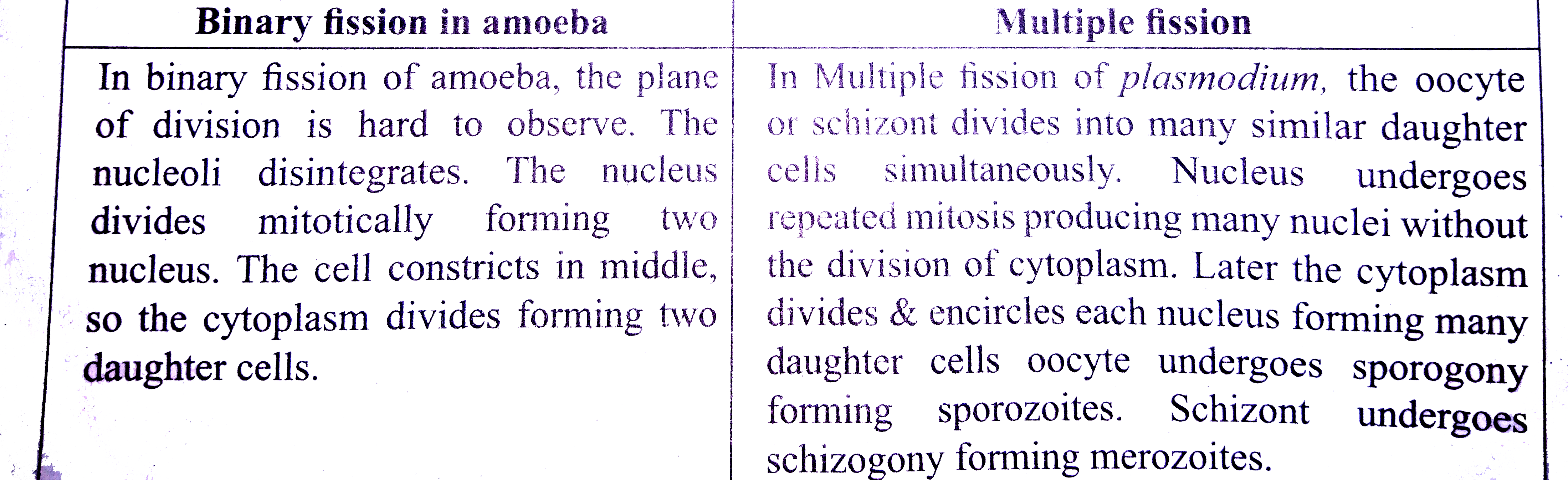
Binary fission in amoeba and multiple fission in Plasmodium

(b) Budding in yeast and budding in Hydra

(c ) Regeneration in lizard and Planaria
Promotional Banner

Topper's Solved these Questions

  • REPRODUCTION IN ORGANISMS

    FULL MARKS|Exercise Additional Question (1 - Mark Questions )|24 Videos
  • REPRODUCTION IN ORGANISMS

    FULL MARKS|Exercise Additional Question (2 - Mark Questions )|14 Videos
  • PRINCIPLES OF ECOLOGY

    FULL MARKS|Exercise ADDITIONAL QUESTIONS (HIGHER ORDER THINING SKILLS (HOTs) QUESTIONS)|4 Videos
  • REPRODUCTIVE HEALTH

    FULL MARKS|Exercise HIGHER ORDER THINKING SKILLS (HOTs ) QUESTIONS|2 Videos

Similar Questions

Explore conceptually related problems

Differentiate between the following: Binary fission in Amoeba and multiple fission in Plasmodium.

Differentiate between the following : Budding in yeast and budding in Hydra

Refer to the given figures and select the correct option. a) binary fission b) multiple fission c) mitosis d) budding

Explain with a labelled diagram the asexual reproduction in the following . i. Budding in yeast ii. Binary fission in amoeba.

Write the name of organisms that undergo the following of asexual reproduction. (a) Budding (b) fragmentation (c) Regeneration (d) Gemma cup formation.

During binary fission in Amoeba which of the following organelles is duplicated ? a) plasma membrane b) nucleus c) contractile vacuole d) all of these

Study the following figures and select the correct statements regarding these. (i)A shows mode of asexual reproduction in sponges through internal buds. (ii)B shows sexual reprodction through zoospores in Chlamydomonas. (iii) C shows asexual reproduction through fragmentation in Penicullium. (iv) D shows external budding in Sycon.

Find the odd one out in each group and justify. a.Vasa efferentia, epididymis, prostate gland, seminal tube. b.Ovary, penis, vagina, uterus, oviduct c. Proliferative phase, menstrual phase, multiplication phase, ovulatory phase, secretory phase. d.Budding, gametogenesis, fertilization, cleavage, gastrulation e. Acrosome, zona pellucida, distal centriole, middlc piece, axial centriole f. Amnion, foetus, chorion, allantois, yolk sac

Match the following. {:("Types of Asexual reproduction","Organsims"),("A. Endogenous budding","i. Star fish"),("B. Parthenogenesis","ii. Tapeworm"),("C. Fragmentation","iii. Noctiluca"),("D. Regeneration","iv. Honey bees"):}