Text Solution
Verified by Experts



Topper's Solved these Questions
HEREDITY
FULL MARKS|Exercise ADDITIONAL QUESTIONS (HOTS)|2 VideosHEREDITY
FULL MARKS|Exercise ADDITIONAL QUESTIONS (ANSWER THE FOLLOWING BRIEFLY:)|7 VideosHEALTH AND DISEASES
FULL MARKS|Exercise Additional Questions (Higher Order Thinking Skills (HOTS):)|1 VideosNERVOUS SYSTEM
FULL MARKS|Exercise VII. ADDITIONAL QUESTIONS (HOTS).|5 Videos
Similar Questions
Explore conceptually related problems
FULL MARKS-HEREDITY-ADDITIONAL QUESTIONS (ANSWER THE FOLLOWING IN DETAIL:)
- Explain the structure of chromosomes with suitable diagram.
Text Solution
|
- What is mutation? Explain the two types of mutation.
Text Solution
|
- Explain the monohybrid cross, with a diagram and describe the interpre...
Text Solution
|
- Explain with an example the inheritance of dihybrid cross.How is it di...
Text Solution
|
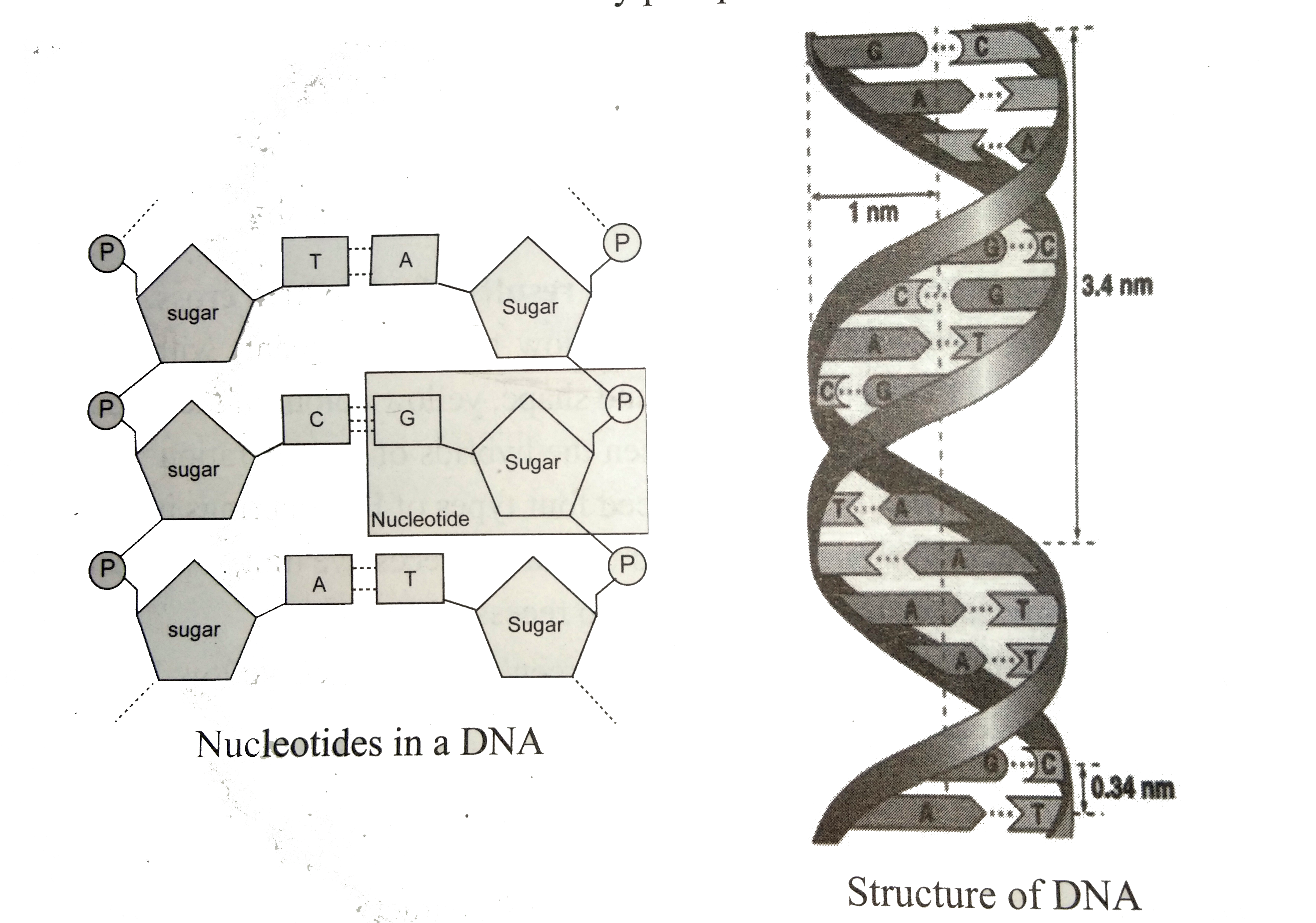
- Explain the Watson and Crick model of DNA.
Text Solution
|
- Explain the detail, the various steps of DNA replication.
Text Solution
|