

Home
Class 12
PHYSICS
A particle moving parallel to x-axis as ...

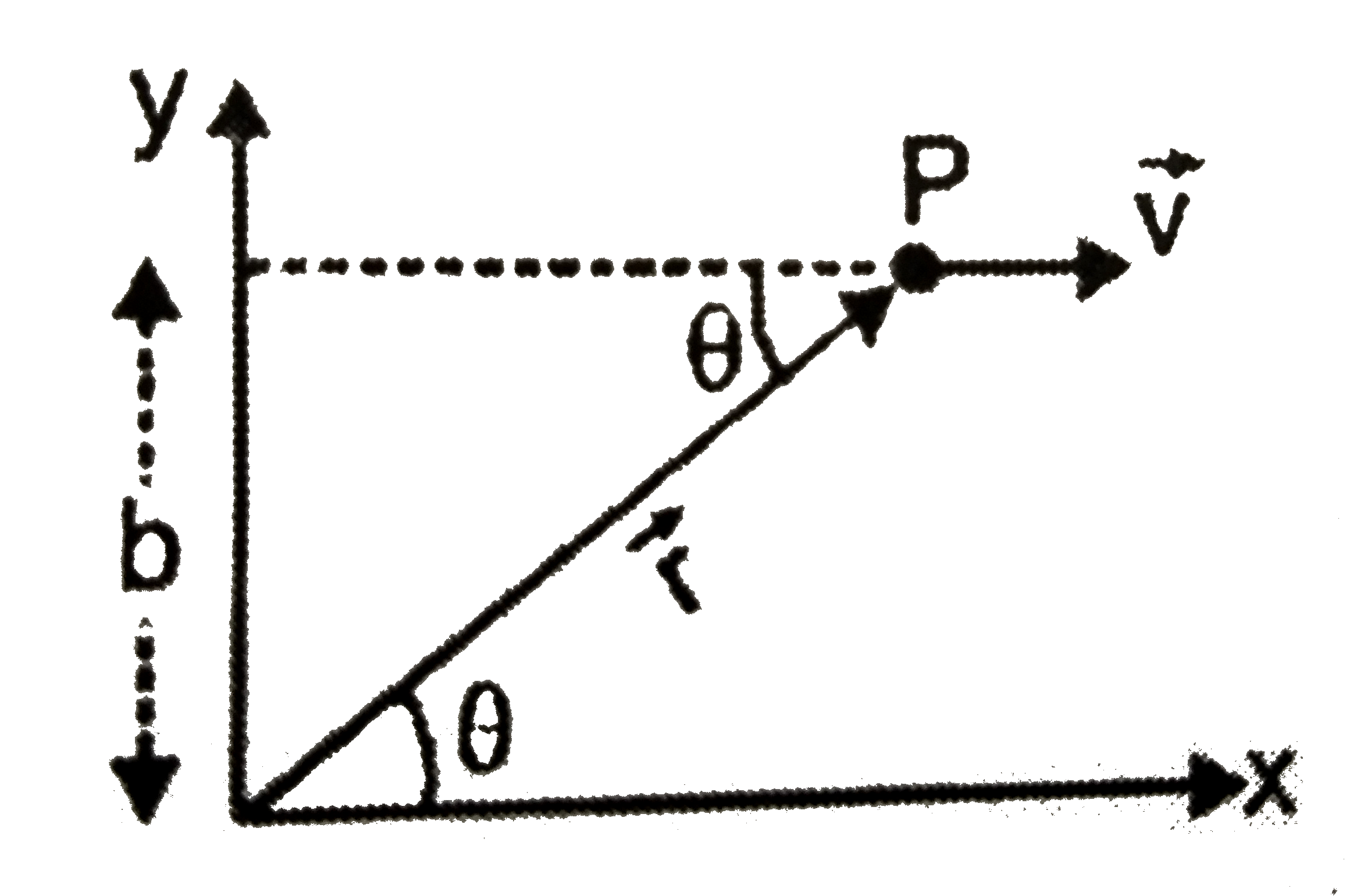
A particle moving parallel to x-axis as shown in fig. such that at all instant the y-axis component of its position vector is constant and is equal to 'b'. Find the angular velocity of the particle about the origin when its radius vector makes angle `theta` from the axis.

Promotional Banner

Similar Questions

Explore conceptually related problems

A particle moves parallel to X-axis as shown in the figure such that at all instant the y axis component of its position vector is constant and is equal to 'b'. The angular velocity of the particle about the origin is

A particle is moving parallel to x-axis as shown in the figure. The angular velocity of the particle about the origin is

A particle is moving parallel to x-axis as shown in the figure. The angular velocity of the particle about the origin is

A particle mass parallel to x-axis with constant velocity v as shown in the figure. The angular velocity of the particle about the origin O

A particle mass parallel to x-axis with constant velocity v as shown in the figure. The angular velocity of the particle about the origin O

A particle is moving with constant speed v along x - axis in positive direction. Find the angular velocity of the particle about the point (0, b), when position of the particle is (a, 0).

A particle is moving with constant speed v along x - axis in positive direction. Find the angular velocity of the particle about the point (0, b), when position of the particle is (a, 0).

A particle is moving with constant speed v along the line y = a in positive x -direction. Find magnitude of its angular velocity about orgine when its position makes an angle theta with x-axis.

A particle is moving with constant speed v along the line y = a in positive x -direction. Find magnitude of its angular velocity about orgine when its position makes an angle theta with x-axis.

A particle is moving with constant speed v along the line y = a in positive x -direction. Find magnitude of its angular velocity about orgine when its position makes an angle theta with x-axis.