

Home
Class 11
PHYSICS
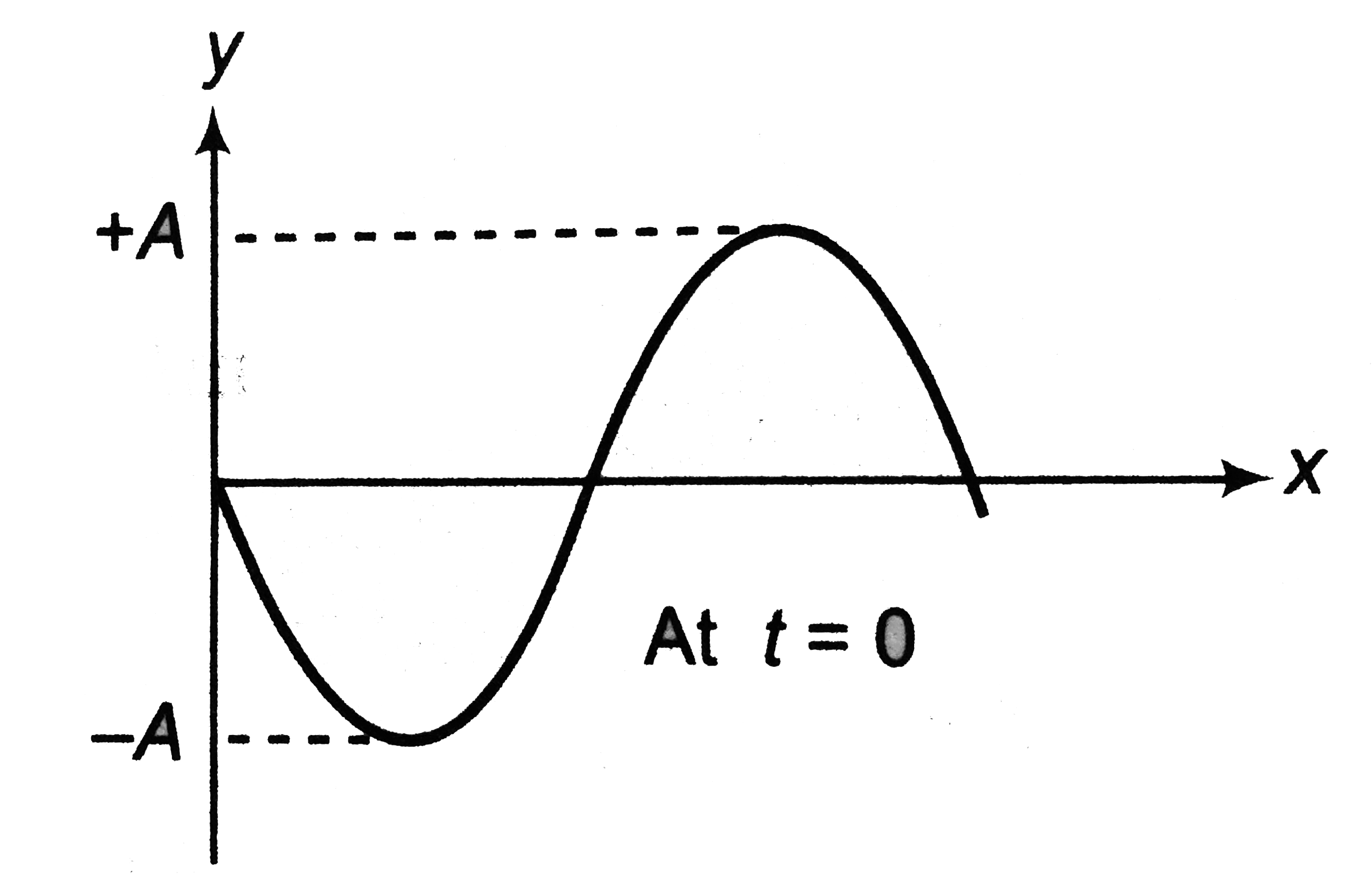
For a wave described by y = A sin (omega...

For a wave described by `y = A sin (omegat - kx)`, consider the following or not and in what direction and describe whether the particle is speeding up, slowing sown or instantanteously not accelerating?

Promotional Banner

Similar Questions

Explore conceptually related problems

For a wave described by, y = A sin(omega t -kx) , consider the following points (i) x =0,(ii) x =pi/(4k) For aparticle at each ofthese.points at t = 0, describe whether the particle is moving or not and in what direction and describe whether the particle is speeding up, slowing down or instantaneously not accelerating.

A wave on a string is described by y(x,t)=A cos (kx-omegat) . (a) Graph y,v_(y) , and a_(y) as function of x for time t=0. (b) consider the following points on the string: (i) x=0,(ii) x=pi//4k, (iii) x=pi//2k, (iv)x=3pi//4k, (v)x=pi//k, (vi)x=5pi//4k, (vii) x=3pi//2k, (viii) x=7pi//4k . For a particle at each of these points at t=0, describes in words whether the particle is moving and in what direction, and whether the particle is speeding up, slowing down, or instantaneously not acceleraring.

A wave on a string is described by y(x,t)=A cos (kx-omegat) . (a) Graph y,v_(y) , and a_(y) as function of x for time t=0. (b) consider the following points on the string: (i) x=0,(ii) x=pi//4k, (iii) x=pi//2k, (iv)x=3pi//4k, (v)x=pi//k, (vi)x=5pi//4k, (vii) x=3pi//2k, (viii) x=7pi//4k . For a particle at each of these points at t=0, describes in words whether the particle is moving and in what direction, and whether the particle is speeding up, slowing down, or instantaneously not acceleraring.

A wave is described by y=Asin(omegat-kx) . The speeds of which of the following particles in the medium are increasing at time t=0?

A wave is described by y=Asin(omega-kx) . The speeds of which of the following particles in the medium are increasing at time t=0?

In a wave motion y = a sin (kx - omegat) , y can represent

In a wave motion y = a sin (kx - omegat) , y can represent

A transverse wave is represented by y = A sin (omegat - kx) . For what value of the wavelength is the wave velocity equal to the maximum particle veloctiy?

Two sound waves are y = a sin (omegat - kx), y = a cos (omega - kx) . Phase difference between two waves is