
Home
Class 12
CHEMISTRY
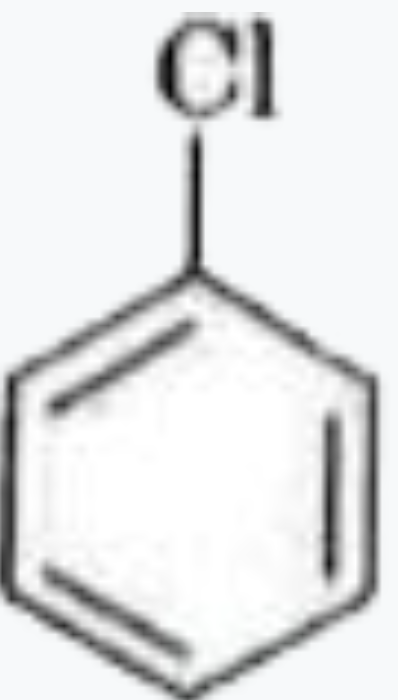
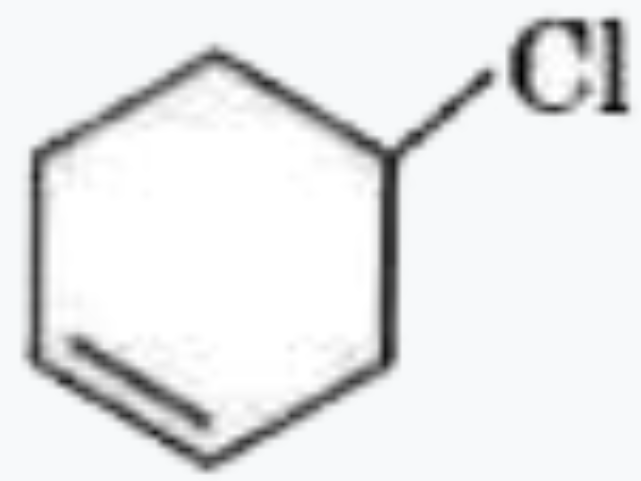
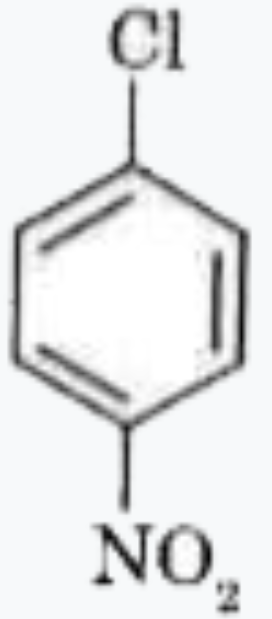
The compound having longest C-Cl bond is...

The compound having longest `C-Cl` bond is

A

B

C

D

Text Solution

AI Generated Solution

The correct Answer is:

To determine which compound has the longest C-Cl bond, we need to analyze the effect of resonance and bond order in the given compounds. Here’s a step-by-step breakdown of the solution: ### Step 1: Understand Bond Length and Bond Order - The bond length is inversely proportional to the bond order. This means that as the bond order increases, the bond length decreases. Conversely, a lower bond order results in a longer bond length. ### Step 2: Identify the Compounds - We need to analyze the given compounds (not specified in the question but typically would include chlorobenzene, alkyl chlorides, etc.) to see which has resonance and how it affects the C-Cl bond. ### Step 3: Analyze Resonance Effects - **Chlorobenzene**: In chlorobenzene, the chlorine atom can participate in resonance with the benzene ring. This resonance leads to a partial double bond character in the C-Cl bond, increasing the bond order and thus decreasing the bond length. - **Alkyl Chlorides**: In simple alkyl chlorides (like chloroethane), there is no resonance effect. The C-Cl bond retains its single bond character, resulting in a higher bond length compared to chlorobenzene. ### Step 4: Compare the Compounds - **Chlorobenzene**: Has resonance, leading to a shorter C-Cl bond. - **Alkyl Chlorides**: Lack resonance, resulting in a longer C-Cl bond compared to chlorobenzene. ### Step 5: Identify the Compound with the Longest C-Cl Bond - Since alkyl chlorides do not have resonance and thus have a lower bond order compared to chlorobenzene, they will have the longest C-Cl bond. Among the alkyl chlorides, the one with the least steric hindrance or branching will have the longest bond. ### Conclusion - The compound with the longest C-Cl bond is likely to be an alkyl chloride (e.g., chloroethane) due to the absence of resonance.

To determine which compound has the longest C-Cl bond, we need to analyze the effect of resonance and bond order in the given compounds. Here’s a step-by-step breakdown of the solution: ### Step 1: Understand Bond Length and Bond Order - The bond length is inversely proportional to the bond order. This means that as the bond order increases, the bond length decreases. Conversely, a lower bond order results in a longer bond length. ### Step 2: Identify the Compounds - We need to analyze the given compounds (not specified in the question but typically would include chlorobenzene, alkyl chlorides, etc.) to see which has resonance and how it affects the C-Cl bond. ...
Promotional Banner

Topper's Solved these Questions

  • HALOALKANES AND HALOARENES

    MODERN PUBLICATION|Exercise C. MULTIPLE CHOICE QUESTIONS (with more than one correct answers)|10 Videos
  • HALOALKANES AND HALOARENES

    MODERN PUBLICATION|Exercise D. MULTIPLE CHOICE QUESTIONS (based on the given passage / comprehension)|9 Videos
  • HALOALKANES AND HALOARENES

    MODERN PUBLICATION|Exercise A. MULTIPLE CHOICE QUESTIONS (with only one correct answer)|35 Videos
  • GENERAL PRINCIPLES AND PROCESSES OF ISOLATION OF ELEMENTS

    MODERN PUBLICATION|Exercise COMPETION FILE (Integer Type Numerical Value Type Questions)|5 Videos
  • ORGANIC COMPOUNDS CONTAINING NITROGEN

    MODERN PUBLICATION|Exercise UNIT PRACTICE TEST|5 Videos

Similar Questions

Explore conceptually related problems

Which of the following has longest C-O bond

Select the compound having all equivalent bond lengths :

Which of the following has longest C-O bond?

Which of the following compounds will have the longest C = C bonds?

The longest C-C bond is present in

Which of the following has longest C – O bond:

Which of the following has the longest C-O bond length? (C-O bond length of CO is 1.128 A )

MODERN PUBLICATION-HALOALKANES AND HALOARENES-B. MULTIPLE CHOICE QUESTIONS (from competitive Examinations)
  1. The increasing order of reactivity of the following halides for the S(...

    Text Solution

    |

  2. 3-methyl-pent-2-ene on reaction with HBr in presence of peroxide forms...

    Text Solution

    |

  3. The major product obtained in the following reaction is:

    Text Solution

    |

  4. The major product of the following reaction is :

    Text Solution

    |

  5. Tertiary alkyl halides are practically inert to substitution by S(N)^(...

    Text Solution

    |

  6. The number of possible organobromine compounds which can be obtained i...

    Text Solution

    |

  7. Which of the following halides undergoes hydrolysis on warming with "w...

    Text Solution

    |

  8. The compound having longest C-Cl bond is

    Text Solution

    |

  9. The alkyl halides require to prepare by Wurtz reaction are

    Text Solution

    |

  10. The neopentyl halide in ethanol yields alkenes by E(1) mechanism due t...

    Text Solution

    |

  11. The major product of the following reaction is :

    Text Solution

    |

  12. Increasing order of reactivity of the following compounds for S(N)1 su...

    Text Solution

    |

  13. Heating of 2-chloro-1-phenylbutane with EtOK/EtOH gives X as the major...

    Text Solution

    |

  14. The major product of the following reaction is :

    Text Solution

    |

  15. The correct IUPAC name of the following compound is:

    Text Solution

    |

  16. The major product 'Y' in the following reaction is :

    Text Solution

    |

  17. The major product of the following reaction is :

    Text Solution

    |

  18. The correct statement(s) about the compound given below is (are):

    Text Solution

    |

  19. KI in acetone, undergoes S(N)2 reaction with each of P, Q, R and S. Th...

    Text Solution

    |

  20. In the following reaction, the major product is

    Text Solution

    |
