

Home
Class 12
PHYSICS
The angular displacement(theta) of the b...

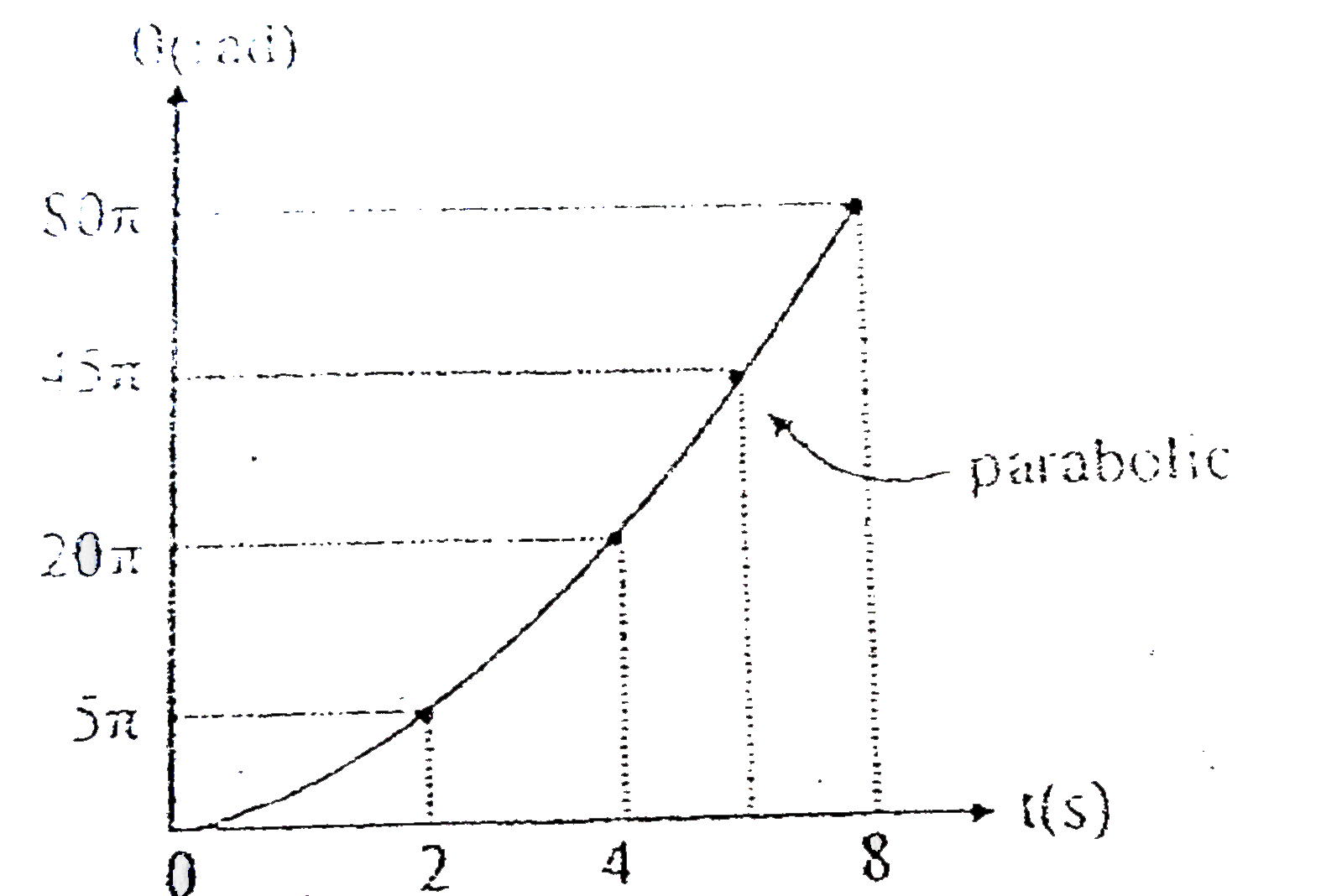
The angular displacement(`theta`) of the blades of a ceiling fan, when the fan is switched on at `t=0`, is shown in figure. The average angular velocity of the fan blades during the first `8` seconds will be

Promotional Banner

Similar Questions

Explore conceptually related problems

Sometimes, the blades of the ceiling fan do not start rotating when it is switched on, Give a reason from Physics.

The angular displacement theta radians of a fly wheel varies with time t seconds and follow the equation theta = 9t^(2) - 2t^(3) . Determine the angular velocity and acceleration of the fly wheel when time t =1 seconds and (ii) The time when the angular acceleration is zero.

The angular displacement of a particle performing circular motion is theta = (t^3)/60 - t/4 where theta is in radian and 't' is in seconds. Then the angular velocity and angular accleration of the particle at the end of 5 s will be

The displacement of a particle moving in a circular path is given by theta = 3 t^(2) + 0.8 , where theta is in radian and t is in seconds . The angular velocity of the particle at t=3 sec . Is

Ten seconds after an electric fan is turned on, the fan rotates at 300 rev/min. Its average angular acceleration is

Ten seconds after an electric fan is turned on, the fan rotates at 300 rev/min. Its average angular acceleration is

When a ceiling fan is switched on, it makes 10 rotations in the first 3 seconds. Assuming a uniform angular acceleration, how many rotation it will make in the next 3 seconds?

When a ceiling fan is switched on, it makes 10 rotations in the first 3 seconds. Assuming a uniform angular acceleration, how many rotation it will make in the next 3 seconds?

The angular displacement of a particle performing circular motion is theta=(t^(3))/(60)-(t)/(4) where theta is in radian and 't' is in second .Then the angular velocity and angular acceleraion of a particle at the end of 5 s will be