

Home
Class 11
PHYSICS
A rod PQ of mass M and length L is hinge...

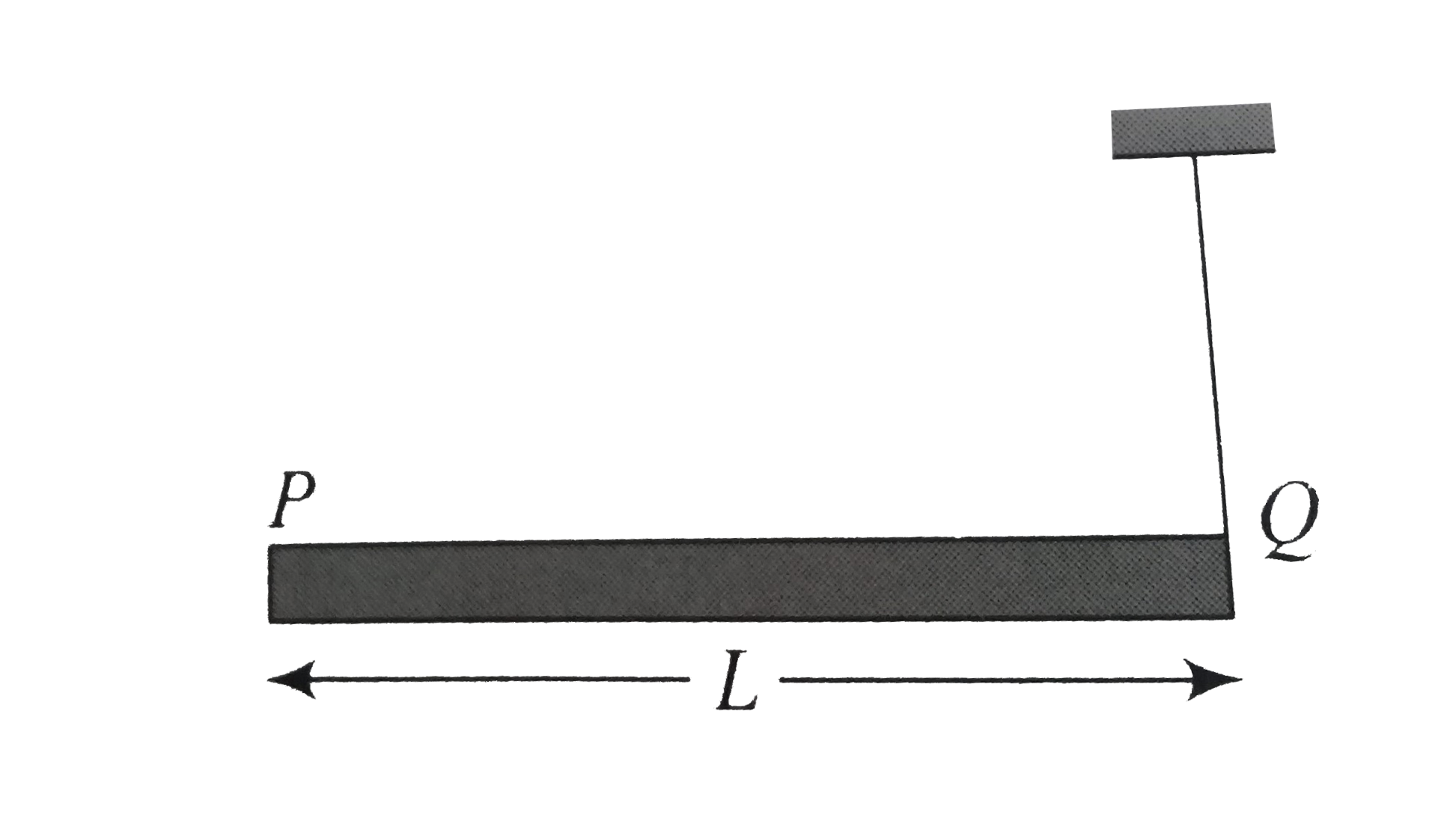
A rod `PQ` of mass `M` and length `L` is hinged at end `P`. The rod is kept horizontal by a massless string tied to point `Q` as shown in the figure. When string is cut, the initial angular accleration of the rod is.

Promotional Banner

Similar Questions

Explore conceptually related problems

A rod PQ of mass M and length L is hinged at end P. The rod is kept horizontal by a massless string tied to point Q as shown in figure. When string is cut, the initial angular acceleration of the rod is

A rod PQ of mass M and length L is hinged at end P. The rod is kept horizontal by a massless string tied to point Q as shown in figure. When string is cut, the intial angular acceleration of the rod is

A rod PQ of mass M and length L is hinged at end P . The rod is kept horizontal by a masseless string tied to point Q as shown in Fig. When string is cut, the initial angular acceleration of the rod is :

A rod PQ of mass M and length L is hinged at end P. The rod is kept horizontal by a mass less than string tied at a point Q as shown in figure. When string is cut, the initial acceleration rod is:

A uniform rod AB of length L and and weight Mg is hinged at one end A. The rod is kept in the horizontal position by a massless string. If the string is cut, then the angular acceleration of the rod will be ["M.I. of the rod about A is "(ML^(2))/(3)]

A uniform rod AB of mass 2 kg is hinged at one end A . The rod is kept in the horizontal position by a massless string tied to point B . Find the reaction of the hinge (in N ) on end A of the rod at the instant when string is cut. (g = 10 m//s^(2))

A uniform rod of mass m and length L is kept on a horizontal table with L/4 length on the table as shown in figure. As the string attached to the end B is cut, the angular acceleration of the rod about point C will be