


Similar Questions
Explore conceptually related problems
Recommended Questions
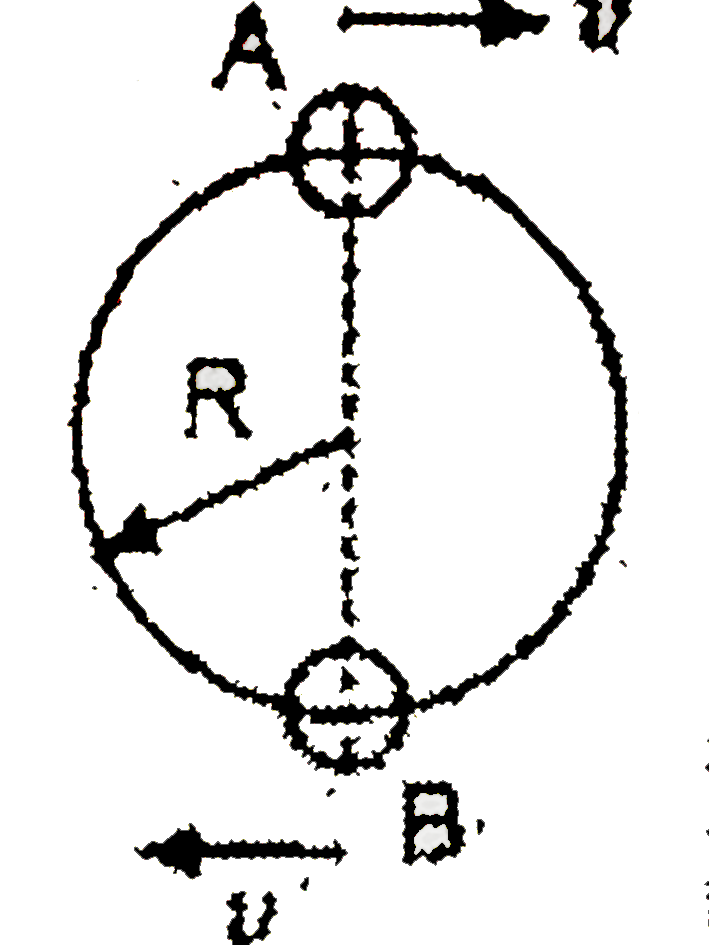
- Two bodies are moving with constant speed v clockwise and are initiall...
Text Solution
|
- If in the previous problem, particle A moves with constant acceleratio...
Text Solution
|
- Assertion:- A particle is moving in a circle with constant tangential ...
Text Solution
|
- A particle moves with a tangential acceleration a(t)=vec(a).hat(v) whe...
Text Solution
|
- Two bodies are moving with constant speed v clockwise and are initiall...
Text Solution
|
- 0.5 मीटर त्रिज्या के व्रत पर गतिमान क कण की चाल एकसमान दर से बद रही है...
Text Solution
|
- IF a body moves with constant speed along a curved path,its tangentia...
Text Solution
|
- A particle moves along circle of radius ((20)/(pi)) m with constant ta...
Text Solution
|
- IF a body moves with constant speed along a curved path,its tangentia...
Text Solution
|