

Home
Class 8
MATHS
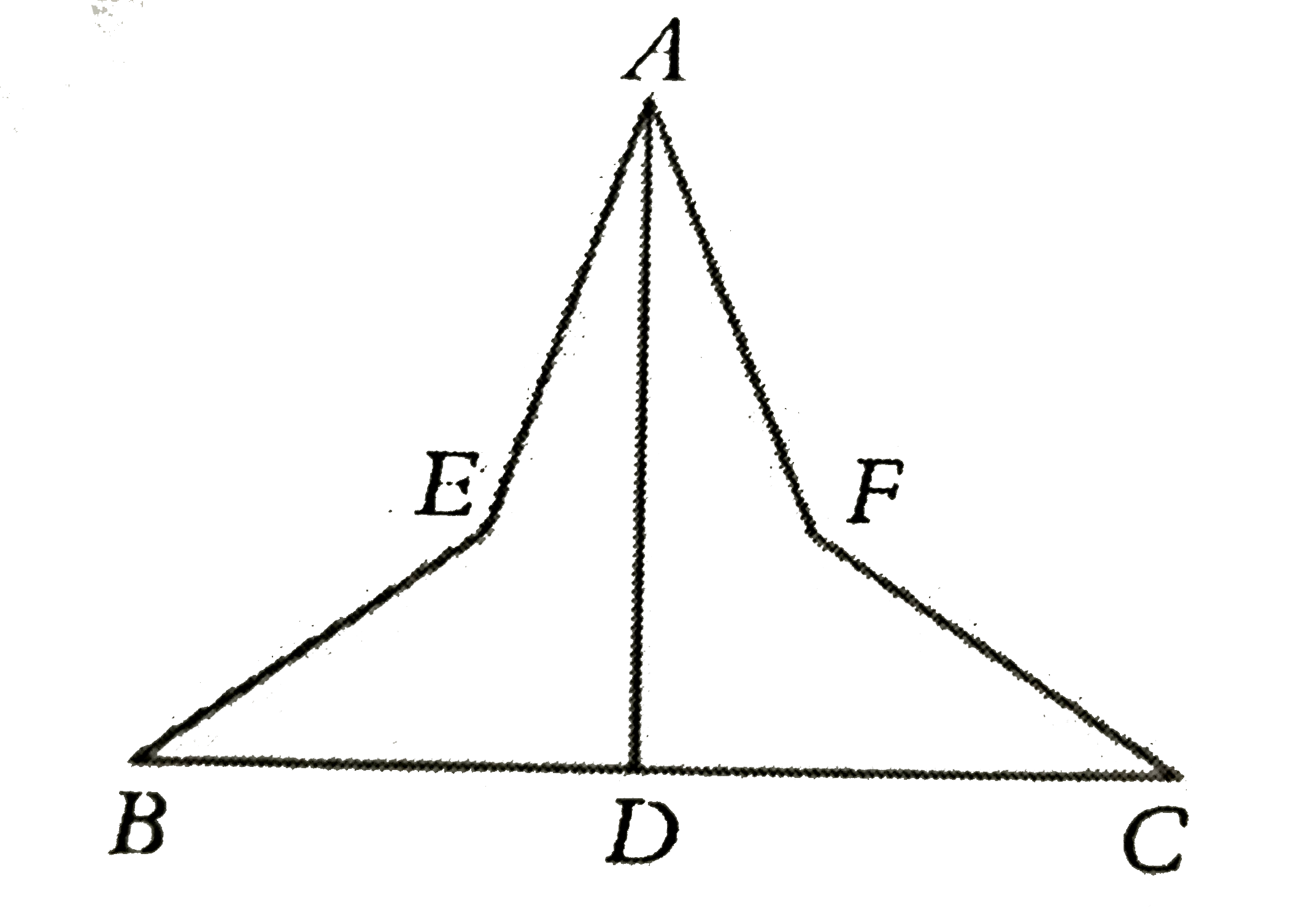
In the figuare above ( not to scale), ba...


In the figuare above ( not to scale), `bar(AD)` is the angle bisector of `/_EAF, /_AFC = 110^(@)` and `/_ DCF =20^(@)`. If `/_ DAF =30^(@)` and `/_ EBD =10^(@)`, then `/_ AEB =`

Promotional Banner

Similar Questions

Explore conceptually related problems

In the above Delta ABC ( not to scale ), OA is the angle bisector of /_ BAC . If OB=OC,/_OAC=40^(@) and /_ ABO=20^(@) . If /_ OCB=(1)/(2) /_ ACO, then find /_ BOC.

In a Delta ABC , angle A=120^(@), AB=20 cm, AC =30 cm find the angle bisector AD .

In the figure above (not to scale), overline(AB)botoverline(CD) and AD is the bisector of angle BAE. AB =3 cm and AC=5cm . Find CD.

In the following figure, bar(BD) is produced to E. If bar(AD) is the angle bisector of angleA , then find the angleBCD . ltimg src="https://d10lpgp6xz60nq.cloudfront.net/physics_images/PS_MATH_IX_C12_E03_005_Q01.png" width="80%"gt

In the following figure (not to scale), angle DAB + angle CBA = 90^@ , BC = AD, AB = 20 cm, CD = 10 cm, then the area of the quadrilateral ABCD is: निम्नलिखित आकृति (जो पैमाने के अनुसार नहीं है) में, angle DAB + angle CBA = 90^@ , BC = AD, AB = 20 सेमी, CD = 10 सेमी है, तो चतुर्भुज ABCD का का क्षेत्रफल कितना होगा?

A monochromatic light source S of wavelength 440 nm is placed slightly above a plane mirror M as shown . Image of S in M can be used as a virtual source to produce interference fringes on the screen. The distance of source S from O is 20.0 cm, and the distance of screen from O is 100.0 cm (figure is not to scale). If the angle theta = 0.50 xx10^(-3) radians, the width of the interference fringes observed on the screen is –

A movie screen on a wall is 20 feet high and 10 feet above the floor. If a man has to position himself at distance x from the screen to have a maximum angle of view theta , then x=(10)/(sqrt(3))fe e t (b) theta=60^0 x=10sqrt(3) (d) theta=30^0