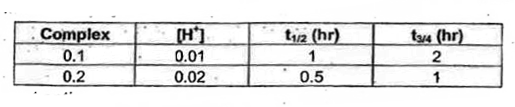
A
B
C
D
Text Solution
Verified by Experts
The correct Answer is:



Topper's Solved these Questions
CHEMICAL KINETICS AND RADIOACTIVITY
FIITJEE|Exercise Assignment problems (Objective) Level-II ( Comprehension-II)|3 VideosCHEMICAL KINETICS AND RADIOACTIVITY
FIITJEE|Exercise Assignment problems (Objective) Level-II (Comprehension-III )|4 VideosCHEMICAL KINETICS AND RADIOACTIVITY
FIITJEE|Exercise Assignment problems (Objective) Level-II|21 VideosCHEMICAL EQUILIBRIUM
FIITJEE|Exercise MATCHING TYPE QUESTIONS|3 VideosCHEMISTRY IN EVERY DAY LIFE
FIITJEE|Exercise ASSIGNMENT PROBLEMS (OBJECTIVE) Level - II (Numerical Based Questions)|5 Videos
FIITJEE-CHEMICAL KINETICS AND RADIOACTIVITY-Assignment problems (Objective) Level-II (Comprehension-I)
- A catalyst increases the rate of chemical reaction by providing an alt...
Text Solution
|
- A catalyst increases the rate of chemical reaction by providing an alt...
Text Solution
|
- A catalyst increases the rate of chemical reaction by providing an alt...
Text Solution
|
- A catalyst increases the rate of chemical reaction by providing an alt...
Text Solution
|
- A catalyst increases the rate of chemical reaction by providing an alt...
Text Solution
|