Home
Class 12
CHEMISTRY
Dehydration by conc. H(2)SO(4) is the mo...

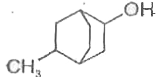
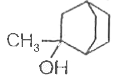
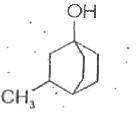
Dehydration by conc. `H_(2)SO_(4)` is the most difficult in

A

B

C

D

Text Solution

AI Generated Solution

The correct Answer is:

To determine which alcohol is the most difficult to dehydrate using concentrated sulfuric acid (H₂SO₄), we need to analyze the stability of the carbocations formed during the dehydration process. The stability of the carbocation is crucial because the formation of the carbocation is the rate-determining step (RDS) in the dehydration mechanism. ### Step-by-Step Solution: 1. **Understanding Dehydration Mechanism**: - Dehydration of alcohols typically involves the loss of a water molecule (H₂O) to form an alkene. This process can be facilitated by strong acids like concentrated H₂SO₄. - The mechanism involves protonation of the alcohol to form a better leaving group (water), followed by the formation of a carbocation. 2. **Carbocation Formation**: - The first step in the dehydration mechanism is the protonation of the alcohol, resulting in the formation of a protonated alcohol (ROH₂⁺). - The leaving of water (H₂O) leads to the formation of a carbocation (R⁺). 3. **Evaluating Carbocation Stability**: - Carbocation stability follows the order: tertiary (3°) > secondary (2°) > primary (1°) > methyl (0°). - The more stable the carbocation, the easier it is to form, and thus the easier the dehydration reaction will be. 4. **Analyzing Given Options**: - **Option 1**: A primary alcohol will form a primary carbocation, which is the least stable. - **Option 2**: A secondary alcohol will form a secondary carbocation, which is more stable than primary but less stable than tertiary. - **Option 3**: A tertiary alcohol will form a tertiary carbocation, which is the most stable. - **Option 4**: A compound that cannot form a stable carbocation (like a bridged carbocation) will be very difficult to dehydrate. 5. **Conclusion**: - The alcohol that forms the least stable carbocation will be the most difficult to dehydrate. - Based on the analysis, the primary alcohol (Option 1) is the most difficult to dehydrate because it forms a primary carbocation, which is the least stable. ### Final Answer: The most difficult alcohol to dehydrate by concentrated H₂SO₄ is the primary alcohol.
Promotional Banner

Topper's Solved these Questions

  • HYDROCARBONS

    AAKASH INSTITUTE|Exercise Assignment(Section - C) (Previous Years Questions)|69 Videos
  • HYDROCARBONS

    AAKASH INSTITUTE|Exercise Assignment(Section - D) (Assertion -Reason Type Question)|24 Videos
  • HYDROCARBONS

    AAKASH INSTITUTE|Exercise Assignment(Section - A) (Obejctive type question)|55 Videos
  • HALOALKANES AND HALOARENES

    AAKASH INSTITUTE|Exercise ASSIGNMENT SECTION -D|15 Videos
  • HYDROGEN

    AAKASH INSTITUTE|Exercise ASSIGNMENT (SECTION - D) (Assertion-Reason Type question)|15 Videos

Similar Questions

Explore conceptually related problems

Conc. H_(2)SO_(4) is not

Conc. H_2 SO_4 is not a

Addition of Conc. H_(2)SO_(4) to water is

Dehydration of (A) with conc. H_(2)SO_(4) gives a compound that exists in two isomeric forms. Give the structurest of both the isomers.

Based on the above isomer answer the following (A to F). Which isomers on dehydration with conc. H_(2)SO_(4) give alkene is capable to show geometrical isomerism ?
