Text Solution
Verified by Experts
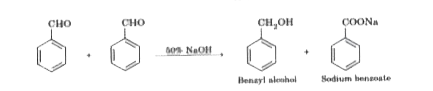
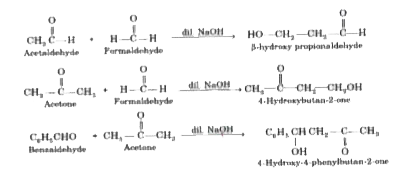
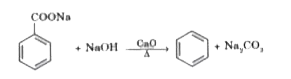



Topper's Solved these Questions
ALDEHYDES ,KETONES AND CARBOXYLIC ACIDS
MODERN PUBLICATION|Exercise NCERT FILE (NCERT EXEMPLAR PROBLEMS ) (MULTIPLE CHOICE QUESTIONS ( TYPE -I)|12 VideosALDEHYDES ,KETONES AND CARBOXYLIC ACIDS
MODERN PUBLICATION|Exercise NCERT FILE (NCERT EXEMPLAR PROBLEMS ) (MULTIPLE CHOICE QUESTIONS ( TYPE -II)|6 VideosALDEHYDES ,KETONES AND CARBOXYLIC ACIDS
MODERN PUBLICATION|Exercise NCERT FILE (NCERT IN TEXT QUESTIONS )|8 VideosALCOHOLS, PHENOLS AND ETHERS
MODERN PUBLICATION|Exercise UNIT PRACTICE TEST (FOR BOARD EXAMINATION)|12 VideosBIOMOLECULES
MODERN PUBLICATION|Exercise UNIT PRACTICE TEST FOR BOARD EXAMINATION|13 Videos
Similar Questions
Explore conceptually related problems
MODERN PUBLICATION-ALDEHYDES ,KETONES AND CARBOXYLIC ACIDS-NCERT FILE (NCERT TEXTBOOK EXERCISES )
- What is meant by the following terms ? Give an example of the reaction...
Text Solution
|
- Name the following compounds according to IUPAC system of nomoen...
Text Solution
|
- Draw the structures of following compound: i. 3-Methylbutanal ii. ...
Text Solution
|
- Write the IUPAC names of the ketons and aldehydes wherever poss...
Text Solution
|
- Draw the structure of following derivatives: i. 2,4-Dinitrophylhydra...
Text Solution
|
- Predict the product formed when cyclohexanecarbaldehyde reacts wi...
Text Solution
|
- Which of the following compounds would undergo aldol condensation or t...
Text Solution
|
- How will you convert ethnal into the following compounds ? i. Butane...
Text Solution
|
- Write structure formulae and names of four possible aldol condensation...
Text Solution
|
- An organic compound with the molecular folmula C(9)H(10)O form 2,4-DNP...
Text Solution
|
- An organic compound (A) (molecular formula C(8)H(16)O(2)) was hydrolys...
Text Solution
|
- Arrange the following compounds in the increasing order of their prope...
Text Solution
|
- Give simple chemical test to distinguish between the following pairs o...
Text Solution
|
- How will you prapare the following compounds from benzene ? You may us...
Text Solution
|
- How will you bring about the following conversions in not more than tw...
Text Solution
|
- Describe the following i. Acetylation ii. Cannizzaro reaction i...
Text Solution
|
- complete each synthesis by giving missing starting material , r...
Text Solution
|
- Giving plausible explanation for each of the following: i. Cyclohexa...
Text Solution
|
- An organic compound contains 69.77% carbon, 11.63% hydrogen, and rest ...
Text Solution
|
- Although phenoxide ion has more number of resonating structures than c...
Text Solution
|