


Similar Questions
Explore conceptually related problems
Recommended Questions
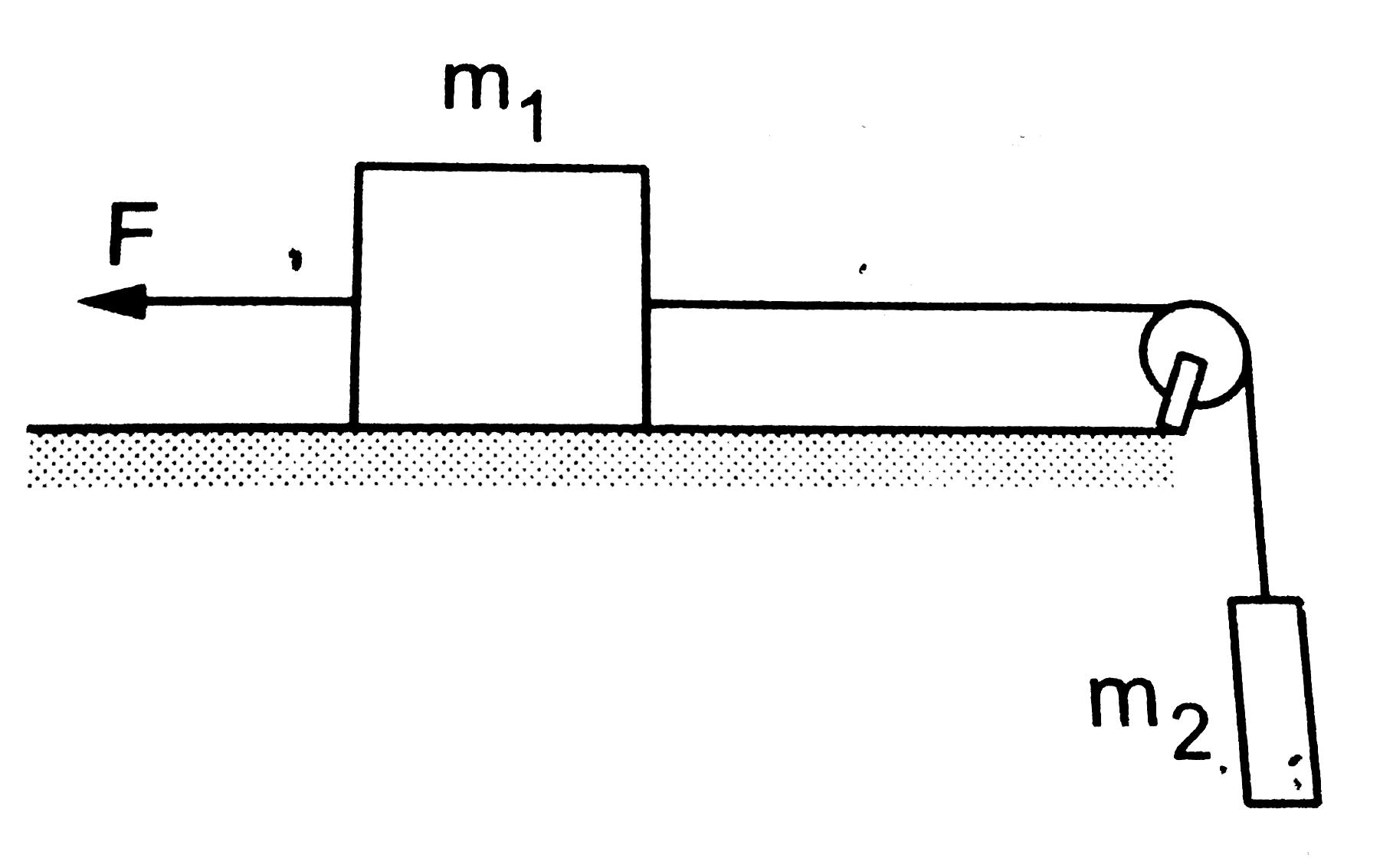
- In figure m1=5 kg, m2=2kg and F=1N. Find the acceleration of either bl...
Text Solution
|
- Three blocks of masses m1, m2 and m3 are connected as shown in the fig...
Text Solution
|
- A constant force F=m2g/s is applied on the block of mass m1 as shown i...
Text Solution
|
- In figure m1=5 kg, m2=2kg and F=1N. Find the acceleration of either bl...
Text Solution
|
- Let m1=1 kg, m2=2kg and m3=3kg is figure. Find the acceleration of m1,...
Text Solution
|
- Two blocks are placed at rest on a smooth fixed inclined place. A forc...
Text Solution
|
- Find the acceleration of centre of mass of the blocks of masses m1, m2...
Text Solution
|
- Two blocks of masses m1 and m2 (m1 gt m2) in contact with each other...
Text Solution
|
- If m1 = 10 kg, m2 = 4kg and m3=2kg the tension in the string connecti...
Text Solution
|