


Similar Questions
Explore conceptually related problems
Recommended Questions
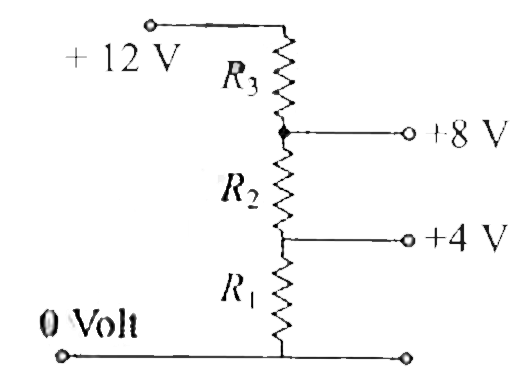
- A potential divider is used to give outpurs of 4V and 8V from a 12V so...
Text Solution
|
- In a triangle ABC, if (r(1)+r(2))(r(2)+r(3))(r(3)+r(1))4RK then k=
Text Solution
|
- (r(3)+r(1))(r(3)+r(2))sin C=2r(3)sqrt(r(2)r(3)+r(3)r(1)+r(1)r(2))
Text Solution
|
- A potential divider is used to give outpurs of 4V and 8V from a 12V so...
Text Solution
|
- Prove that (r(1)(r(2)+r(3)))/(sqrt(r(1)r(2)+r(2)r(3)+r(3)r(1)))=a
Text Solution
|
- In DeltaABC, " show that " (ab-r(1)r(2))/(r(3))=(bc-r(2)r(3))/(r(1))=(...
Text Solution
|
- A resistance R(1) is connected to a source of constant voltage . On co...
Text Solution
|
- Statement-1: ln !ABC,r(1)+r(2)+r(3)-r=4R Statement-2: In !ABC,r(1)r(...
Text Solution
|
- A resistance R(2) is connected in parallel with a resistance R(1) what...
Text Solution
|