

Home
Class 12
PHYSICS
We have an isolated conducting spherical...

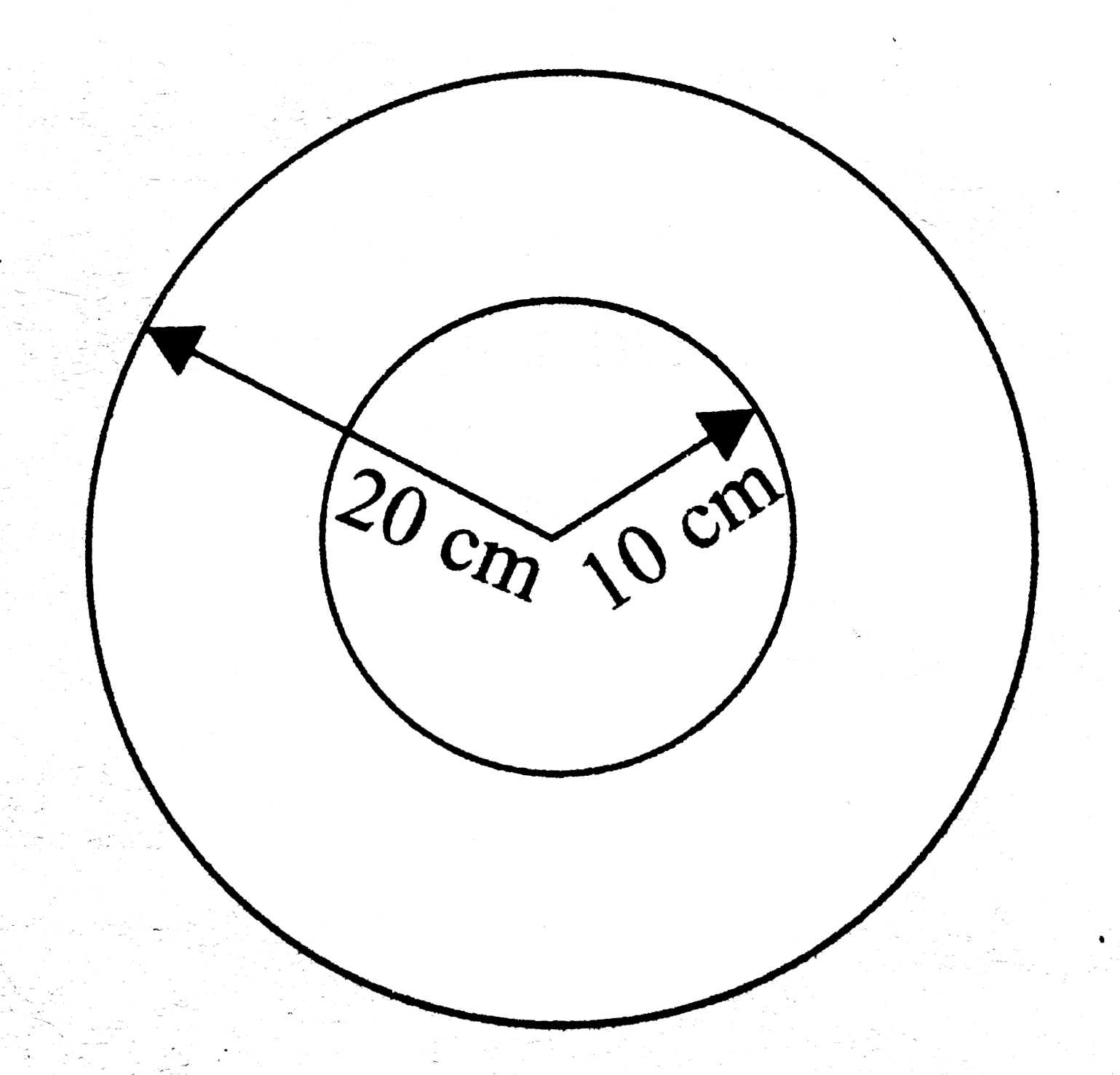
We have an isolated conducting spherical shell of radius `10 cm`. Some positive charge is given to it so that the resulting electric field has a maximum intensity of `1.8 xx 10^6 NC^-1`. The same amount of negative charge is given to another isolated conducting spherical shell of radius `20 cm`. Now, the first shell is placed inside the second so that both are concentric as shown in (Fig. 3.154).
.
The electric potential at any point inside the first shell is.

Promotional Banner

Similar Questions

Explore conceptually related problems

We have an isolated conducting spherical shell of radius 10 cm . Some positive charge is given to it so that the resulting electric field has a maximum intensity of 1.8 xx 10^6 NC^-1 . The same amount of negative charge is given to another isolated conducting spherical shell of radius 20 cm . Now, the first shell is placed inside the second so that both are concentric as shown in (Fig. 3.154). . The electric field intensity just inside the outer sphere.

We have an isolated conducting spherical shell of radius 10 cm . Some positive charge is given to it so that the resulting electric field has a maximum intensity of 1.8 xx 10^6 NC^-1 . The same amount of negative charge is given to another isolated conducting spherical shell of radius 20 cm . Now, the first shell is placed inside the second so that both are concentric as shown in (Fig. 3.154). . The electric field intensity just inside the outer sphere.

We have an isolated conducting spherical shell of radius 10 cm . Some positive charge is given to it so that the resulting electric field has a maximum intensity of 1.8 xx 10^6 NC^-1 . The same amount of negative charge is given to another isolated conducting spherical shell of radius 20 cm . Now, the first shell is placed inside the second so that both are concentric as shown in (Fig. 3.154). . The electrostatic energy stored in the system is.

We have an isolated conducting spherical shell of radius 10 cm . Some positive charge is given to it so that the resulting electric field has a maximum intensity of 1.8 xx 10^6 NC^-1 . The same amount of negative charge is given to another isolated conducting spherical shell of radius 20 cm . Now, the first shell is placed inside the second so that both are concentric as shown in (Fig. 3.154). . The electrostatic energy stored in the system is.

We have an isolated conducting spherical shell of radius 10 cm . Some positive charge is given to it so that the resulting electric field has a maximum intensity of 1.8 xx 10^6 NC^-1 . The same amount of negative charge is given to another isolated conducting spherical shell of radius 20 cm . Now, the first shell is placed inside the second so that both are concentric as shown in (Fig. 3.154). . If both the spheres are connected by a conducting wire, then.

We have an isolated conducting spherical shell of radius 10 cm . Some positive charge is given to it so that the resulting electric field has a maximum intensity of 1.8 xx 10^6 NC^-1 . The same amount of negative charge is given to another isolated conducting spherical shell of radius 20 cm . Now, the first shell is placed inside the second so that both are concentric as shown in (Fig. 3.154). . If both the spheres are connected by a conducting wire, then.

A 10 C charge is given to a conducting spherical shell, and a-3 C point charge is placed inside the shell. For this arrangement, find the correct statement(s).

A 10 C charge is given to a conducting spherical shell, and a-3 C point charge is placed inside the shell. For this arrangement, find the correct statement(s).

A uniformly charged non-conducting spherical shell is given +q charge and a point charge -q is placed as shown. The electric field lines will be

A uniformly charged non-conducting spherical shell is given +q charge and a point charge -q is placed as shown. The electric field lines will be